Previous
Next
logo logo
logo logo
  • Discover Art
    • Trending
    • Most Recent
    • Most Faves
    • Most Views
    • Curated Galleries
  • Drawing Challenges
    • See All Challenges
  • Drawing Prompts
  • Artists
    • Most Popular
    • Most Recent
    • Available For Hire
    • Artist Spotlight
  • More
    • Marketplace
    • Art Discussions
    • Resources
    • News + Blog
Login
Most Views
Select an option
  • Most Relevant
  • Most Faves
  • Most Views
  • Most Comments
  • Most Recent
SEARCH RESULTS FOR

ideas

Beresford Beresford
Enlarge
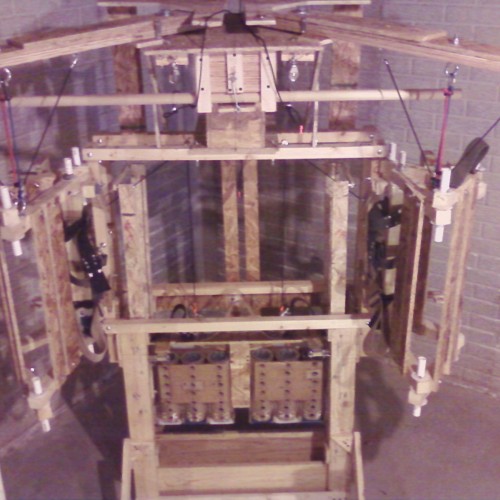
Industrial Art Project

What was created? A concept exerciser (aka: homemade workout machine) made mostly out of wood components, that was a contraption full of hinges, pulleys, weights, and grips (see pin 1). With my system, a person could perform both the butterfly and lat pull down exercises and transition between them with minimal effort. The unit stood about 8 feet tall and was about 6 ft wide when the butterfly arms were connected to it. Why was it created? I have always been fascinated with weight training machine design. I had a bench press weight set at home that did not come with a butterfly attachment, so I decided to make one of my own. I was able to get a steady supply of material (scrap wood) from a local source and constructed a workout routine by stacking columns of weight (instead of accumulating weight plates) in a moving grid generating even or uneven resistance (see pin 3). I also consider what I made could be a benefit to others since it does: (1) represent an extension of DIY culture (i.e. advancing individual knowledge, learning new skills, and the feeling of satisfaction that comes from building from your own ideas), (2) how to apply simple machine principles (i.e. pulleys, leverage, changing the direction or amount of force, etc.) in making a project and, (3) promote woodworking (which allows a person to be creative and is a wonderful medium for artistic expression). What makes it special? What makes my work distinctive concerns the butterfly arms and the weight container. Butterfly Attachment The butterfly attachment arms can be quick disconnected and re-mounted easily. The jackknife motion that the butterfly arms travel in as they flex forward and return to their starting position is an original conception. Weight Grid (see pin 3) Unlike traditional stacked weight plate machines, a person is allowed to make a variety of pattern configurations on the grid (X,□, /,\, —, etc.) by using cup shaped ballast inserts (up to 24) that changes the amount of force a user exerts for each repetition (see figure 2). An individual can position the weights in organized horizontal/vertical patterns or treat them more as random objects in the load basket. In their current form my system’s weight supplements are ½ pound each (about 2 ¾ inches long and 1 14/16 inches in diameter): making them easy to manage. If solid roll stock were used in their construction, they would be estimated to weigh 2 ½ to 2 ¾ pounds (see pin 2). When not in use, weights can be placed in the grid case for compact storage. As a point of fact, the sight holes cut into the drop tubes were drilled by hand with a fixture and not with the use of a drill press. At one point, I contemplated that one could focus on certain muscle groups in the upper body by placing inserts on the weight grid in particular patterns (X,□, /,\, —, etc.). This may have been beneficial for those in need of rehabilitation (through segregation of muscle areas that needed treatment) in such disciplines as Kinesiology or Physical Therapy. What was learned creating it? I learned how much ideas on paper can change drastically when fabricated physically. I learned how challenging it was to develop removable butterfly arms that hang and pivot in mid air. The exerciser’s weight box glides up and down on a vertical guide. I researched various ways of how to make that move while keeping the friction between the connectors on the weight box and the track surface it to a minimum. This was in order to make the climb and drop motion as fluid and controlled as possible. I considered using various sprays, waxes, greases, lacquers, covers, wheels, and even ball bearings to accomplish that. I ended up sanding the inside of the track extensively and then mounted small furniture mover inserts to the weight box on its four corners for a successful connection. Therefore, I learned here how important considering a variety of ideas provides solution to a problem. If I were to start over and do things again? I probably would have done some more background research in the areas of Fluid Dynamics or Biomechanics. I figure, if I had consulted with people in those areas, the time it took to design and redesign the overall unit as well as the weight box might not have taken about 3 years to fully complete. Miscellaneous In the back the machine was a counterweight of tube sand (60 lbs.). Without that, the whole thing would have toppled forward when trying to use it. Thank you for your time. Best Regards. Matthew Link: https://www.pinterest.com/meb206/industrial-art-project/

  • 14
  • 1
  • 0
Paul Paul
Enlarge
You Never Know When You’ll Require  a Chilli

Just playing round with tin can ideas.....You never know when you’ll require a chilli......

  • 14
  • 3
  • 0
Robyn Jensen Robyn Jensen
Enlarge
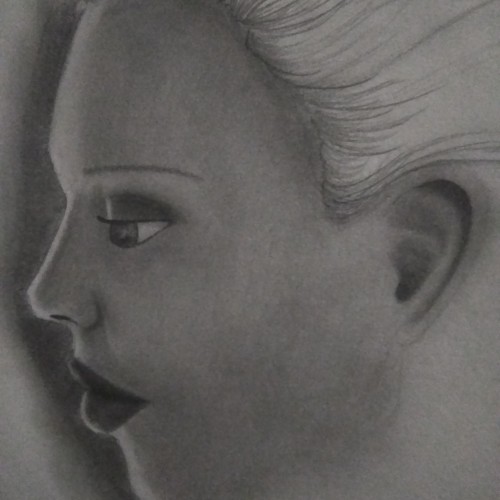
value practice

really getting into sketching with value, trying to learn different ways to use value

  • 14
  • 3
  • 1
Krouu Krouu
Enlarge
Sketch 001

I like to carry around a tiny sketchbook. Something to jot down ideas, or scribble out a concept, with little worry about the technical application.

  • 13
  • 8
  • 0
Margaret Langston Margaret Langston
Enlarge
Can we go here?

Color pencil studies all year, from photos. I have no ideas of my own this year. It’s been awhile.

  • 13
  • 3
  • 0
Juice_Lime Juice_Lime
Enlarge
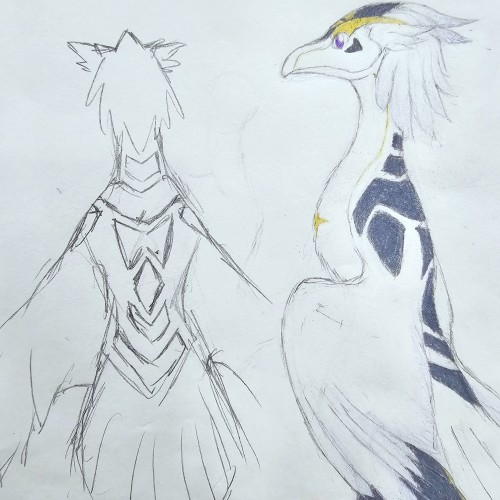
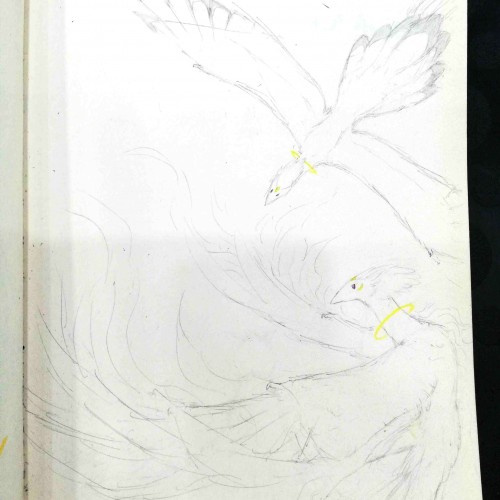
Scribbles: Masked Shapeshifter

Been some time since I touched the pencil. It wasn't easy to get back to drawing, since I was also distracted by the internet for some time. Lots of things went through my head, while I was out on a trip. Just drew whatever I felt like drawing, and this came alongside some reflections: I have been stuck on fixing this character concept for a very long time, trying to box it within a classification. Bird, wyvern, dragon, shadow, whatever- I came to a point today, where I felt that it really doesn't matter anymore. This is that sort of character who can be everything. I spent the entire afternoon trying to arrange all the little ideas and features, following true to creative intuition. Smashing together many of my previous character designs, this appeared. A masked and unnamed figure (???) with traits from many of my previous works. An avian / draconic / spiritual shapeshifter has always been something with me all this time, even when I tried to create a sona years back (finding it meaningless). True to its nature, it has few lively features except its eyes and requires a mask to display additional signs of life. Its clear that this character is basically a symbolic self-expression. It wasn't easy to seperate myself from my introjective tendencies, which easily distorts my concept of this figure (took weeks to untangle). Once the confusions loosen, it reappears with noticeably familiar features. The scribble above still has some room for rearrangement, just limited by the irreversible nature of pencil drawing. The grey markings were too dark, and the feet might look better staying white. The pale golden underbody markings, were actually a surprise.

  • 12
  • 3
  • 0
Natalie Harvey Natalie Harvey
Enlarge
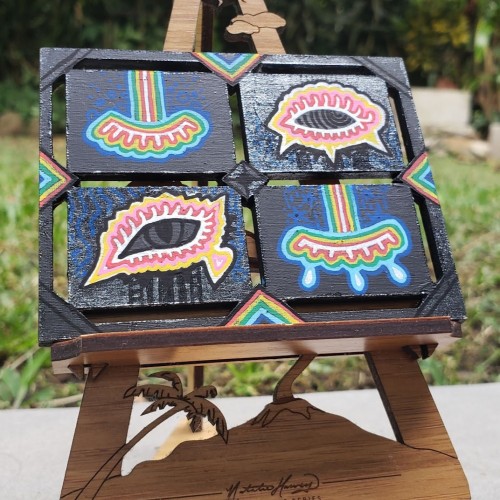
Rainbow Eyes

A bit inspired by that TOOL album, a bit inspired by my love of spontaneous, weird ideas. Acrylic on custom 3.5" x 4.5" canvas.

  • 12
  • 3
  • 0
crais robert crais robert
Enlarge
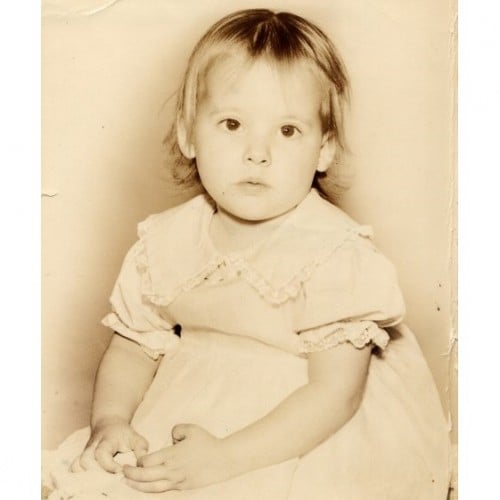
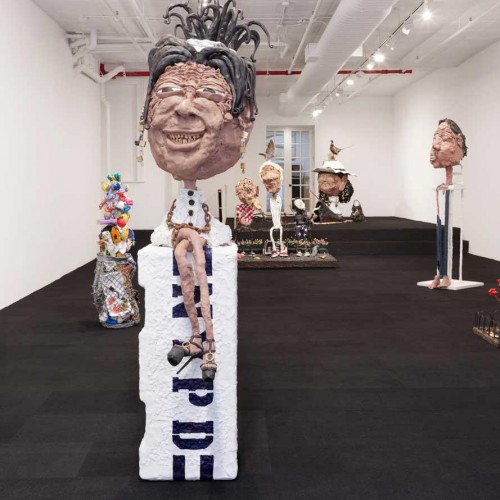
The House of Ryman: A Family of Artists

Take the Rymans, for instance. There is Robert Ryman (1930 – 2019), the patriarch whose paintings are indisputable icons of the modernist canon. Then there are his wives and children. Ethan Ryman (b. 1964) is the oldest of Robert’s three artist children. Though his mother was not an artist, Lucy Lippard (b. 1937) was still a scrappy and eloquent art critic, a feminist, a social activist, and an environmentalist. Ethan’s meticulously considered and crafted artworks might be characterized as somewhere between photography and sculpture, the abstract and the (f)actual. Though Lippard and Ryman divorced just six years after their 1961 marriage, their son is arguably the closest to his father’s methodologies if not his medium, and was certainly the last to become a visual artist. Robert Ryman went on to marry fellow artist Merrill Wagner (b. 1935) in 1969 and they had two sons. Though Wagner is more quietly acknowledged than Ryman, her boundless practice includes sculpture, painting, drawing, installation, and more. With an emphasis on materiality, her sites are indoors and out, her styles alternating. Will Ryman (b. 1969) is the elder son of Robert and Merrill. He started out as an actor and playwright though he too eventually assumed a visual art practice to become a sculptor. He is best known for his large-scale public artworks and theatrical installations that focus on the figurative and psychological, at times absurdist, narratives. Cordy Ryman (b. 1971) is the youngest, and the only one of the three who knew that he was going to be a visual artist early on. His work is abstract, the sophistication understated, and his output is prolific. With his mother’s DIY flair, his homely materials seem sourced from the overflow of construction projects, lumberyards, and Home Depot. Ethan Ryman said that, when he was young, he didn’t want to be a visual artist. Instead, he pursued music and acting, producing records for Wu-Tang Clan, among others, getting “my ears blown out.” But he was always surrounded by artists—Sol LeWitt, Carl Andre, Jan Dibbetts, William Anastasi, and countless others at his mother’s place on Prince Street in SoHo and at the Rymans’s 1847 Greek Revival brownstone on 16th Street in Manhattan, where everyone was often seated around the family dinner table. He would spend part of most weekends in the highly stimulating chaos that reigned there—birds, dogs, plants, toys, art, people, everywhere. “While nowhere near as overwhelming, I was also constantly exposed to artists, writers and other creative folks at my Mom’s place.” “While nowhere near as overwhelming, I was also constantly exposed to artists, writers and other creative folks at my Mom’s place.” Ethan Ryman Lippard was “a powerhouse.” She took Ethan on her lecture tours, readings, conferences, galleries, studios, wherever she had to go. And while that almost always breeds rebellion, at some point, he began noticing all the art around them—both what it looked like and how it was made. He began to take photographs of buildings and realized that “abstract color fields were all around us.” He also began to notice his father and Wagner’s work more carefully—how sensitively it was executed and how reactive it was to its surroundings. “Once you’re interested, you notice. When I asked my dad questions, I would most likely get a one-word response. I had to go to his lectures for answers where he broke down modern art for me. After listening to him, it seemed to me we should all be painting, otherwise what were we doing with our lives?” Will Ryman, on the other hand, said that all his work has a narrative component. His background is in theatre and his interests have always been film and plays, his narratives about New York City and American culture and history. “It’s a city I love,” he said. “I try to observe culture in a bare-bones way and I’ve always been interested in telling stories—we’re the only species that tells stories to each other. It comes from an intuitive, cathartic place in me. I want to stay away from preconceived notions, although that’s not completely possible. I have no plan except to do something honest, with a little bit of a political bent and humor but I’m not an activist. I’m interested in exploring a culture and its flaws as an interaction between human beings.” His interests and his work are very different from his last name. There is no connection to minimalism. He didn’t go to art school, drawn instead to theatre workshops and theatre troupes. “I didn’t become involved with the visual arts until my mid-thirties. It’s easy to say what I make is a reaction, but I dismiss that. And I also wouldn’t say it’s rebellious after twenty years.” Of his family, he said, “we’re a normal family, a close family, with all the dynamics and complications that go along with that. And while everyone who came to 16th Street were artists, they were also just family friends. I have no other measure for how a family interacts. It was just the way it was.” Cordy Ryman was the only one of the three who went to art school, earning a BFA from the School of Visual Arts, but it was reportedly awkward for him, since all his teachers knew his parents. “When I started making abstract paintings, it was kind of push and pull but it became more interesting to me than my earlier figurative or narrative work. That’s when I started to know where I came from. I realized that I had a visual memory, and the language was there, a language I didn’t know I knew. We all had different ways of working; our processes are very different and it’s hard to compare us. Ethan and I use a similar inherited language but he thinks about what he does more. I work very fast, the ideas come from the process itself. I work in two or three modes simultaneously and bounce around.” At home, they were around Wagner’s work since her studio was there. “Will and I were always in her studio, helping her, going to her installation sites with her, adjusting her boulders or whatever the project was she was working on. That was special and made a deep impression, but I didn’t realize it then.” All five Rymans have in common an acute consciousness of space and of place as an integral component of their work. For the brothers, part of that consciousness might stem from their parents, but also from their attachment to their family home, which was a crucible of sorts for them, where everyone was an artist. To Cordy, the house was a “living, breathing thing, and the art in it felt alive, growing, and occupying any space that was available. It was the structure of our world. When I’m making work, it doesn’t need to be the most beautiful thing ever, but it needs to have its own life, its own space, like the art we grew up with.” And the next generation of Rymans, also all sons—what about them? Will said his son is still too young to know. Cordy thought the same about his two younger children; his oldest is in the art world, but not as an artist—so far. Ethan perhaps summed it up best: my two sons are artists; they just don’t know it yet.

  • 12
  • 1
  • 0
Hev Easley Hev Easley
Enlarge
Lovely Lilies

New journal, new ideas, using Derwent inktense pencils.

  • 12
  • 5
  • 0
Andrea Andrea
Enlarge
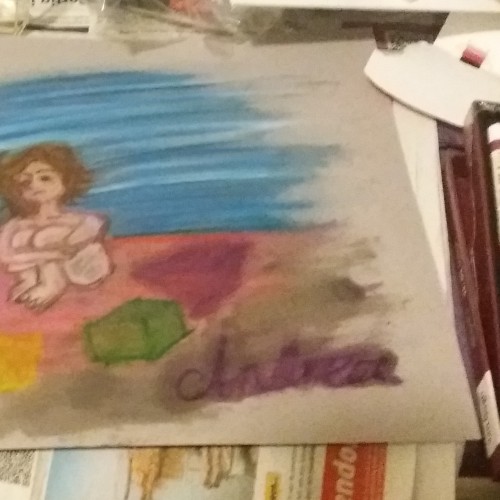
Concepts and Hope

First time oil pastel. Concepts and Hope: as a woman struggling with autism spectrum disorder I grew up not understanding basic concepts in the world around me. Maybe this is universal. I didn't understand why we had to go out to play in school for example, or I didn't understand other people might not be as honest as I always had been. A lot of concepts have a different meaning for someone like me. So here I am naked between the concepts, misunderstood but hopefully looking up. Maybe one day the world will be more like my ideals are, maybe I will create a circle around me of likeminded people, maybe the world will never change enough but I will find peace with myself. One day I will get peace, one way or another. Hope. Oh and yeah, it's a mess with the oil at the bottom. Does anyone have some ideas to improve my technique?

  • 12
  • 1
  • 0
Shruti Sood Shruti Sood
Enlarge
Appreciation Acrylic painting for kids room | acrylic painting canvas

Nature, beauty, and appreciation is the innate need of every being. Innocence and eyes speak a different language. This portrait on canvas is a perfect piece of art for kid's room décor. Acrylic painting canvas, acrylic painting simple, acrylic painting for bedroom, acrylic painting abstract. #acrylicpainting #acrylicpaintingideas

  • 11
  • 5
  • 0
Margaret Langston Margaret Langston
Enlarge
DoodleAddict Prompt 030121: A Saying

I don't often do the prompts and, when I do, I generally finish them late. They don't always speak to me, but this one did. The ideas are not original, but I'm pretty sure I came up with this maxim last year as a way of encouraging myself.

  • 11
  • 2
  • 0
Kevin McQuillan Kevin McQuillan
Enlarge
Portrait of Mick Jenkins

Portrait of Mick Jenkins, Chicago hip hop artist. Looking to do more with this image and eventually turn it into a poster. Open to ideas if you would like to leave a comment.

  • 11
  • 1
  • 0
Juice_Lime Juice_Lime
Enlarge
More Ido

Continued developments, as I condensed all the ideas gathered recently. Something is taking shape.

  • 9
  • 2
  • 0
Spearmint Chalk Spearmint Chalk
Enlarge
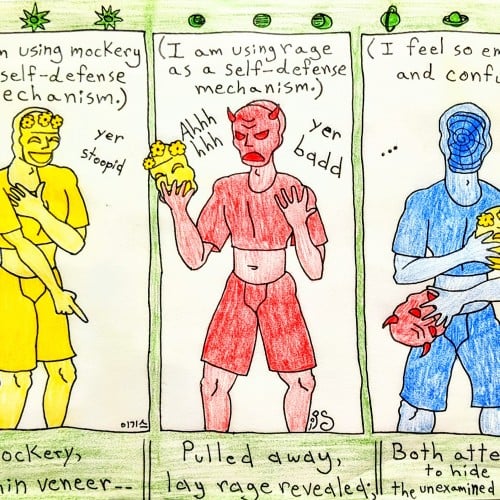
Defensive Layers

A far-too-common archetype that i have observed frequently in people as they converse with another is one in which an individual uses two layers of defense to protect an otherwise unexamined confusion or emptiness. This relates to a defense of the ego and does not apply to all situations involving anything discussed. First posturing: -A mask (or wall) of mockery is sustained in which the defensive individual behaves flippantly as if in jest. This positioning is a way to be aloof from the situation, using incredulity and belittlement to keep a person or their ideas away from the defensive individual. Second posturing: -A mask (or wall) of rage is revealed after a certain level of perceived threat is achieved internally. This positioning is usually the one the defensive individual maintains when they have given up the argument or the introspection. Not risking an ontological or existential crisis, the defensive individual lashes out with anger, often accusatorily in manner, potentially belittling others further or just plain rushing away in a huff. This is usually the end of the engagement. Third posturing: -The masks (or walls) both come off, leaving the defensive individual to examine the thoughts or behaviors involved in the situation more critically. The defensive individual may find themselves feeling deeply uncomfortable, sad, uneasy, lost, or confused. This position leads to introspection and to a genuine openness, which is not something that the defensive individual had been prepared for. They may find that they were incorrect, only partially correct, or that the perceived rightness of their idea/behavior now has an expanded context, all of which may seem frightening. Individuals may become mentally paralyzed at this point. It takes a strength and an honesty to reflect in this position, which is not something that everyone expressing this archetype will be capable of doing. (Based on my professional insights as: a cashier, as a member of various technical support staffs, as an occasional minister, and as a peer counselor. Also based on my casual and repeated interactions with both strangers and with more intimately known persons over the course of my lifetime. Observations are my own.)

  • 9
  • 1
  • 1
Spearmint Chalk Spearmint Chalk
Enlarge
Embodiment

we grow over time; ideas and our actions. who is really who?

  • 9
  • 1
  • 1
Sajan prasanna Sajan prasanna
Enlarge
Random sketches

Just random ideas

  • 9
  • 1
  • 0
Glitch Glitch
Enlarge
False Serenity

This image kind of represents my life... seemingly peaceful, but in all actuality is a whirlwind of emotion and ideas that just end up being torture. This is more of a vent.

  • 9
  • 1
  • 0
Brendon Brendon
Enlarge
Space Time Life Death

One in my Surreal Landscape series. I basically mixed ideas "Space Time Life Death" and try to portray some vision I had in my mind about life in the universe. Purposefully just trying to make something deep and interesting :) [Prints Available]

  • 9
  • 2
  • 0
Timothy Simpson Timothy Simpson
Enlarge
Big Horn Sheep

This came about from a doodle. Doodling is a combination of skilled scribbling, mindless direction & abstract tracing. Doodling [For Me] is not sketching someone's portrait or rendering a photo. It's freely skating w a pencil or pen along a drawing surface & searching for discoveries & different unusual paths that some how result in some lovely surprises. So here ye go. And as always, there r some sneaky bonus ideas to be had if u r so willing to take a gander. Enjoy!

  • 9
  • 4
  • 0
Giles keen Giles keen
Enlarge
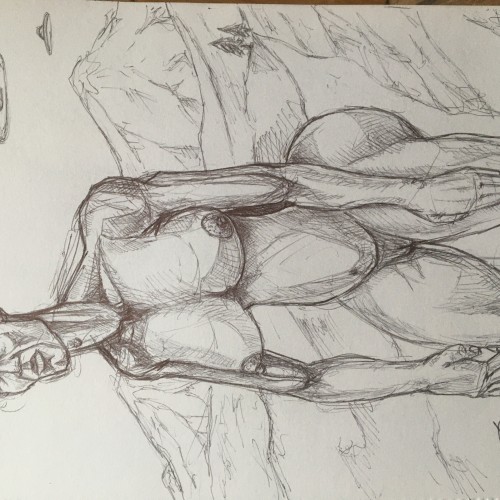
Figure in landscape

My drawings depict figures that are created from my imagination. My figures are distorted and usually out of proportion as I prefer not to be constrained by reality of what we see around us . My work typically is done using a simple black biro. I find the act of drawing a vehicle to express and explore ideas in figurative forms.

  • 9
  • 0
  • 0
RawMoon RawMoon
Enlarge
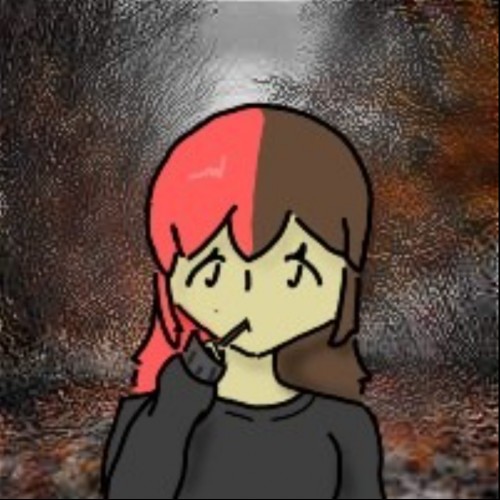
OC and.. a blog?? Maybe?

Well.. I’m thinking about starting an art blog/shop so... ideas? Thoughts? Anyway, hope you like it!

  • 9
  • 0
  • 0
Neringa Neringa
Enlarge
CIrcle

Doodling through the work. 2017

  • 9
  • 2
  • 0
Spearmint Chalk Spearmint Chalk
Enlarge
Something to think about

Ideas are transferred in different ways by different people

  • 8
  • 1
  • 2
alex b alex b
Enlarge
red sunset

playing with ideas

  • 8
  • 2
  • 2
Heather Heather
Enlarge
Watercolor Stickers

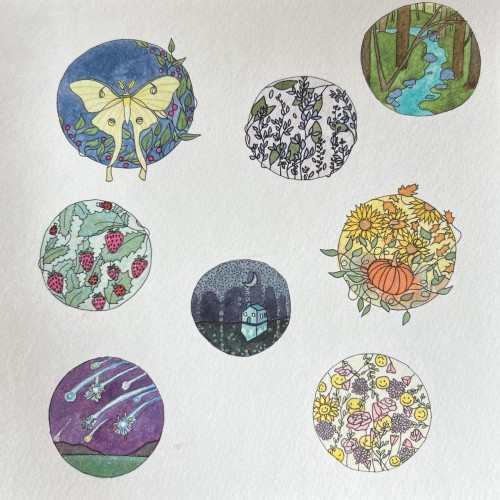
Some ideas sketched and painted for stickers!

  • 8
  • 2
  • 0
venus venus
Enlarge
they know what my people for

work notes, sense of self and higher questions.. i've decided not to edit out weird notes and random doodles and ideas that arent fleshed out

  • 8
  • 2
  • 0
Grace Grace
Enlarge
Norma Bates

Im doing the 6 fanarts challenge! This is the only one I have right now. Comment more ideas if you feel like it!!

  • 8
  • 3
  • 0
Braeden Annkrisomoth Braeden Annkrisomoth
Enlarge
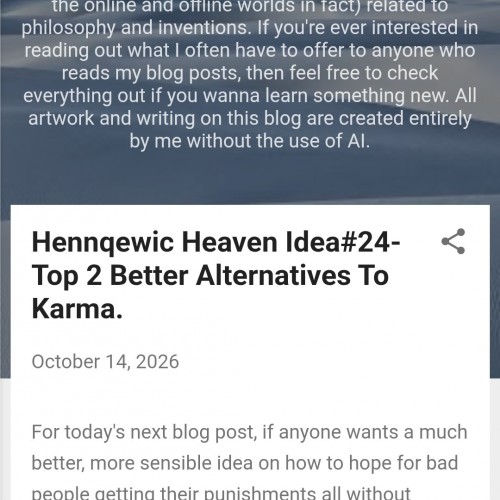
My own Blogger blog titled The Nonfictional And Fictional Ideas Of Braeden Annkrisomoth.

Today's next picture isn't so much a digital drawing or even a drawing at all, but rather a picture I took of my own Blogger blog titled "The Nonfictional And Fictional Ideas Of Braeden Annkrisomoth", where I mostly use it to publish and preserve my own ideas relating to my own fiction and nonfiction (the latter especially for "The Hennqew" most of all), though I'm trying to limit giving myself more blog posts just to not necessarily give myself way too much work to the point where writing everything about my comics would take even longer to finish to the point where I couldn't finish any comics at all, just a thought. First published on 10/20/2026.

  • 7
  • 0
  • 0
Braeden Annkrisomoth Braeden Annkrisomoth
Enlarge
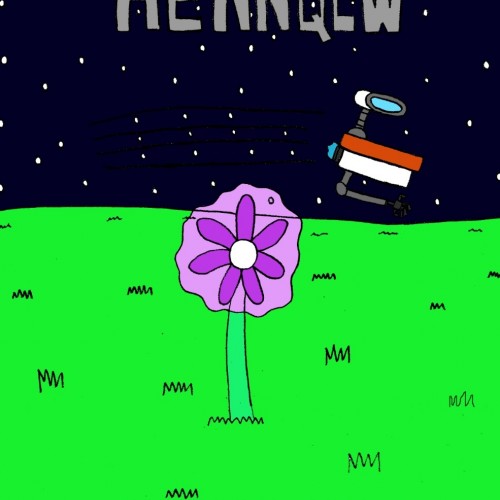
The Hennqew (2/4/2025 Version)

This is the front cover of my absolute most important nonfictional comic titled "The Hennqew", but only refers to the now discontinued 2/4/2025 version (which is still available on ComicFury.Com) That never means though that I'm scrapping all of the Hennqew completely though, because as of today, I'm currently working on a newer and more improved version of it that will hopefully turn out extremely great and good for me and literally every living being in existence. It'll still be a little while to work on and finish, but it will still happen eventually. To learn more about certain Hennqewic ideas, visit my Blogger blog titled "The Nonfictional And Fictional Ideas Of Braeden Annkrisomoth". First uploaded on 10/19/2026.

  • 7
  • 1
  • 0
« Previous
Next »

Doodle Addicts

Navigate
  • Discover Art
  • Drawing Challenges
  • Weekly Drawing Prompts
  • Artist Directory
  • Art Marketplace
  • Resources
Other
  • News + Blog
  • About Us
  • Contact Us
Newsletter
© 2026 Doodle Addicts™ — All Rights Reserved Terms & Conditions / Privacy Policy / Community Guidelines
Add Doodle Addicts to your home screen to not miss an update!
Add to Home Screen