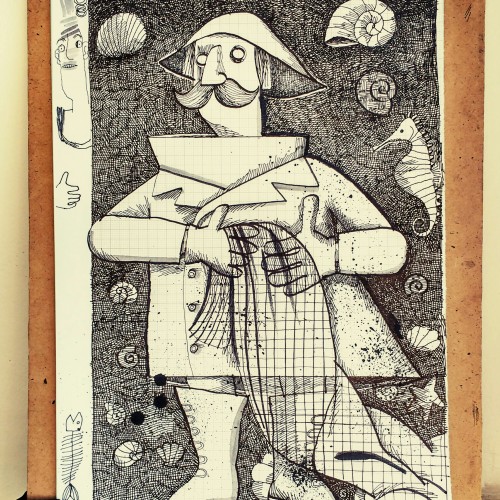
Dmitry Shostakovich (1906–1975)
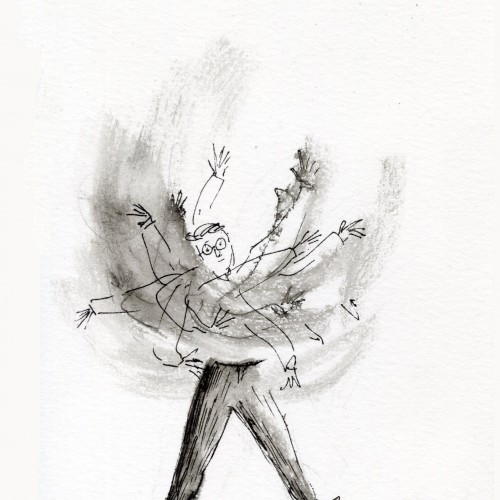
Shostakovich’s contemporaries do not recall seeing him working, at least not in the traditional sense. The Russian composer was able to conceptualize a new work entirely in his head, and then write it down with extreme rapidity—if uninterrupted, he could average twenty or thirty pages of score a day, making virtually no corrections as he went.
But this feat was apparently preceded by hours or days of mental composition—during which he “appeared to be a man of great inner tensions,” the musicologist Alexei Ikonnikov observed, “with his continually moving, ‘speaking’ hands, which were never at rest.”
Shostakovich himself was afraid that perhaps he worked too fast. “I worry about the lightning speed with which I compose,” he confessed in a letter to a friend. Undoubtedly this is bad. One shouldn’t compose as quickly as I do. Composition is a serious process, and in the words of a ballerina friend of mine, “You can’t keep going at a gallop.” I compose with diabolical speed and can’t stop myself.… It is exhausting, rather unpleasant, and at the end of the day you lack any confidence in the result. But I can’t rid myself of the bad habit.
- From Daily Rituals: How Artists Work by Mason Currey
#dailyrituals #inktober #shostakovich @masoncurrey
Something I drew a while ago, when I decided to look for things around the house that I could draw, rather than from photos.
This was the first thing I did, a pair of my brown shoes on top of a stool.
There are another 3 in the series of "things around the house", which I will post at some stage in the future.
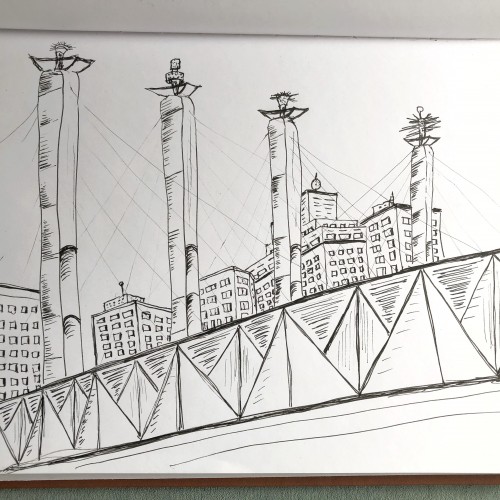
Landschaftpark Duisburg-Nord, Germany. This abandoned steel mill is transformed into a industrial heritage centre and landscape park. It's a great location for photographers and urban sketchers.