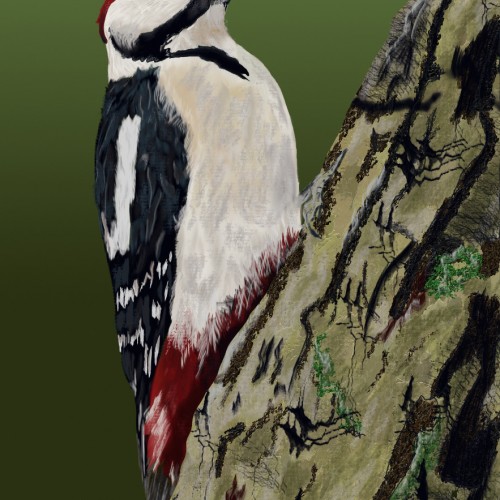
The Lesser Spotted Woodpecker is the smallest and least common of the UK's three species of woodpecker. It is most often found in the tops of trees where it creeps along branches in search of insects. Found in England, but rare in the north. Absent from Scotland and Ireland. Its 'drumming' is much quieter and less vigorous than that of the Great Spotted Woodpecker; its presence is often only given away by this or their call.
The lesser spotted woodpecker is small in size, being not much bigger than a house sparrow. Males are black and white, with a red crown cap, and females are plain black and white. They both have a distinctive white ladder marking down their black back.
**Did you know?**
There are now believed to be less than 3,000 pairs breeding annually in the UK compared to nearly 45,000 greater spotted woodpeckers.
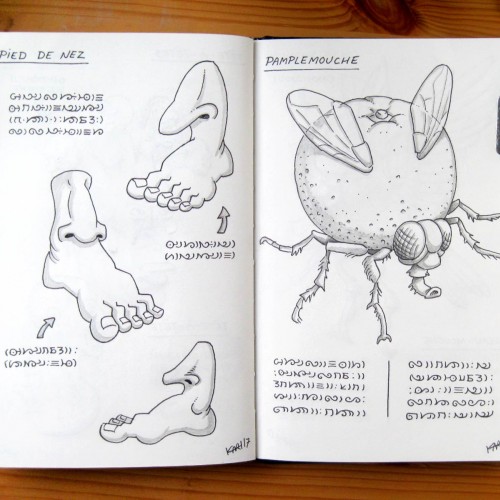
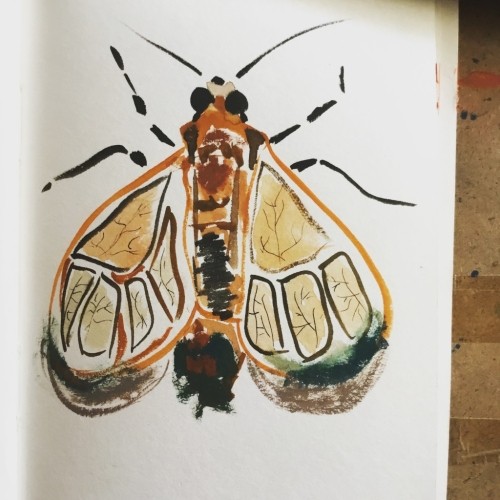
These patterns are all made from drawings pulled from my 2017 sketchbook project. I studied fiber arts in grad school and learned how to do repeat patterns - the old fashioned way by cutting and taping paper together... I haven't done any in 25 years - until this month!
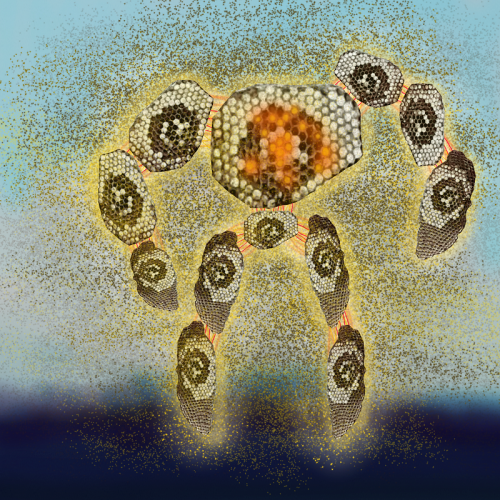
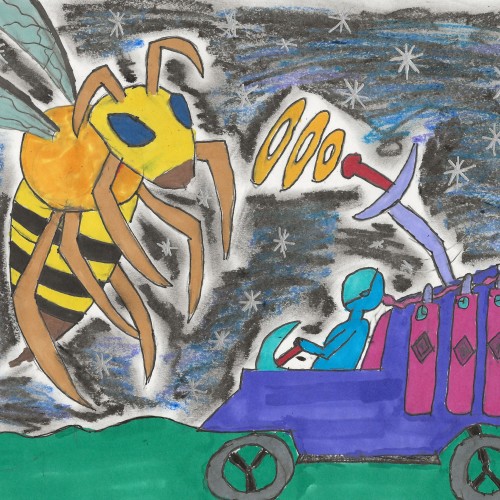
The Moon Mason Bees spread life throughout the galaxy in the world of Under a Hostile Sun!
Astronauts love them. Hate them. Hate to love them and love to hate them. The Moon Masons are larger than cars, have the curiosity of squirrels, the hive mind of insects and endless mutagenic powers.
https://muckraker.itch.io/under-a-hostile-sun
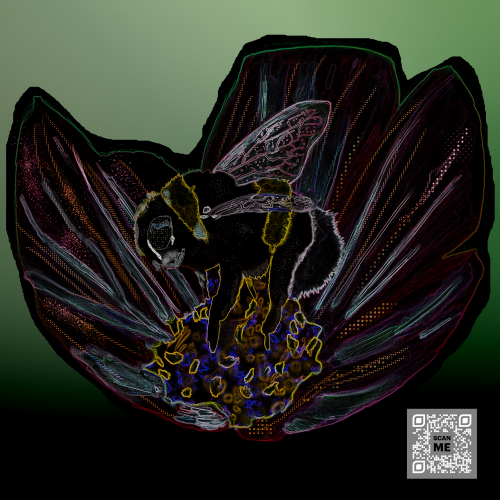
Flight of the bumblebee The lifecycle begins in spring, when rising temperatures awaken a queen bumblebee that has been hibernating alone in the soil. The queen will have spent the entire winter underground, using up reserves of energy stored as fat in her body. When she first emerges, she feeds on flowers, drinking nectar to gain energy. She will then begin to search for a suitable nest site. Frequent nesting sites include holes in the ground, tussocky grass, bird boxes and under garden sheds.