Sometimes, a good goodbye is also a fresh hello.
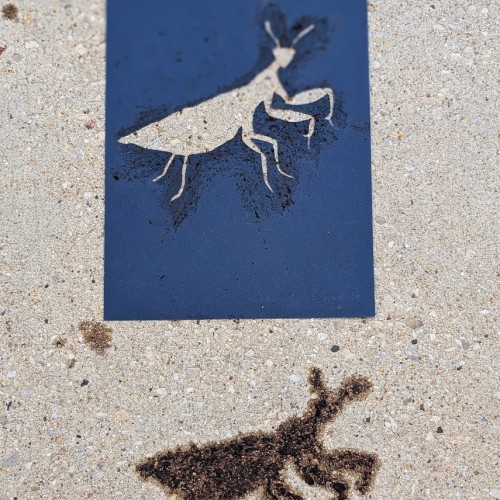
As we wrapped up our "Sacred Spaces" paintings, I asked our student teacher to design a one-day project—something playful, earthy, and engaging to ease the class into her care. She brought mud. Literally.
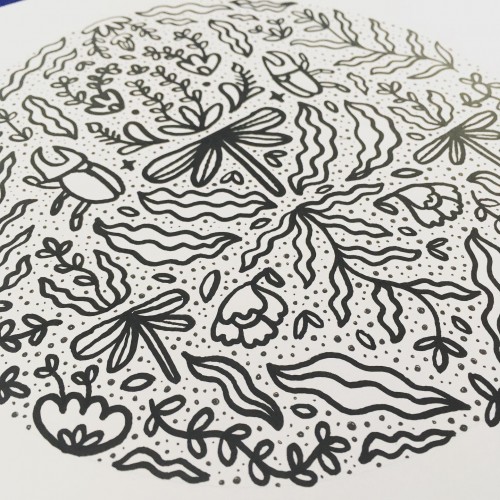
Using mud and simple stencils, students pressed images—flowers, insects, wings—onto the sidewalk behind our school. There's something timeless about making marks with the ground itself. It felt ancient and immediate at the same time.
These prints won’t last long, but maybe that’s the point. A fleeting image, a shared laugh, a new hand guiding the next phase of learning.
Art is about making marks. Not all of them need to be permanent.
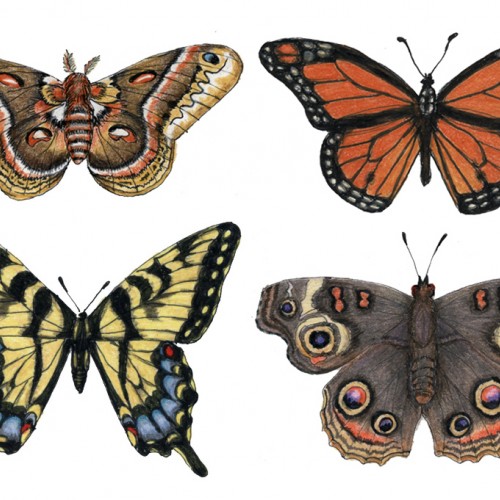
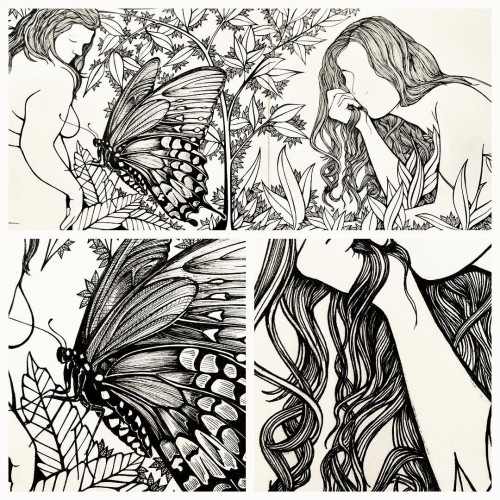
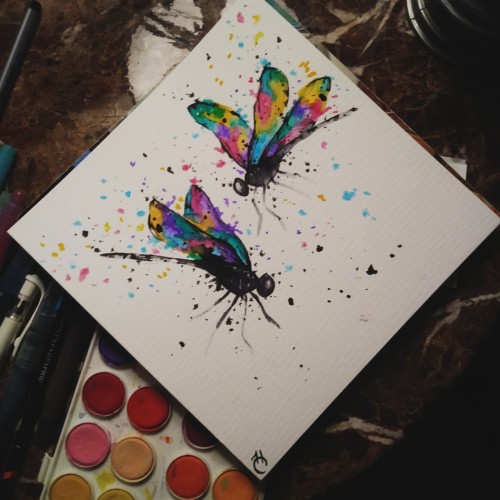
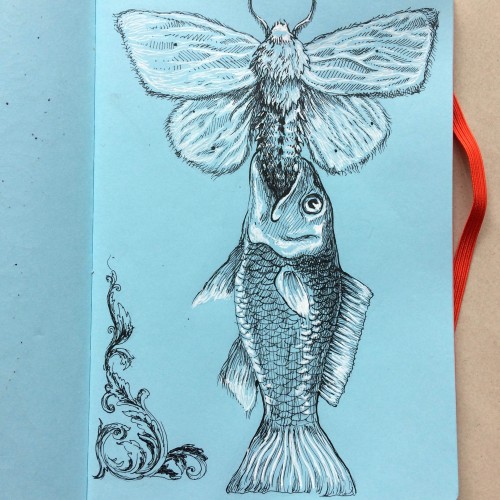
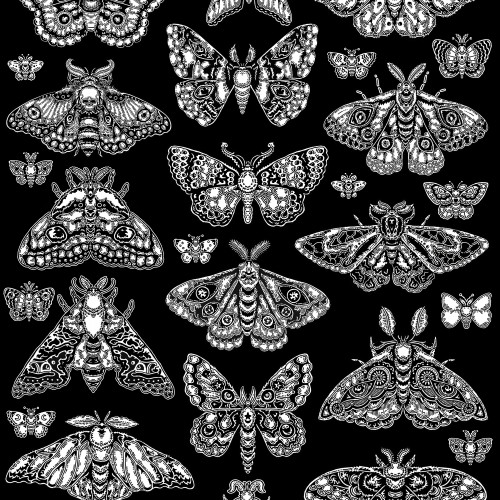
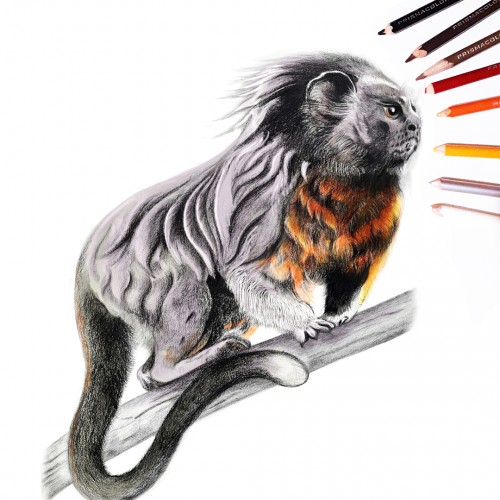
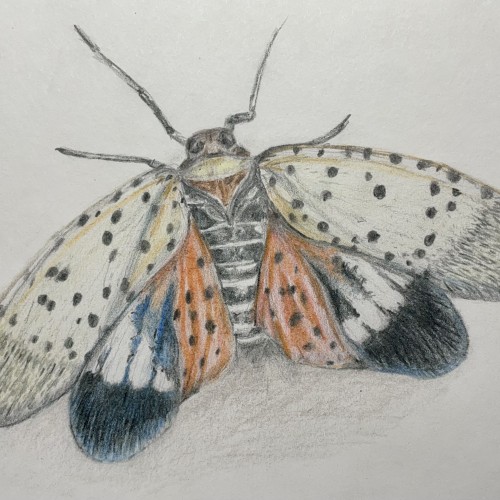
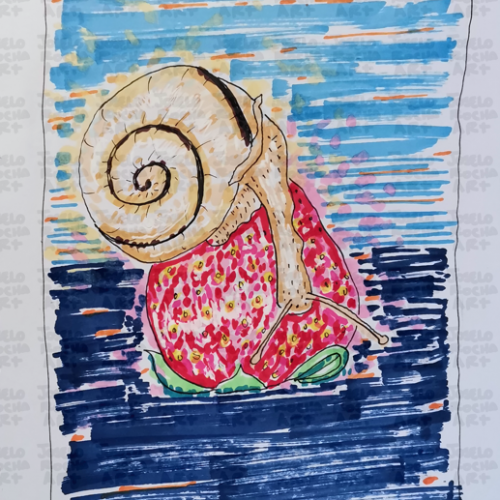
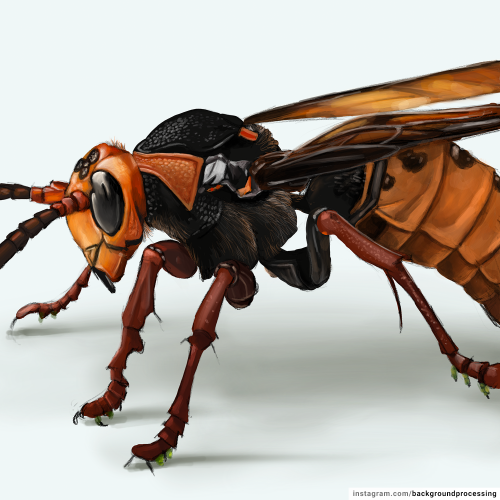
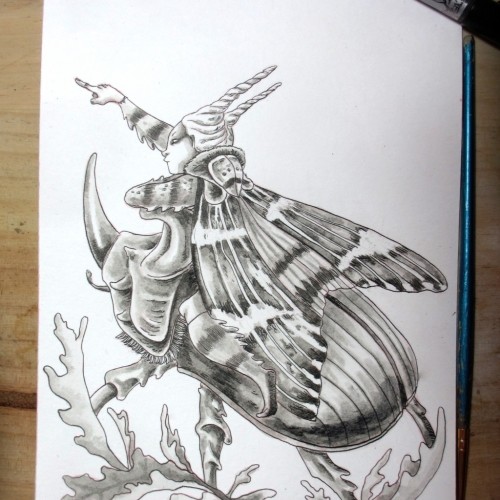
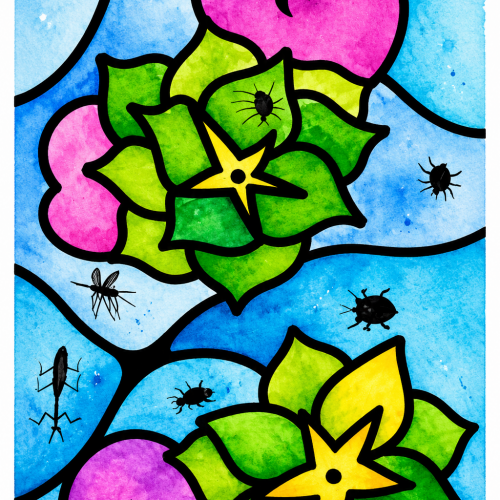
It's never been my practice to stick pins into insects and collect them that way, but drawing them is quite appealing. These are created with Prismacolor pencils and a Micron pen.
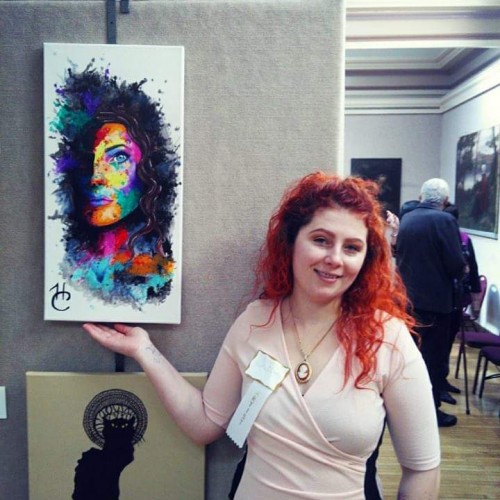
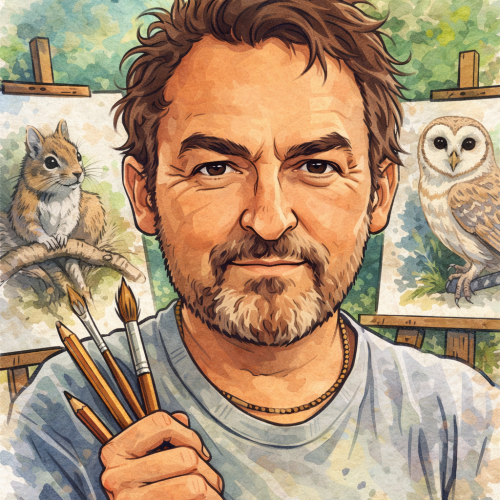
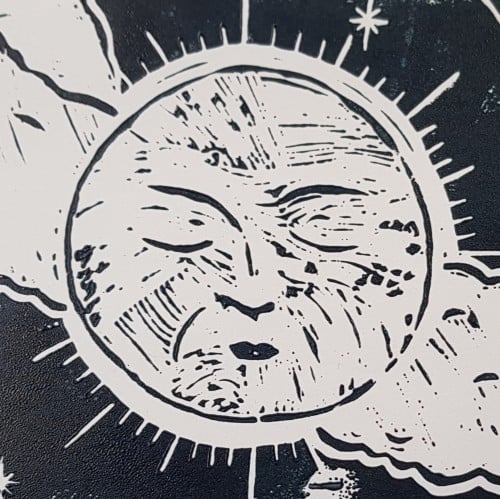
Hello, this is me in sunglasses. My name is Tricia (they/them) and I live on the east-coast of US in Maine (which is up by Canada). I look forward to the cooler weather. My goal is to draw more insects and moons in the future. Hope you have a great day~
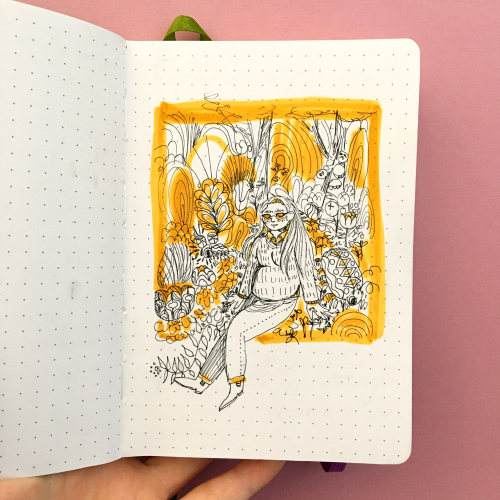
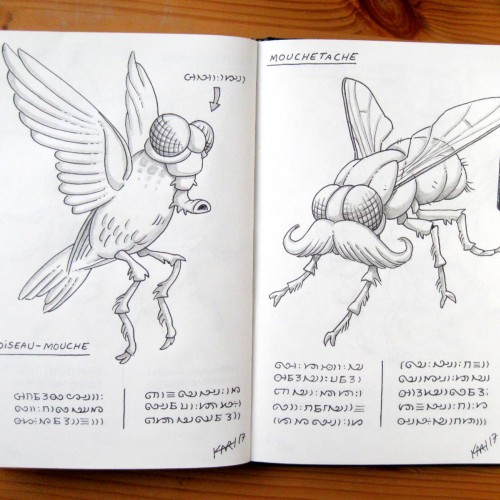
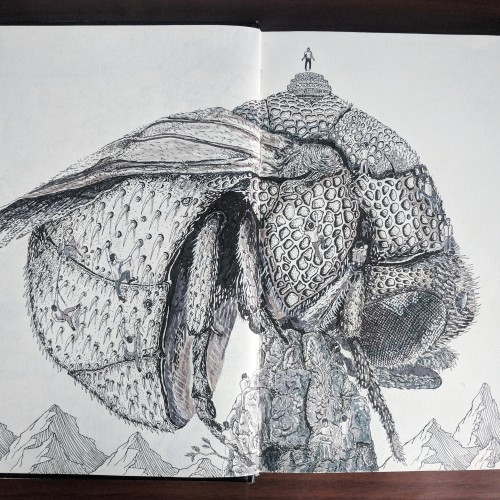
Every day in 2017 I drew in a Moleskine Japanese (Accordion Fold) Album (pocket size) with the goal of completing one continuous drawing all year. I filled up nearly six complete sketchbooks, completing a drawing that is 5.5 inches high and more than 600 inches wide. Now, what do I do with it?
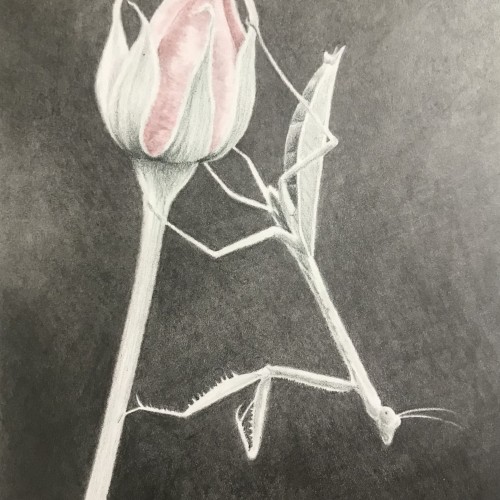
Mantid on a rose bud was done on Strathmore Bristol with Derwent Graphitint (tinted graphite) pencils. I love these insects and they are all over the rose bushes this time of year. I tried to capture her natural grace and beauty as she stepped down from her rose bud perch while eyeing her prey.
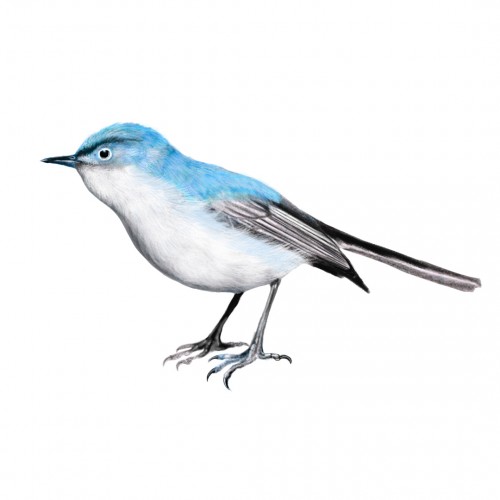
Mixed media, colored pencils and Photoshop. Blue-gray Gnatcatchers (Polioptila caerulea) are a very small songbirds and are most frequently encountered in pinyon-juniper habitat but can be found in any low-elevation areas with an abundance of shrubs. It prey mainly on small insects. Main source: https://www.instagram.com/camilojulianc/
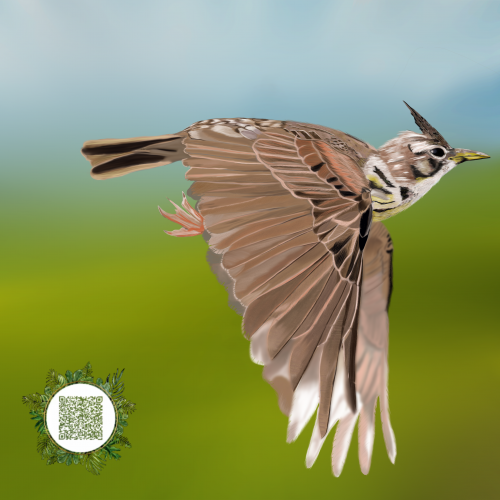
I just finished the Calandra Lark. Here are some facts about this beautiful bird...
Appearance: It's a large lark, about 17.5-20 cm long, with a robust build, a heavy bill, and noticeable pale eyebrows
. Its plumage is mainly greyish-brown streaked above and white below, with large black patches on the breast sides.
Habitat: This species is found in open plains, steppes, pastures, and dry cereal cultivations. It's mainly resident in the west of its range but Russian populations migrate further south in winter.
Diet: Their main food source is seeds, but they also consume insects when nesting.
Behaviour: Calandra Larks are known to be gregarious outside the breeding season, often forming large flocks.
Song: Their song is considered musical and slower than the Skylark's. It has been historically popular as a cagebird.
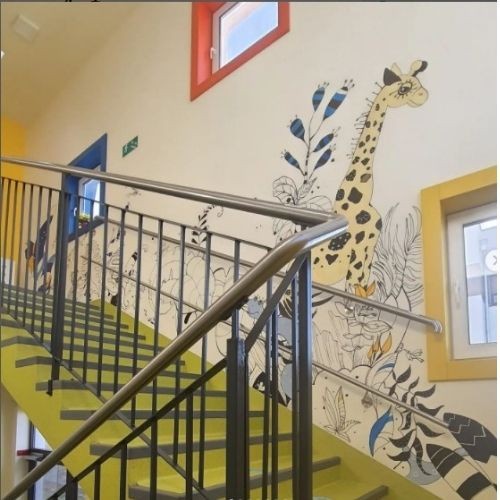
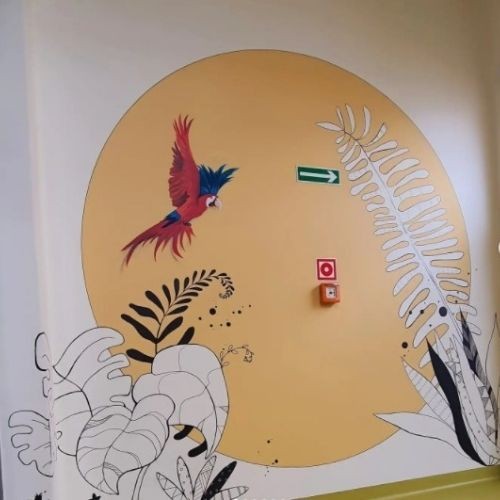
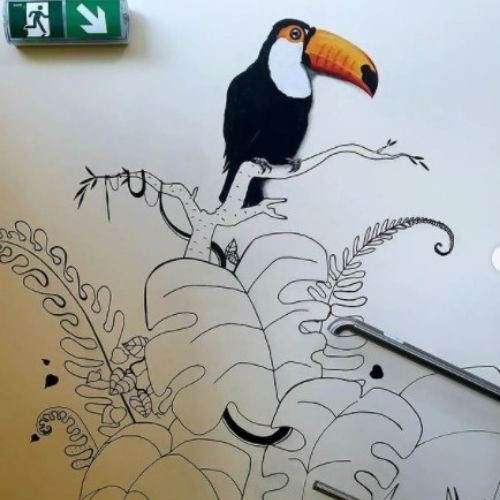
The implementation of the project for the Akademos kindergarten in Poznań has ended. The idea behind the project was to create a jungle staircase in which children will be able to cover something new every day while walking down the corridor. Many animals, reptiles, and insects are hidden in the thicket of plants. So that the number of details and small elements does not overwhelm the space, we used a black and white combination with small colorful accents, which are also to stimulate the imagination of children. Realistically painted birds are an additional decorative element, which can be a background for photo sessions.
The implementation of the project for the Akademos kindergarten in Poznań has ended. The idea behind the project was to create a jungle staircase in which children will be able to cover something new every day while walking down the corridor. Many animals, reptiles and insects are hidden in the thicket of plants. So that the number of details and small elements does not overwhelm the space, we used a black and white combination with small colorful accents, which are also to stimulate the imagination of children. Realistically painted birds are an additional decorative element, which can be a background for photo sessions.
The implementation of the project for the Akademos kindergarten in Poznań has ended. The idea behind the project was to create a jungle staircase in which children will be able to cover something new every day while walking down the corridor. Many animals, reptiles and insects are hidden in the thicket of plants. So that the number of details and small elements does not overwhelm the space, we used a black and white combination with small colorful accents, which are also to stimulate the imagination of children. Realistically painted birds are an additional decorative element, which can be a background for photo sessions.
Many thanks to @czapski.gallery for providing colorful paints, as well as to the kindergarten team who supported the activities.
Every person chooses his/her own path. Somepeople help others. Some people quit. Some people settle for less. That's the theme. I always loved the textures of insects so chose it as main thing to look at. And then trekking is easiest way of seeing struggle. That's about it.
After the success of last year's birth month flower drawings and the products I made with them, I decided to continue drawing flowers - this time it's all the state flowers and state insects. I'm a little behind on the insects.
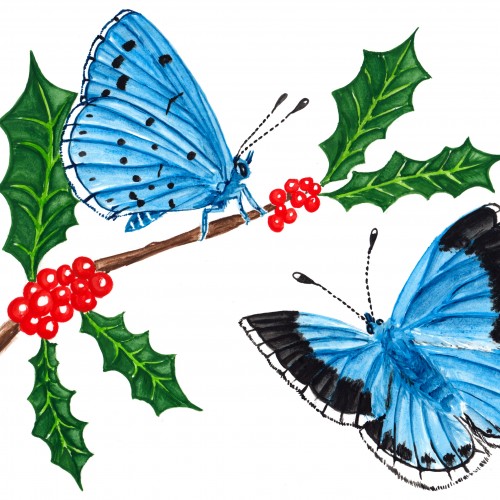
butterflies # ????? : two holly blues. This was a hard one and worthy of an art block
with top and bottom wings distinguishing the species, composition and pose was almost impossible. Cue two of the Holly Blues! :)
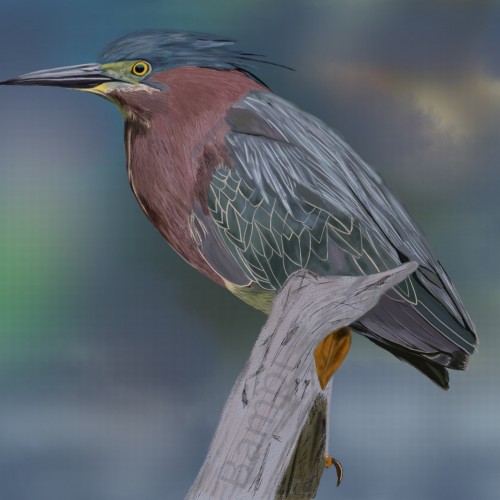
The Green Heron is one of the world’s few tool-using bird species. It often creates fishing lures with bread crusts, insects, and feathers, dropping them on the surface of the water to entice small fish.
Green Herons usually hunt by wading in shallow water, but occasionally they dive for deep-water prey and need to swim back to shore—probably with help from the webs between their middle and outer toes.
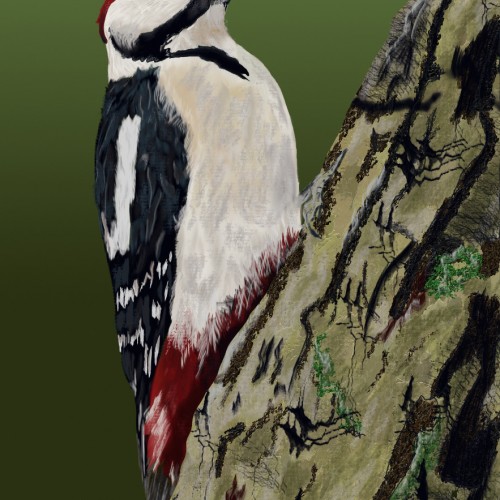
The Lesser Spotted Woodpecker is the smallest and least common of the UK's three species of woodpecker. It is most often found in the tops of trees where it creeps along branches in search of insects. Found in England, but rare in the north. Absent from Scotland and Ireland. Its 'drumming' is much quieter and less vigorous than that of the Great Spotted Woodpecker; its presence is often only given away by this or their call.
The lesser spotted woodpecker is small in size, being not much bigger than a house sparrow. Males are black and white, with a red crown cap, and females are plain black and white. They both have a distinctive white ladder marking down their black back.
**Did you know?**
There are now believed to be less than 3,000 pairs breeding annually in the UK compared to nearly 45,000 greater spotted woodpeckers.