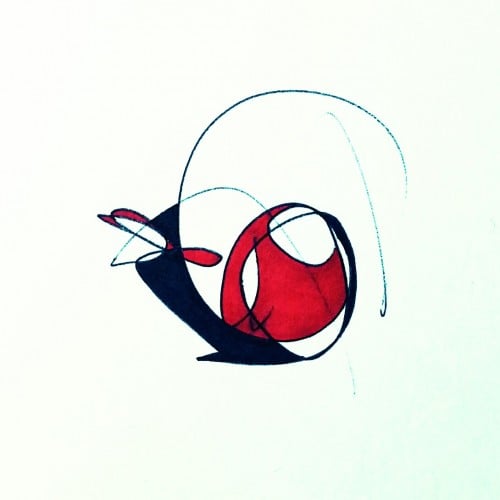
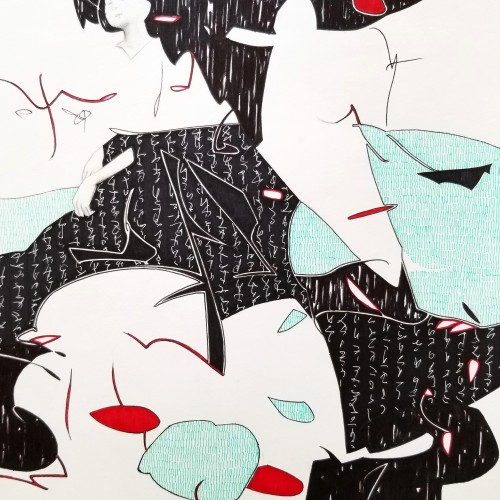
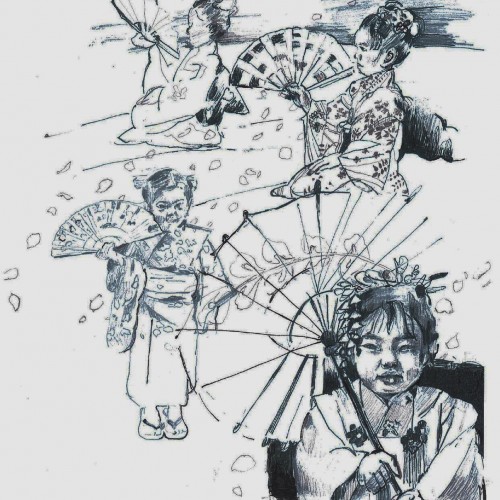
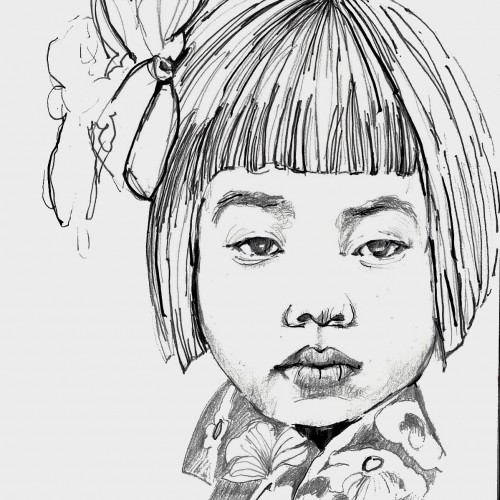
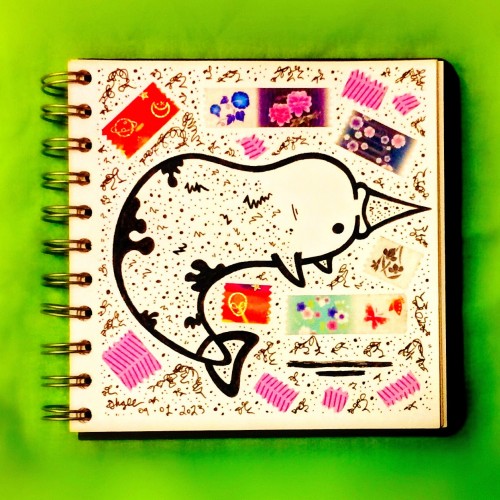
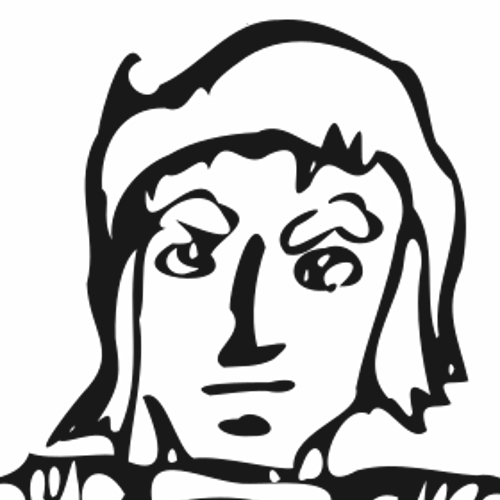
Whether the script in the background is an actual sutra is not the concern, even if it is, would it be readable to most? I question the use of lines in Calligraphy. Without the recognition of the exact words or meaning, can we still appreciate the quality and skills involved? Armed with a Chinese writing foundation, I adapted the use of the eight strokes (the basis of construction to Chinese character). The `writings’ resembles Chinese/Japanese writings but in fact, they are not. I needed a texture. With language as a symbol of culture, by visually adapting these kind of lines endears us to the image.
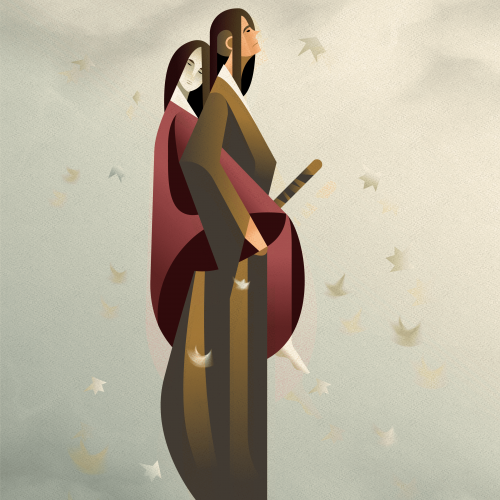
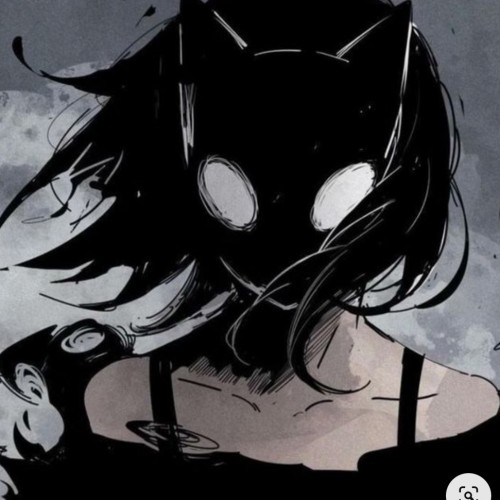
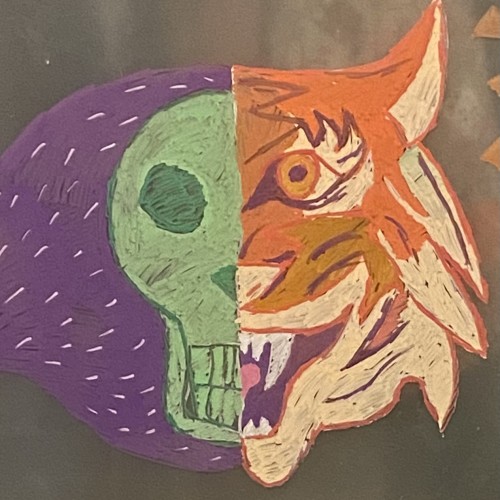
A Japanese demon known as a yokai, who started off as a human but whose emotions ran so deep, she ended up transforming into something much more monstrous…
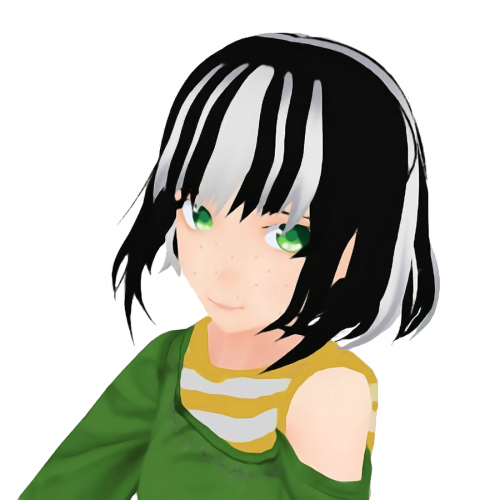
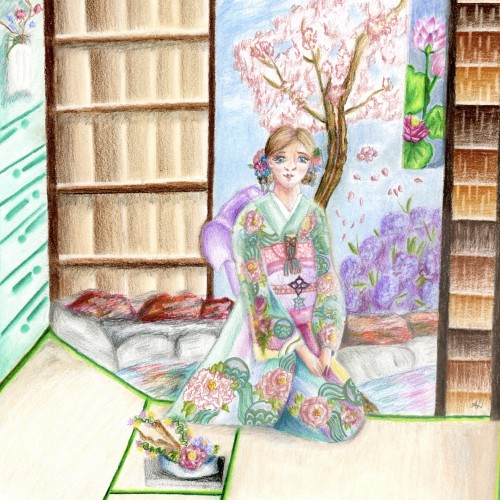
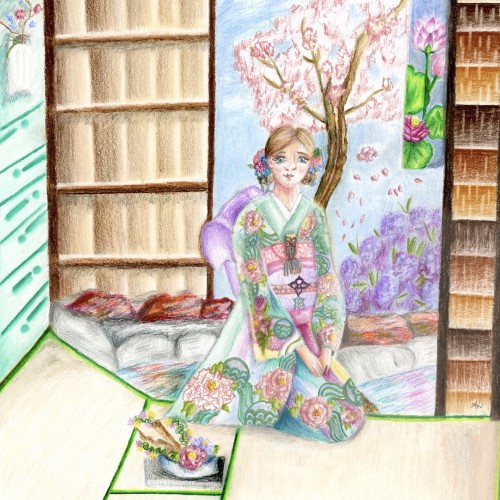
My latest illustration! I recreated my character Okimoto Manami (a computer graphics piece back in 2013) in a traditional Japanese setting. She is in a traditional house overlooking a garden that has a pond, a cherry blossom tree and a flower bush. She also has Ikebana (flower arrangement) peony piece near her. Theres also peony designs on her kimono.The kind of kimono she’s wearing is a furisode.I have advanced quite a bit in the past eight years and I prefer using traditional mediums these days! Colored pencils used: Caran d’ache luminance, Posca colored pencils, Faber Castell polychromos, etc..
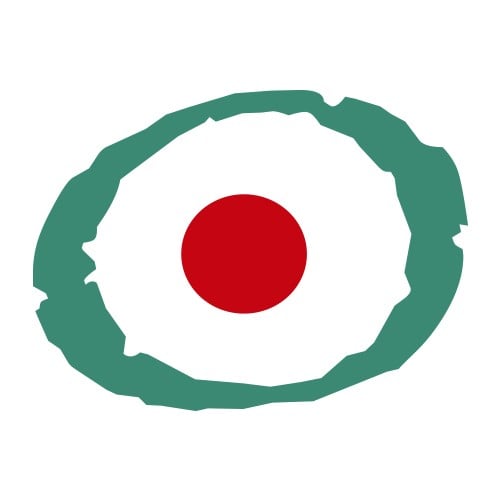
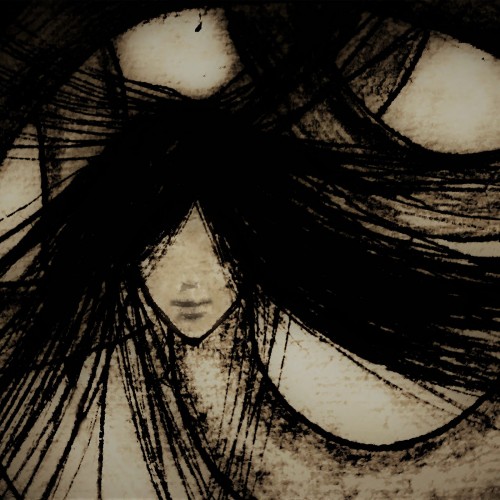
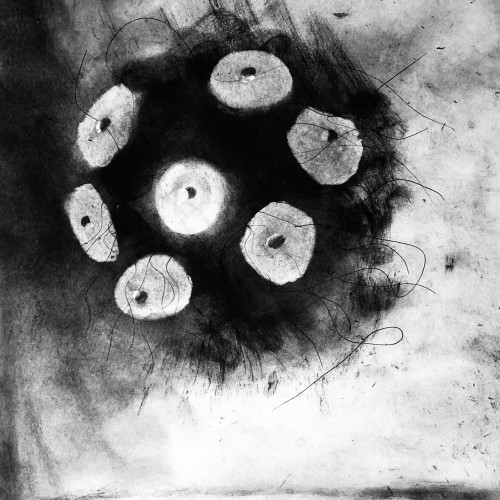
The name "Mokumokuren" literally means "many eyes" or "continuous eyes". The Mokumokuren is considered by the Japanese to be one of the traditional inhabitants of haunted houses.
The only way to remove the spirit from the wall is to patch up the holes in it.