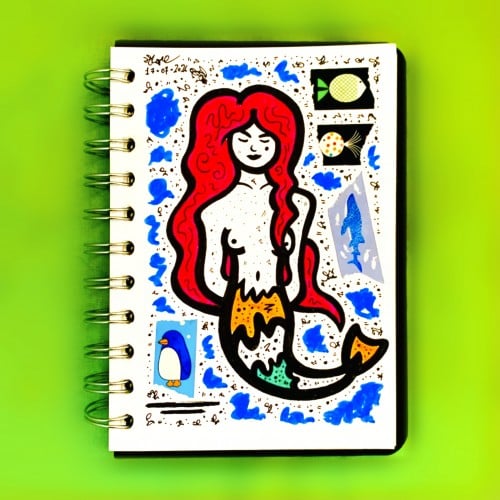
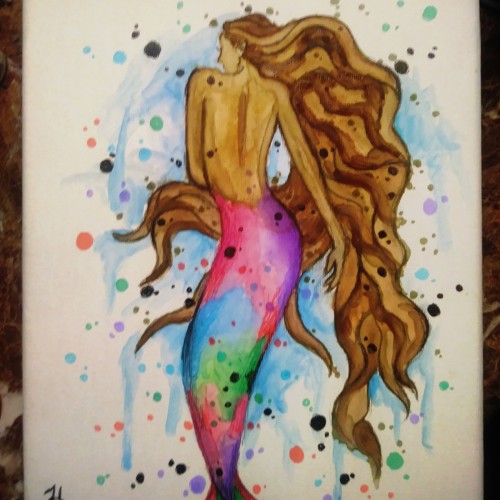
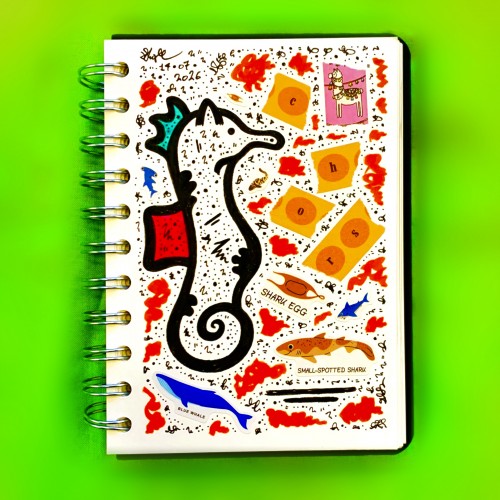
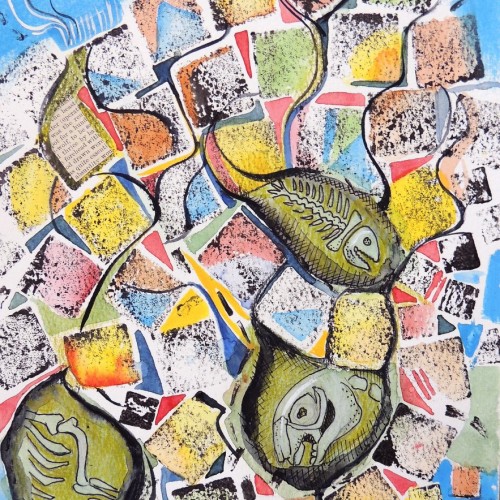
Tried drawing a mermaid yesterday because why not, as I always say… unfortunately my first few attempts looked like someone punished a toilet, so I nixed that idea until now. Third (I think) time lucky?
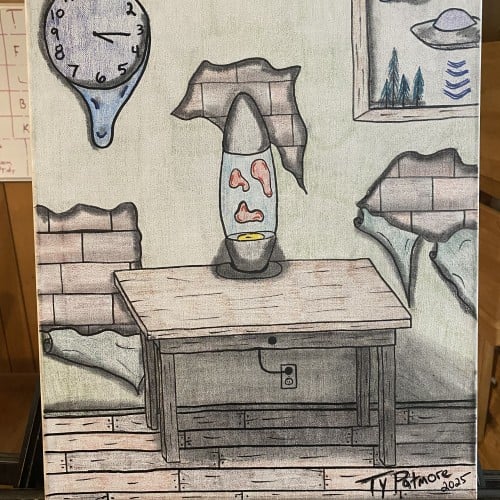
In “I Love Lamp,” Ty Patmore blends nostalgia, humor, and subtle unease into a surreal domestic scene where time, space, and memory feel slightly off-center. A lava lamp—softly glowing with drifting shapes—sits on a worn wooden table, acting as the sole beacon of warmth inside a room that is quietly falling apart. The wallpaper peels back to reveal fractured brick beneath, as if the structure itself is shedding its old skin.
A melting wall clock drips down the surface like time losing its grip, while a framed picture of a UFO drifting over pine trees hints that even the outside world may not be quite right. Every object bends reality just enough to make the viewer question whether this room is comforting… or unsettling.
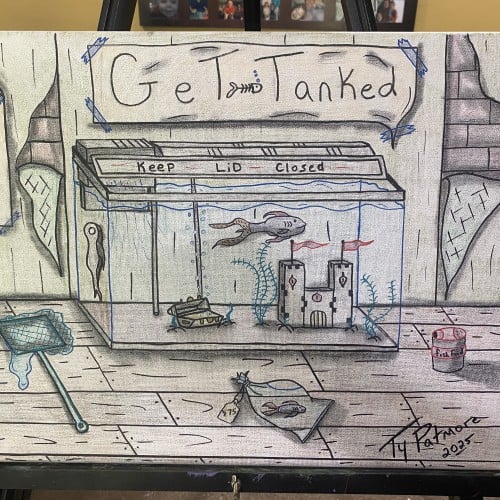
A playful, mixed-media tribute to the aquarium life. This piece captures a slice of a fish's world, complete with a warning to "Keep Lid Closed", miniature castle, forgotten net, and a $75 price tag on a fish. It's a whimsical look at the serious business of pet fish ownership.
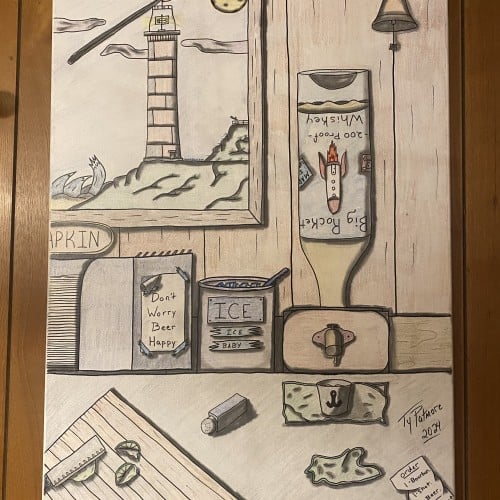
A whimsical yet reflective scene blending humor and nostalgia. Ty Patmore transforms an ordinary tavern tabletop into a surreal narrative—where a whiskey bottle doubles as a rocket, a lighthouse watches over the horizon, and every object hums with quiet irony. Mixing ink and graphite with storytelling detail, this piece captures the playful spirit of escapism and the bittersweet comfort found in small rituals.
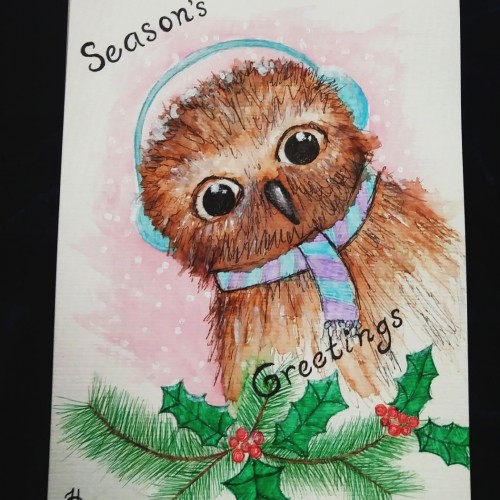
This is my first holiday card of the year. I paint them and get them printed on 5x7 folded cardstock. I sell them $5 a piece of $4 a piece when you buy 2 or more. I do take online orders so let me know if you would like to purchase one.
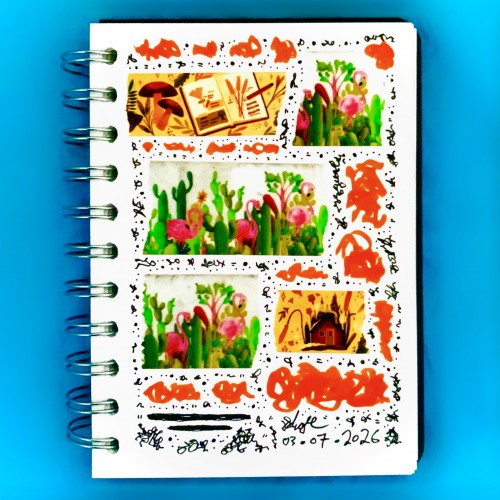
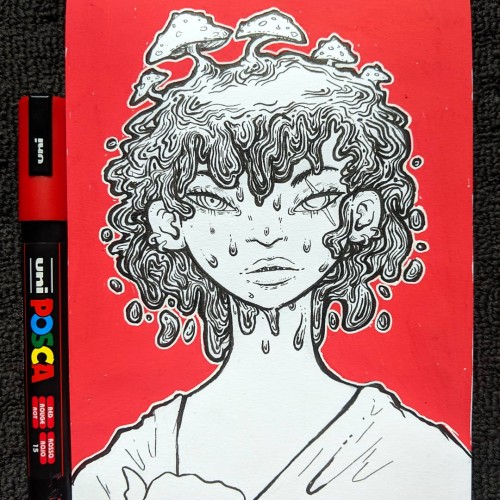
I can grow my own garden. I did this drawing in a stillman and birn alpha sketchbook with a kuretake bimoji pen (+ the posca paint pen for the background). Thank you for looking!
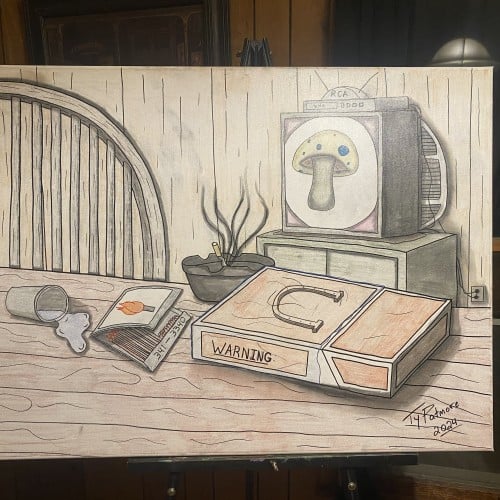
"Nowhere Fast" is a compelling still life that blends mundane domesticity with surreal, slightly ominous undertones. The scene is anchored by a wooden table where a spilled glass, a pack of matches, and an ashtray with a smoldering cigarette suggest a moment of interrupted pause or quiet, long-term stagnation. Dominating the foreground is an oversized, weathered cigarette carton boldly labeled "WARNING", its subtle but unsettling presence hinting at a consumption that leads nowhere.
In the background, a vintage RCA television set displays a stylized amanita mushroom, a recurring symbolic motif that adds a layer of psychedelia and altered perception to the otherwise drab setting. The earthy, muted color palette and soft lighting create a feeling of weary introspection, capturing a sense of being perpetually stuck in a cycle. The piece masterfully uses everyday objects to explore themes of vice, time, and the quiet, slow march toward an uncertain destination.
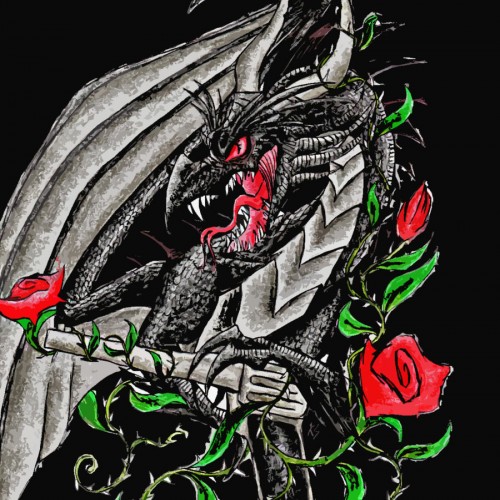
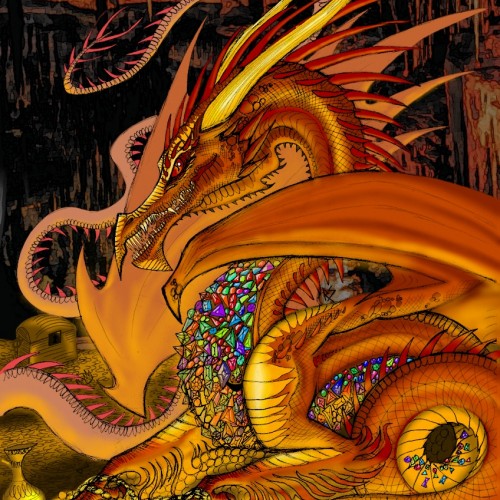
My vision of the character ‘Smaug’ from J.R.R. Tolkien’s ‘The Hobbit’.
Pencil sketch, coloured digitally on IbisPaint X.
Here is a passage from The Hobbit describing Smaug’s appearance: “There he lay, a vast red-golden dragon, fast asleep; thrumming came from his jaws and nostrils, and wisps of smoke, but his fires were low in slumber. Beneath him, under all his limbs and his huge coiled tail, and about him on all sides stretching away across the unseen floors, lay countless piles of precious things, gold wrought and unwrought, gems and jewels, and silver red-stained in the ruddy light. Smaug lay, with wings folded like an immeasurable bat, turned partly on one side, so that the hobbit could see his underparts and his long pale belly crusted with gems and fragments of gold from his long lying on his costly bed.”