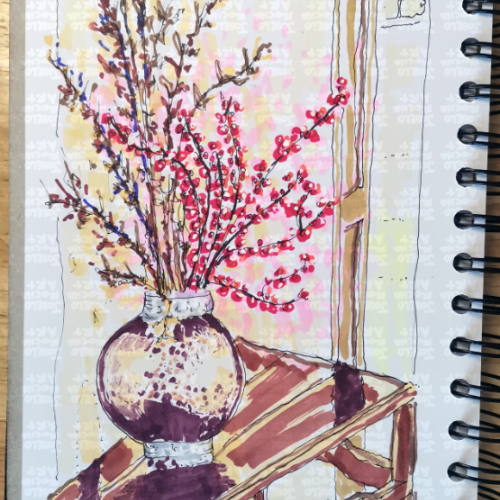
A vibrant exploration of color and line, this piece captures the ephemeral beauty of red plum blossoms in a textured, contemporary sketch style. Perfect for those who appreciate the intersection of traditional botanical themes and modern, expressive artistry.
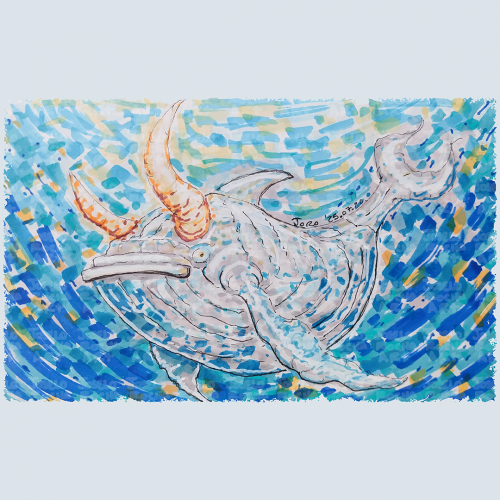
A fantastical bullwhale creature with a mix of whale and bull features glides through a vibrant, swirling, blue and orange hues body of water. The colors blend in a mosaic style, enhancing the creature's mythical presence with a composition that creates a sense of movement and depth, capturing an imaginative underwater scene.
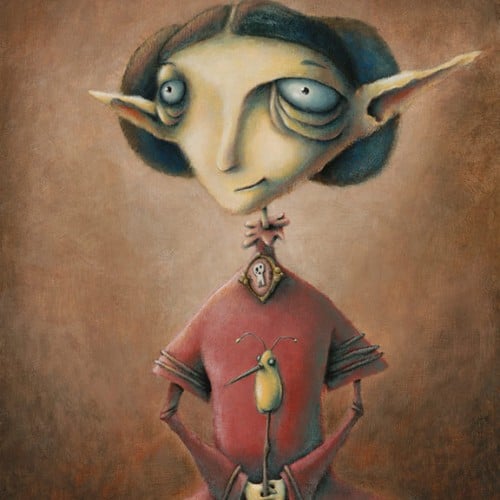
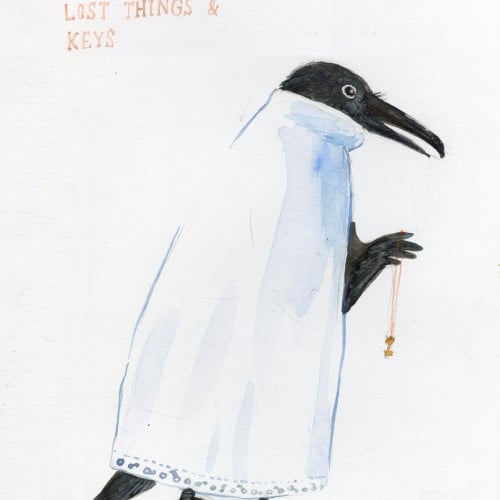
Patron Saint of Lost Keys and Small Things.
Reminded me of this poem by Elizabeth Bishop.
One Art
The art of losing isn’t hard to master;
so many things seem filled with the intent
to be lost that their loss is no disaster.
Lose something every day. Accept the fluster
of lost door keys, the hour badly spent.
The art of losing isn’t hard to master.
Then practice losing farther, losing faster:
places, and names, and where it was you meant
to travel. None of these will bring disaster.
I lost my mother’s watch. And look! my last, or
next-to-last, of three loved houses went.
The art of losing isn’t hard to master.
I lost two cities, lovely ones. And, vaster,
some realms I owned, two rivers, a continent.
I miss them, but it wasn’t a disaster.
—Even losing you (the joking voice, a gesture
I love) I shan’t have lied. It’s evident
the art of losing’s not too hard to master
though it may look like (Write it!) like disaster.
A tiger wearing a teal suit and top hat is depicted against a muted background, giving an elegant and whimsical appearance. The animal's serious expression is emphasized by the formal attire.
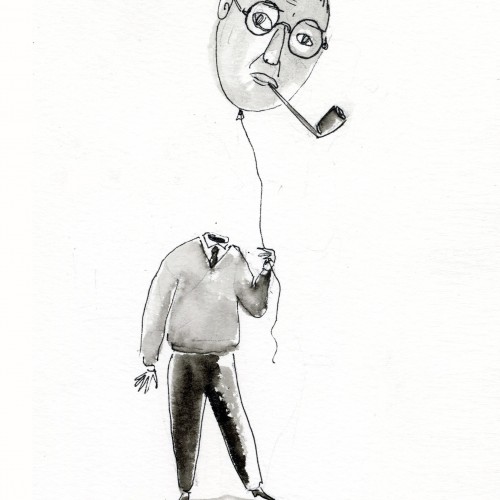
Jean-Paul Sartre (1905–1980)
By the 1950s, too much work on too little sleep—with too much wine and cigarettes—had left Sartre exhausted and on the verge of collapse. Rather than slow down, however, he turned to Corydrane, a mix of amphetamine and aspirin then fashionable among Parisian students, intellectuals, and artists (and legal in France until 1971, when it was declared toxic and taken off the market). The prescribed dose was one or two tablets in the morning and at noon. Sartre took twenty a day, beginning with his morning coffee and slowly chewing one pill after another as he worked. For each tablet, he could produce a page or two of his second major philosophical work, The Critique of Dialectical Reason.
The biographer Annie Cohen-Solal reports, “His diet over a period of twenty-four hours included two packs of cigarettes and several pipes stuffed with black tobacco, more than a quart of alcohol—wine, beer, vodka, whisky, and so on—two hundred milligrams of amphetamines, fifteen grams of aspirin, several grams of barbiturates, plus coffee, tea, rich meals.”
- From Daily Rituals: How Artists Work by Mason Currey
#dailyrituals #inktober #jeanPaulSartre @masoncurrey
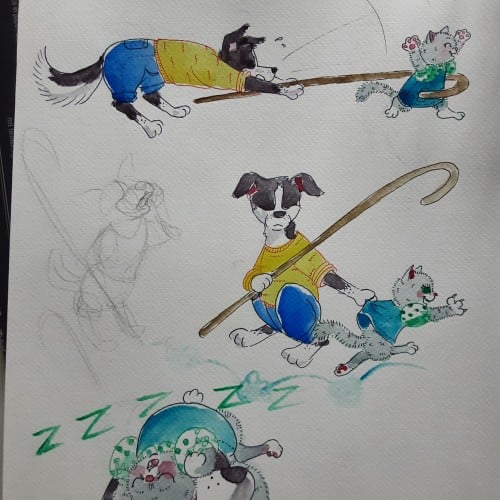
Having younger siblings is 50% about having spoiled rotten playmates and 50% about making sure those little morons dont accidentaly kill themselves. Border collies are so hard to draw antropomorph! Ever noticed how they most of the time keep their head lover than the bum?
"She stopped to speak to him, altering her mind, and went on her way."
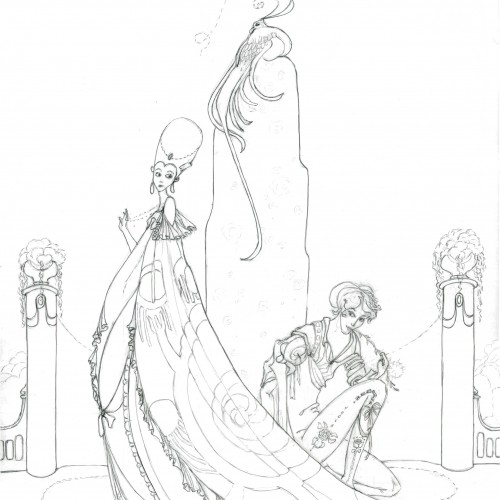
Trying to learn more about Kay Nielsen's style. He illustrated folk and fairy tales in the early 1900s for Grimm and Disney and others. I love his dark/moody style with everything so flowy, elongated, elegant, and tragic. And his amazing compositions.
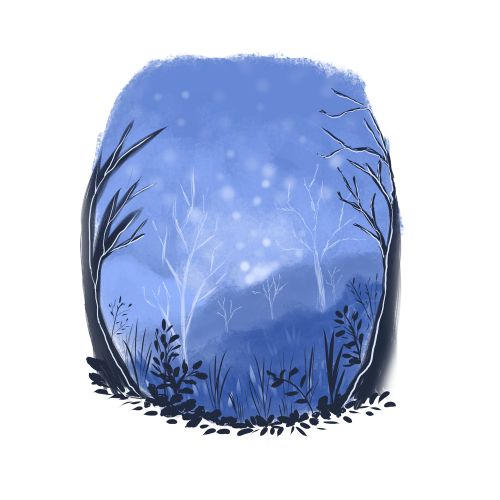
I feel only positive emotions after drawing this landscape.
It's a bit wintery, snowy, and magical.
I love the background texture. But I still need to work on the details.
Recently, I discovered the miraculous power of gouache. I ordered paints a few days ago (still waiting for the shipment). That's why there are only digital versions for now.
I have already purchased a course on the Domestika platform. I'm going to try my skills at traditional painting on paper. It will be a big challenge. Fortunately, I have a great teacher :) Thanks, Ruth Wilshaw, for your Domestika course and daily inspiration to create!
Day 6 of #whimsicalByMamaminia art challenge.