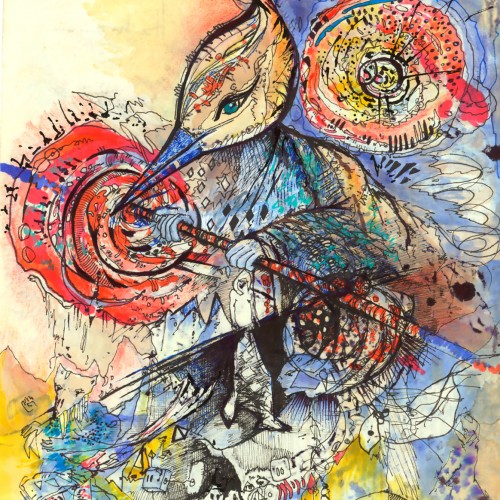
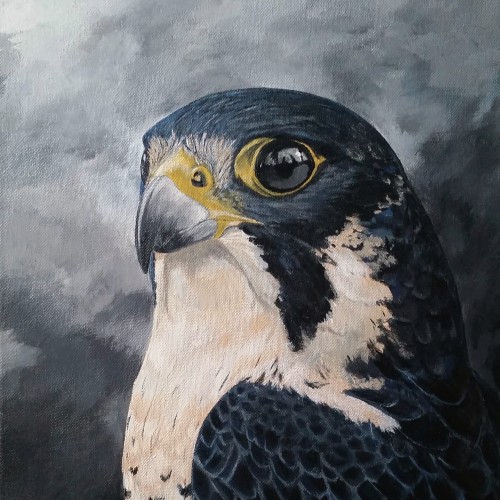
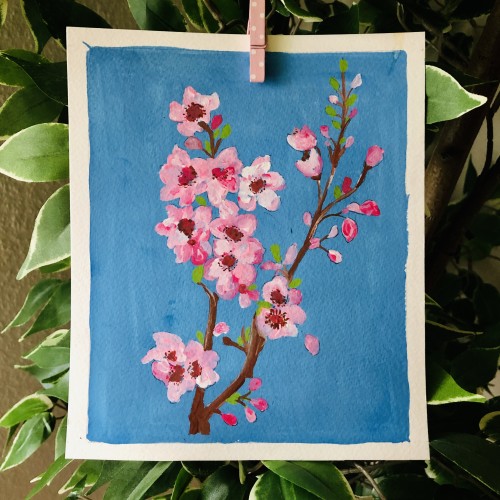
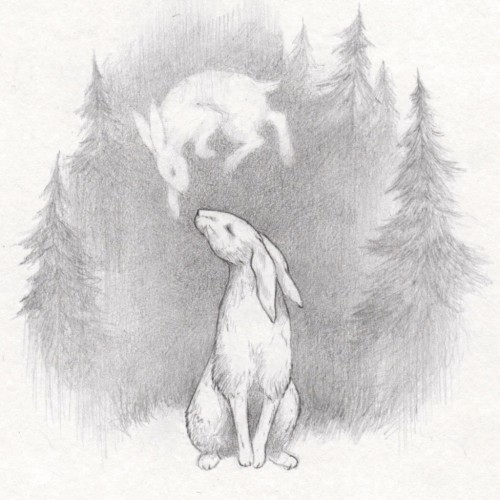
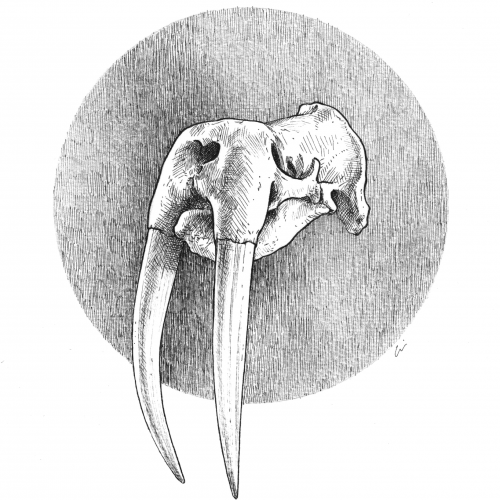
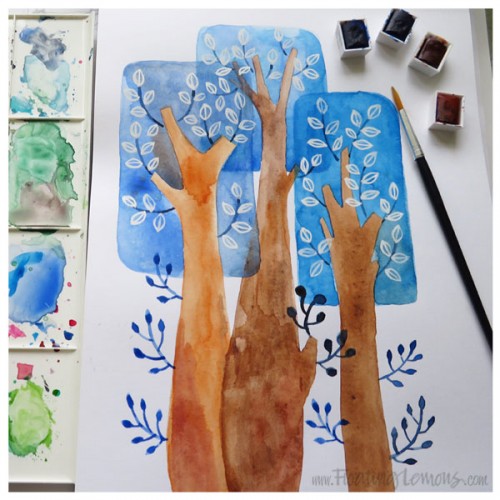
Mixed media artworks. Created in conjunction with each other, on a single piece of paper. As the colors of marker or watercolor bled through, so I worked with the motifs on both sides. It is no secret that i absolutely love birds and they feature so heavily in my drawing/illustrative work.
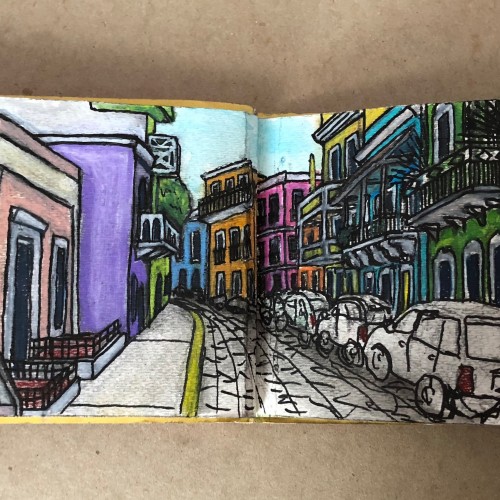
This is one of the pages of my handmade picture book (made w/ watercolor paper, watercolor paint, color pencils, and pen & ink). I really wanted to focus on illustrating the beauty of the architecture and vibrant colors of the buildings.
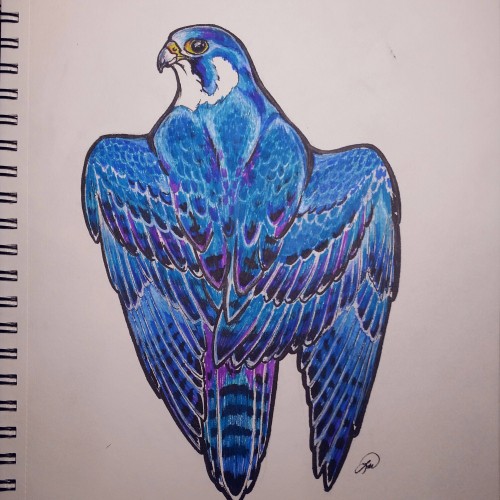
Messing around with very mixed media. Pen, pencil, color pencil, colored sharpies, brush pen and acrylic pen. Just threw everything within arms reach at it lol.
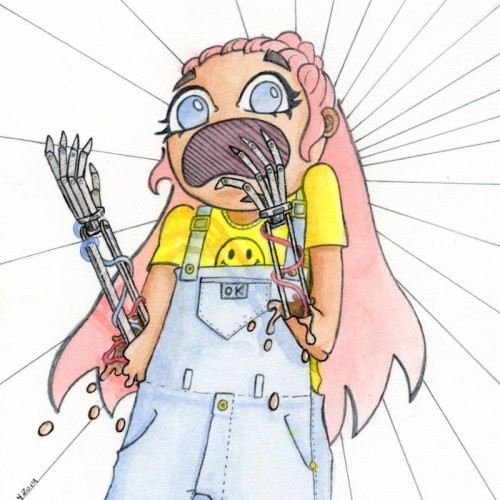
Unaware - i don't think there's a good way to find out you're a robot...but having your skin melt off your arms to reveal a metal skeleton is probably not ideal.
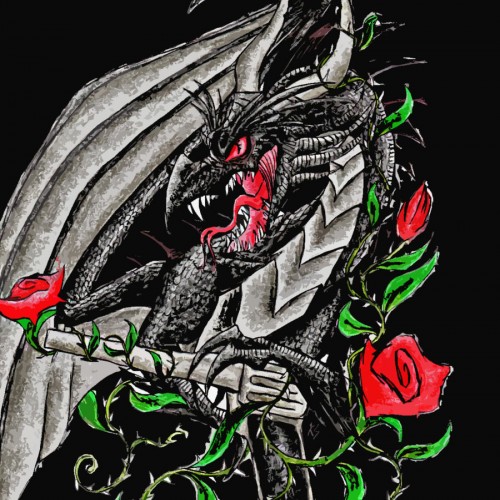
My vision of the character ‘Smaug’ from J.R.R. Tolkien’s ‘The Hobbit’.
Pencil sketch, coloured digitally on IbisPaint X.
Here is a passage from The Hobbit describing Smaug’s appearance: “There he lay, a vast red-golden dragon, fast asleep; thrumming came from his jaws and nostrils, and wisps of smoke, but his fires were low in slumber. Beneath him, under all his limbs and his huge coiled tail, and about him on all sides stretching away across the unseen floors, lay countless piles of precious things, gold wrought and unwrought, gems and jewels, and silver red-stained in the ruddy light. Smaug lay, with wings folded like an immeasurable bat, turned partly on one side, so that the hobbit could see his underparts and his long pale belly crusted with gems and fragments of gold from his long lying on his costly bed.”
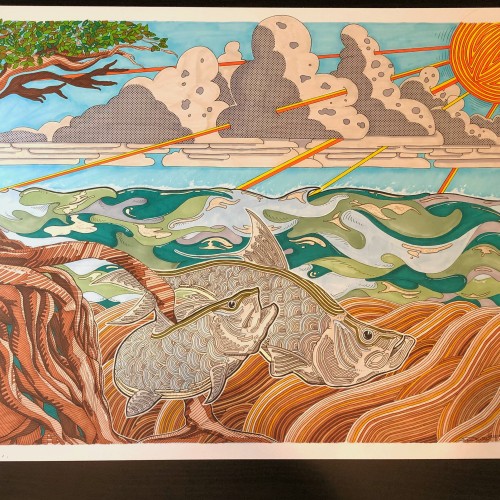
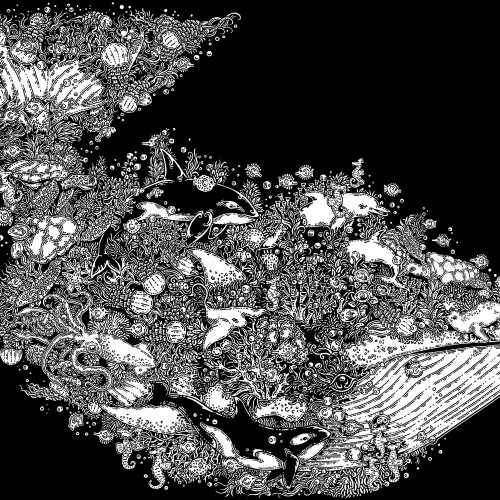
More random drawings I worked on. This is a Great Whale with a whole ecosystem within the illustration. I enjoy these. Artwork by Janelle Dimmett. 2026. www.janelledimmett.com
Thought I'd paint a Red Baby Panda as there so adorable, was originally done mostly in one of Magmas Online Art Jams then finished off in Infinite Painter
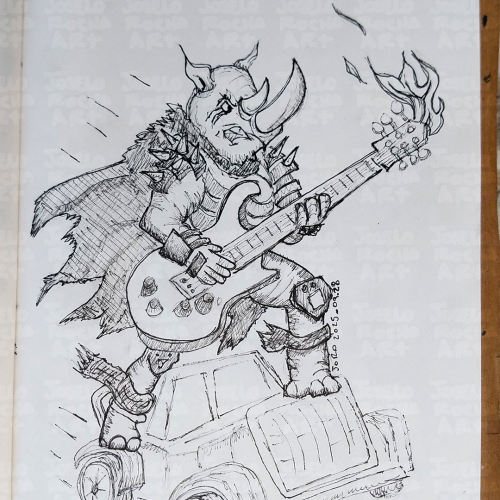
A Rhino energetically plays an electric guitar with flames blazing from the headstock. The rhinoceros stands on a moving car, evoking a sense of wild, rebellious energy.
A bonsai tree sits in a black pot against a bright yellow circular background with humorous text surrounding it. The words "Why aren't they called... Bonsai People?" suggest a playful twist on the terms little person, person with dwarfism or person of short stature.
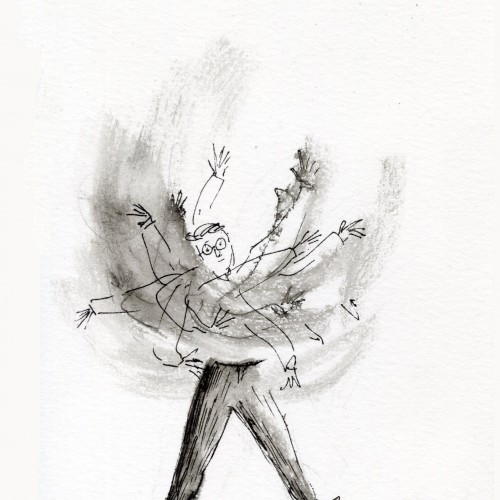
Dmitry Shostakovich (1906–1975)
Shostakovich’s contemporaries do not recall seeing him working, at least not in the traditional sense. The Russian composer was able to conceptualize a new work entirely in his head, and then write it down with extreme rapidity—if uninterrupted, he could average twenty or thirty pages of score a day, making virtually no corrections as he went.
But this feat was apparently preceded by hours or days of mental composition—during which he “appeared to be a man of great inner tensions,” the musicologist Alexei Ikonnikov observed, “with his continually moving, ‘speaking’ hands, which were never at rest.”
Shostakovich himself was afraid that perhaps he worked too fast. “I worry about the lightning speed with which I compose,” he confessed in a letter to a friend. Undoubtedly this is bad. One shouldn’t compose as quickly as I do. Composition is a serious process, and in the words of a ballerina friend of mine, “You can’t keep going at a gallop.” I compose with diabolical speed and can’t stop myself.… It is exhausting, rather unpleasant, and at the end of the day you lack any confidence in the result. But I can’t rid myself of the bad habit.
- From Daily Rituals: How Artists Work by Mason Currey
#dailyrituals #inktober #shostakovich @masoncurrey
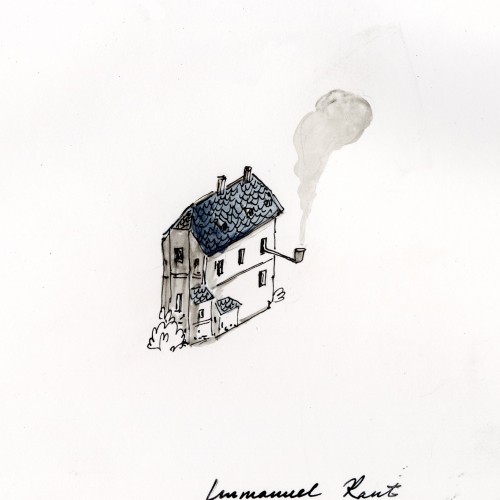
Immanuel Kant (1724–1804)
Kant’s biography is unusually devoid of external events.
As Heinrich Heine wrote: The history of Kant’s life is difficult to describe. For he neither had a life nor a history.
In actual fact, as Manfred Kuehn argues in his 2001 biography, Kant’s life was not quite as abstract and passionless as Heine and others have supposed…. If he failed to live a more adventurous life, it was largely due to his health: the philosopher had a congenital skeletal defect that caused him to develop an abnormally small chest, which compressed his heart and lungs and contributed to a generally delicate constitution. In order to prolong his life with the condition—and in an effort to quell the mental anguish caused by his lifelong hypochondria—Kant adopted what he called “a certain uniformity in the way of living and in the matters about which I employ my mind.”
This routine was as follows: Kant rose at 5:00 A.M., after being woken by his longtime servant, a retired soldier under explicit orders not to let the master oversleep. Then he drank one or two cups of weak tea and smoked his pipe. According to Kuehn, “Kant had formulated the maxim for himself that he would smoke only one pipe, but it is reported that the bowls of his pipes increased considerably in size as the years went on.”
- From Daily Rituals: How Artists Work by Mason Currey
#dailyrituals #inktober #ImmanuelKant @masoncurrey