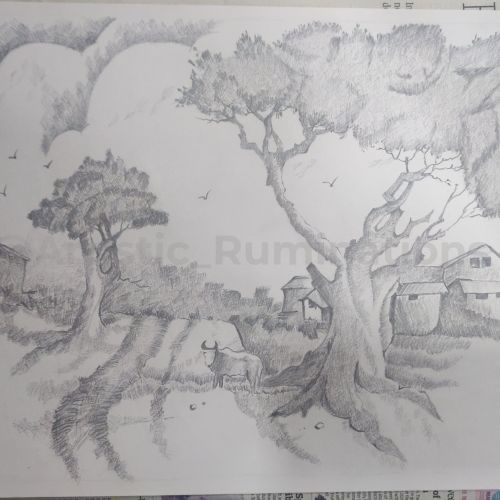
In this captivating cross-hatched pencil shading, a tranquil village scene comes to life. The intricate strokes create a harmonious blend of light and shadow, showcasing the serene beauty of rural life. Thatched roofs, winding pathways, and towering trees are meticulously detailed, inviting viewers to step into the peaceful simplicity of village existence. The gentle interplay of shades and textures evokes a sense of nostalgia and calm, capturing the essence of a timeless village story.
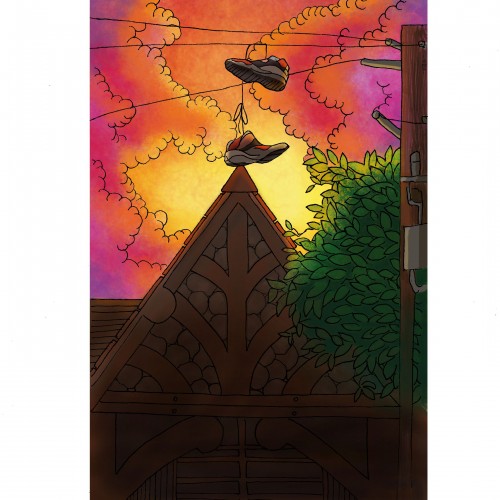
Moving away from your hometown inspires a multitude of emotions. By taking inspiration from the atmosphere that the game Life is Strange and Steven Universe creates, I hope to convey a sense of longing and nostalgia that makes us all a little more united in our loneliness.
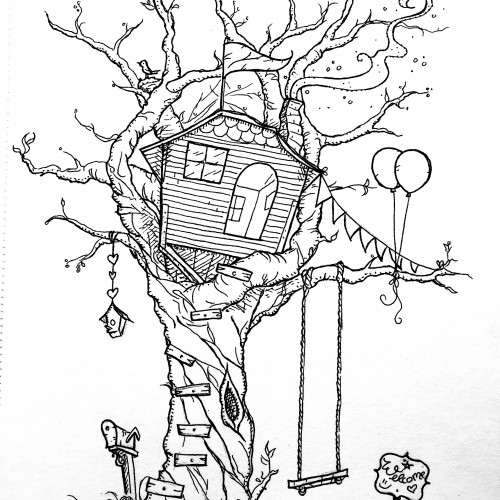
. . . Whimsy and nostalgia all entwined in an inky world of discovery . . . This piece was the last piece of artwork my Grandmother got to see of mine before she passed into the Lord's presence this past summer
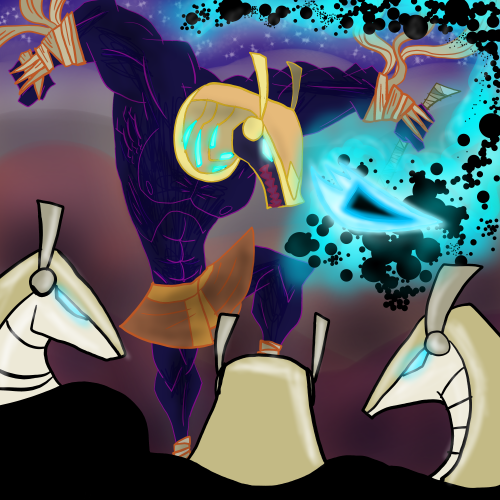
I loved this design! I been re-watching Samurai Jack, in backwards order from season 4 to 1 . they needed to use this design more, but alas, they are only in one episode, but here we are, enjoy! I highly recommend to anyone and everyone, it is one of the greatest animated masterpieces of American cartoons!
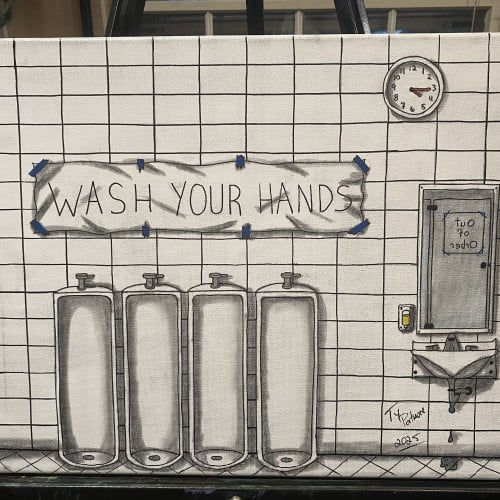
In this memory-driven piece, Patmore reconstructs the bathroom from his third-grade elementary school, capturing the sterile brightness, the tiled repetition, and the institutional reminder to “WASH YOUR HANDS.”
But the scene is not pristine — a leaky sink, an out-of-order stall, and a taped-up sign reveal the quiet decay behind childhood places we assume were orderly and safe.
Patmore blends nostalgia with unease, transforming a simple restroom into a study of what it means to grow up: how the lessons we learn early (“hygiene,” discipline, responsibility) stay with us even after the walls begin to crack. The small pop of blue tape emphasizes the DIY fragility of rules meant to guide us.
This piece stands at the intersection of memory and maintenance — of spaces, of bodies, and of ourselves.
Based on a concept for an upcoming indie metroidvania game inspired by Shadow of the Beast !
The following is by MegaJeff1989 (From DeviantArt) . . . .
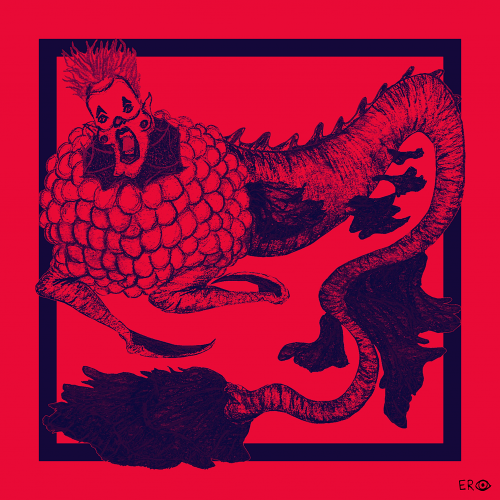
This will be a non-profit high quality free to download Samurai Jack fan game based on Episode XXXI: Jack and the Scarab .
that will take place in it's own continuity separate from SJ's with no mention or appearance of Jack, Aku, or any other characters except the ones from the episode. The characters don't exist in this adaption. It will be it's own self contained story.
The story is that the Minion of Set who is the protagonist was once a human Egyptian prince who was kidnapped by worshippers of Set and given him to their god along with other children, a dark ritual commenced where they were transformed into his strongest minions to wreak chaos and destruction upon Egypt. The protagonist regains his human mind after fatally injuring the pharaoh who was his father but the pharaoh has completed a ritual to imprison him and the other minions in a tomb where they'll stay forever. He vows vengeance upon Set and he awaits the day that somebody frees them from their prison so he can carry it out.
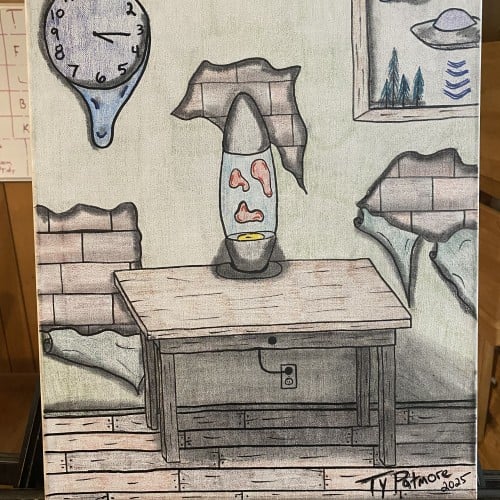
In “I Love Lamp,” Ty Patmore blends nostalgia, humor, and subtle unease into a surreal domestic scene where time, space, and memory feel slightly off-center. A lava lamp—softly glowing with drifting shapes—sits on a worn wooden table, acting as the sole beacon of warmth inside a room that is quietly falling apart. The wallpaper peels back to reveal fractured brick beneath, as if the structure itself is shedding its old skin.
A melting wall clock drips down the surface like time losing its grip, while a framed picture of a UFO drifting over pine trees hints that even the outside world may not be quite right. Every object bends reality just enough to make the viewer question whether this room is comforting… or unsettling.
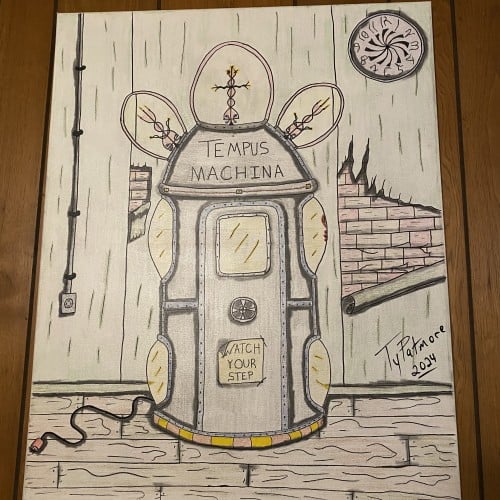
A whimsical yet haunting reflection on the passage of time, From Time to Time imagines a fragile machine built to bend reality itself. The “Tempus Machina” stands as both invention and relic — humming with promise but tethered by a frayed cord and a warning: Watch Your Step. The cracked wall, warped floorboards, and distorted clock hint that tampering with time comes at a cost. Blending humor, nostalgia, and existential tension, Patmore’s work transforms a steampunk curiosity into a metaphor for our human impulse to repair, rewind, and relive what’s already slipping away.
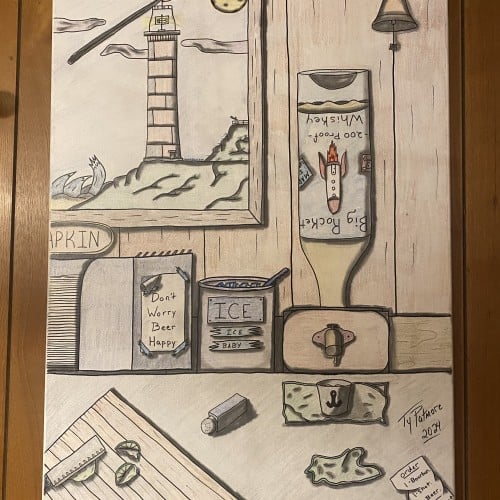
A whimsical yet reflective scene blending humor and nostalgia. Ty Patmore transforms an ordinary tavern tabletop into a surreal narrative—where a whiskey bottle doubles as a rocket, a lighthouse watches over the horizon, and every object hums with quiet irony. Mixing ink and graphite with storytelling detail, this piece captures the playful spirit of escapism and the bittersweet comfort found in small rituals.
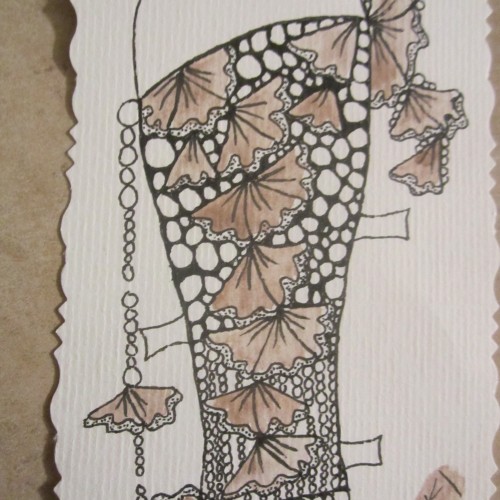
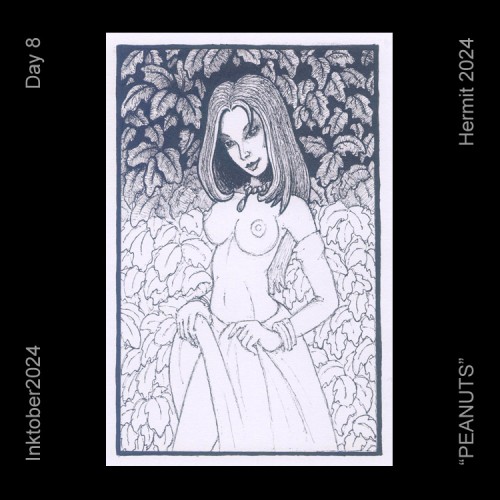
(Gel Fineliner on A5 Paper) It is finished, even if it doesn't look like it. It reflects those old peanut display cards of the 1970s and 80s which were like a peanut strip-tease as the snacks were bought and more of the image was revealed. It's also a comment on the endless WIPs that some upload on social media which are like a form of "peanuts" in themselves.