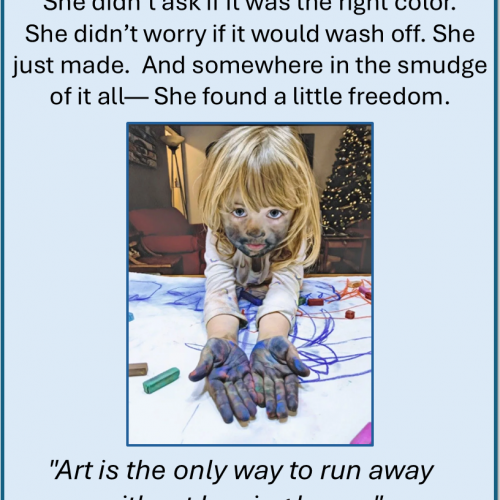
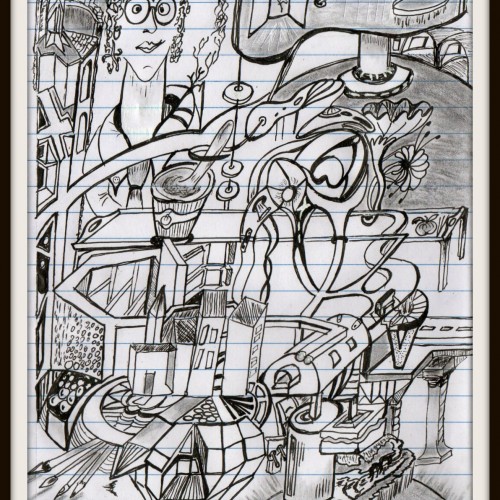
The tables were covered in white paper. Crayons, pastels, and smooth sticks waited quietly. Then came Lucy’s glittery purse—her 8-year-old hands had filled it with stones to pass along, one by one, to the strangers around the table.
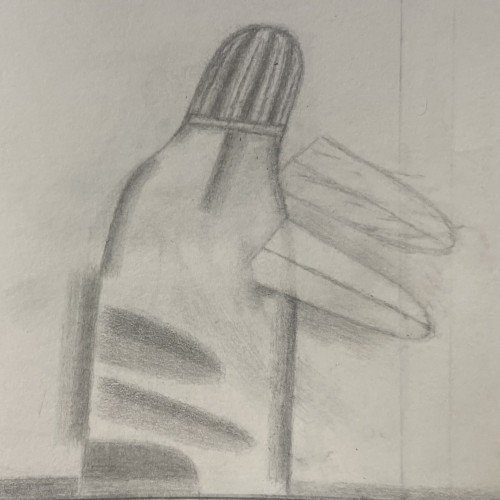
We traced them. Pushed them. Held them.
Then we let the colors lead:
-Red for emotion.
-Yellow for curiosity.
-Blue for memory.
Each color came with music, with story, with space.
At the Museum of Wisconsin Art, we made marks not for meaning but for presence.
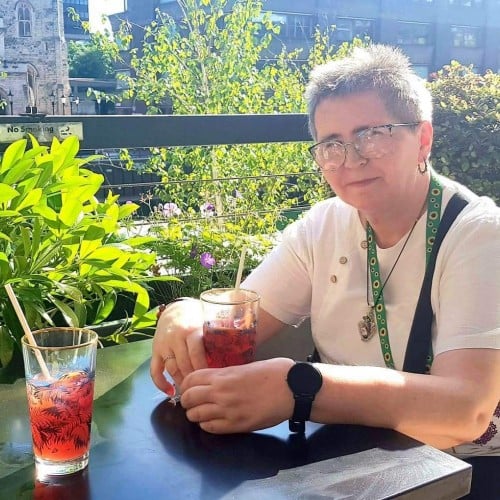
Thank you to Ann Marie and MOWA for the invitation and trust. And thank you to the participants—some new friends, some old students—for showing up and making lines that listened before they spoke.
Mark Twain (1835–1910)
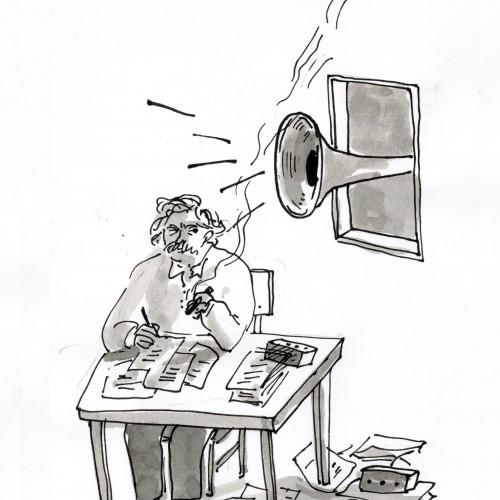
In the 1870s and ’80s, the Twain family spent their summers at Quarry Farm in New York, about two hundred miles west of their Hartford, Connecticut, home. Twain found those summers the most productive time for his literary work, especially after 1874, when the farm owners built him a small private study on the property. That same summer, Twain began writing The Adventures of Tom Sawyer. His routine was simple: he would go to the study in the morning after a hearty breakfast and stay there until dinner at about 5:00. Since he skipped lunch, and since his family would not venture near the study—they would blow a horn if they needed him—he could usually work uninterruptedly for several hours. “On hot days,” he wrote to a friend, “I spread the study wide open, anchor my papers down with brickbats, and write in the midst of the hurricane, clothed in the same thin linen we make shirts of.”
Whether or not he was working, he smoked cigars constantly. One of his closest friends, the writer William Dean Howells, recalled that after a visit from Twain, “the whole house had to be aired, for he smoked all over it from breakfast to bedtime.”
- From Daily Rituals: How Artists Work by Mason Currey
“Everyone is a moon, and has a dark side which he never shows to anybody.”
― Mark Twain
#dailyrituals #inktober #MarkTwain @masoncurrey
I am an art teacher with a master’s degree—trained by brilliant professors who believed that art could do more than decorate walls. I offer safe spaces for teenagers to grow—nourishing soil where their imaginations can take root.
And yet… I am assigned to hallway duty.
This is compulsory education, after all.
So I sit—posted like a sentinel—watching young lives stream past.
“Get to class,” I say with a smile and a nudge.
The system wants attendance; I’m hungry for presence.
Armed not with a whistle or clipboard, but with a pen—
my scribble’s soft insurgency.
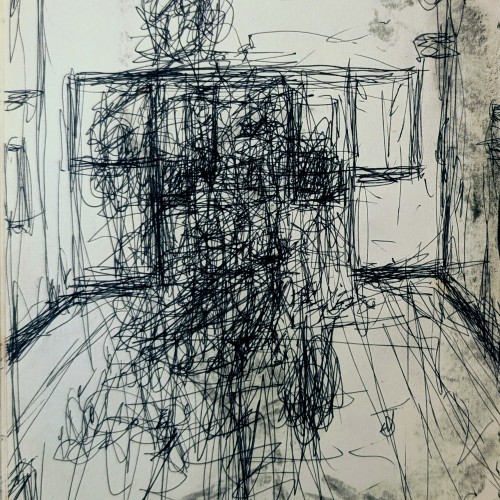
The hallway stretches out like a geometric hymn.
Columns and corners chant structure.
Teenagers swirl past—half-formed galaxies of limbs and laughter—
their orbits chaotic, their gravity pulling time forward.
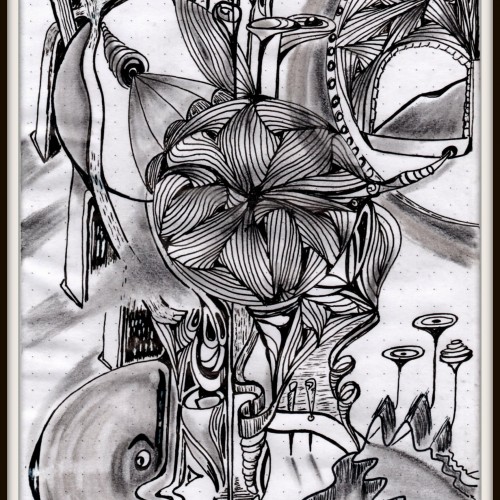
I begin to draw.
Not their tardiness, but their motion.
A shoulder. A blur of sneakers.
A tilted head chasing freedom.
Feet flickering like seconds.
Each mark a pulse.
Each smudge a breath.
My paper becomes a seismograph of seeing—
trembling gently through the mundane.
This isn’t about making art for a frame or a feed.
It’s about refusing to leak away in the fluorescent hum of obligation.
It’s a quiet mutiny against the clock.
I do this on long car rides, too (passenger side, mind you).
Letting the lines grow wild, jagged, and unapologetic.
Not for polish—
but for presence.
This is how I remember I’m still alive.
Still growing.
Still watching.
Still choosing to see.
Because sometimes mental health looks like
a piece of scrap paper,
a moving pen,
and the simple, sacred act of
marking time with wonder.
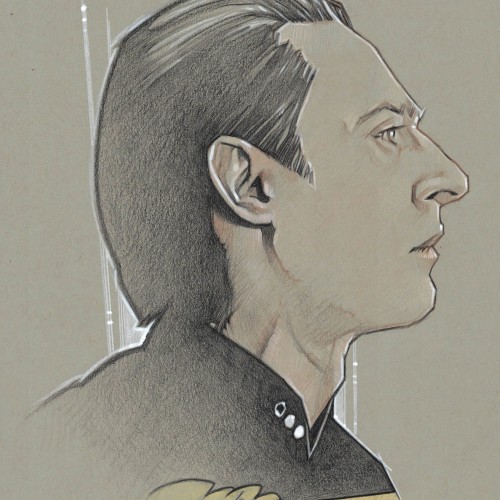
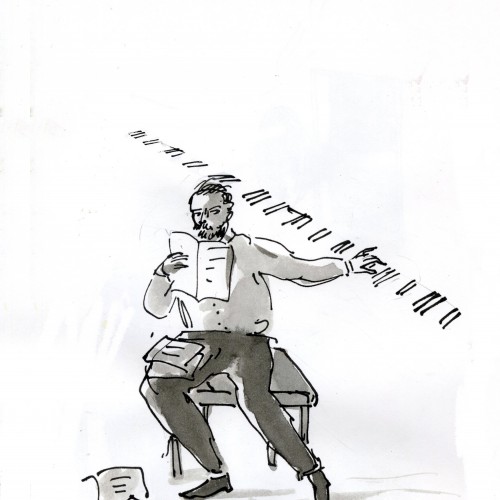
Pyotr Ilich Tchaikovsky (1840–1893)
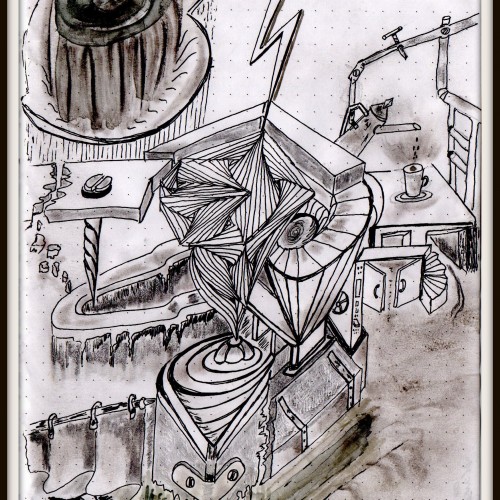
At 9:30, Tchaikovsky set to work—composing at the piano only after he had dealt with any proofs or his correspondence, chores that he disliked. “Before setting about the pleasant task,” his brother noted, “Pyotr Ilich always hastened to get rid of the unpleasant.”
After lunch he went for a long walk, regardless of the weather. His brother writes, “Somewhere at sometime he had discovered that a man needs a two-hour walk for his health, and his observance of this rule was pedantic and superstitious, as though if he returned five minutes early he would fall ill, and unbelievable misfortunes of some sort would ensue.”
- From Daily Rituals: How Artists Work by Mason Currey
“Truly there would be reason to go mad were it not for music.”
― Peter Ilyich Tchaikovsky
“If you do not want to write, at least spit on a piece of paper, put it in an envelope, and send it to me. You are not taking any notice of me at all. God forgive you – all I wanted was a few words from you.”
― Pyotr Ilyich Tchaikovsky
#dailyrituals #inktober #PeterTchaikovsky @masoncurrey