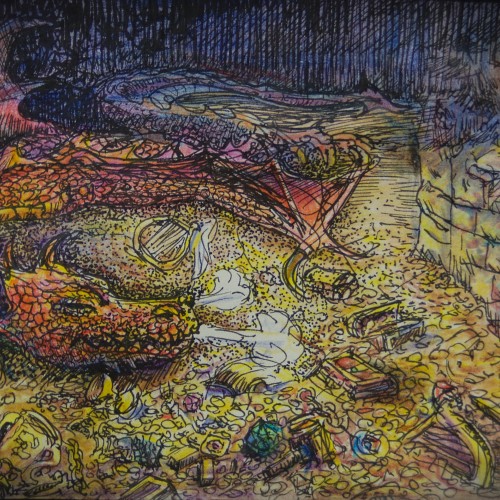
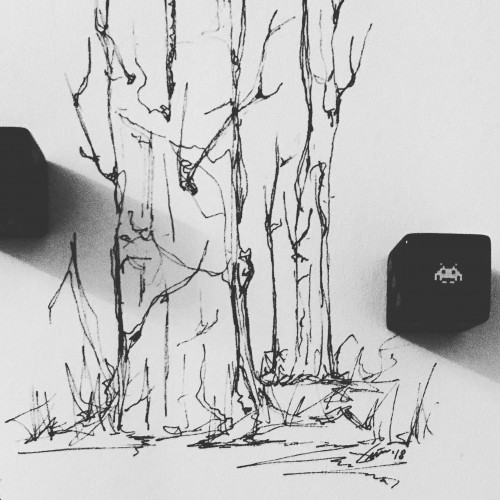
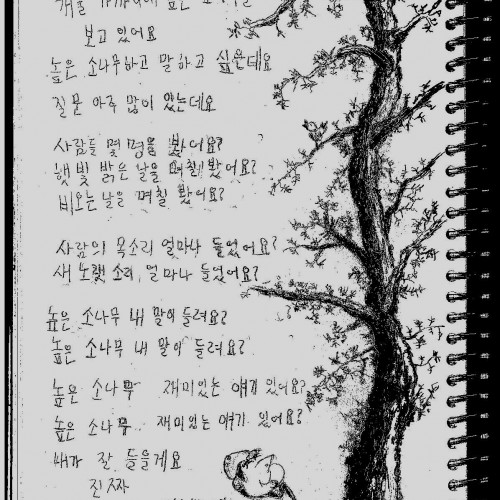
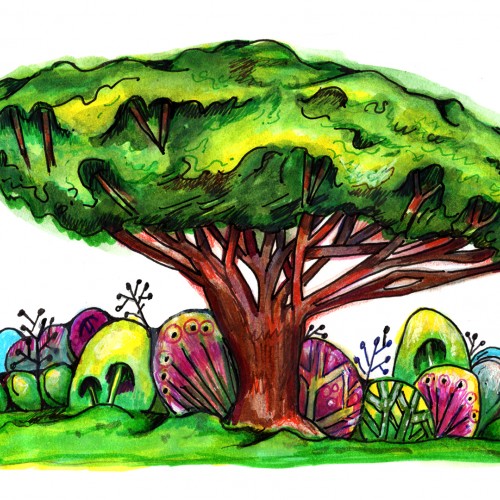
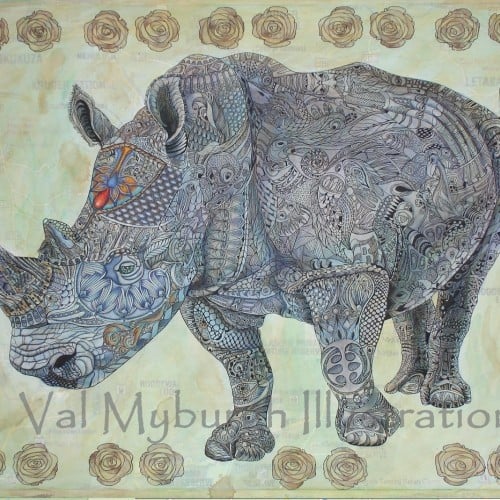
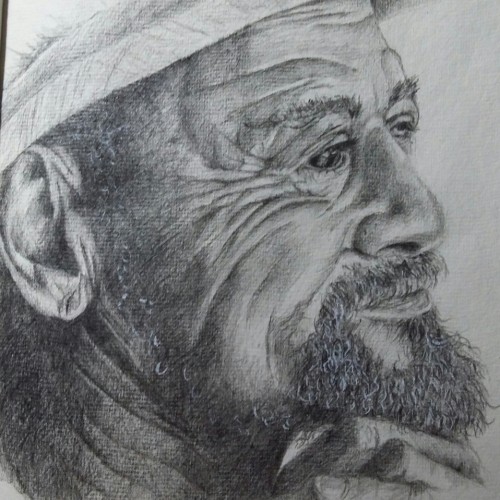
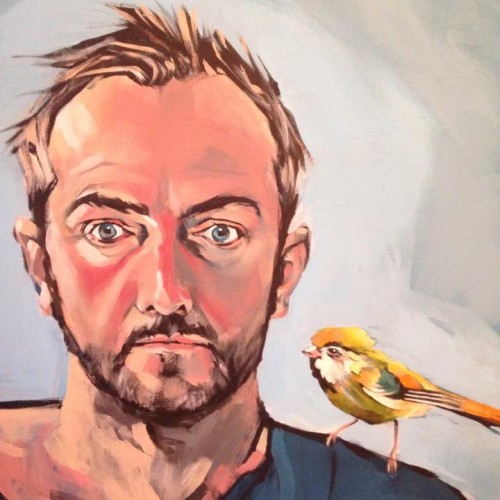
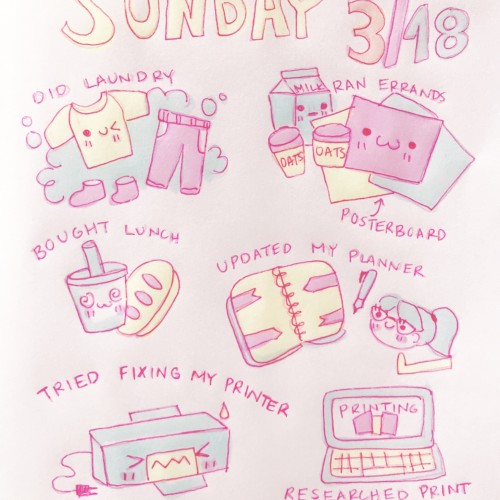
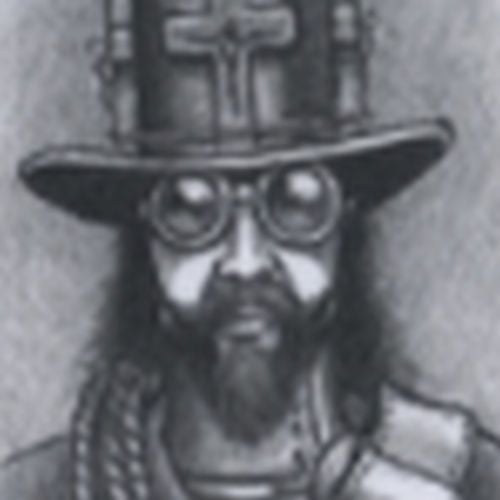
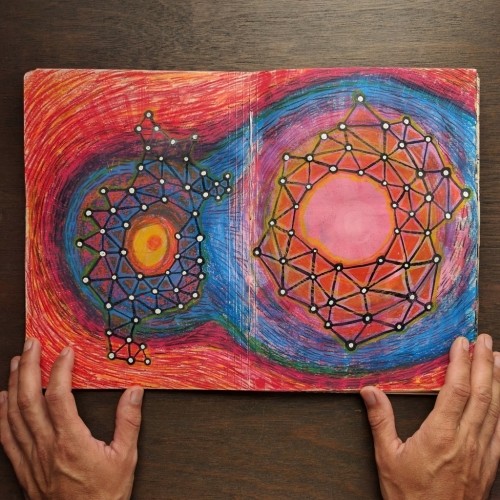
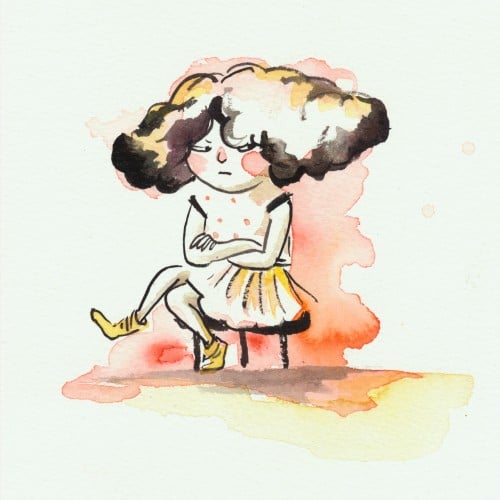
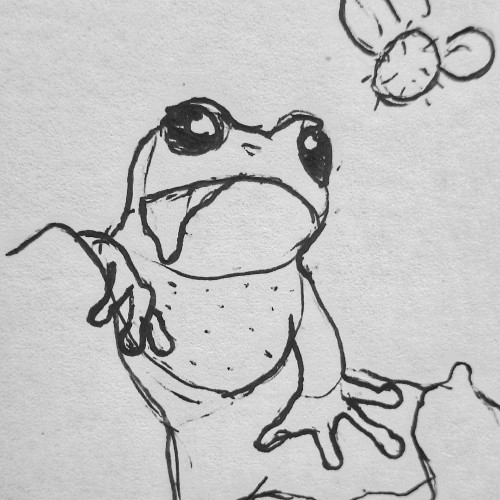
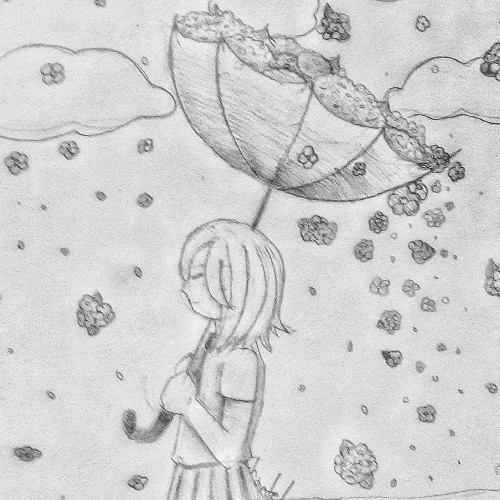
An illustrated poem I did as part of my drive to learn Korean. I did this, along with 40 plus other illustrated poems, in my notebook. Here is an English translation of the poem: :
High Pine
Close to the brook I'm looking at a high pine
High pine I want to talk to you
Many questions I have
How many people have you seen?
How many sunny days have you seen?
How many rainy days have you seen?
How many people's voices have you heard?
How many birds' songs have you heard?
High pine can you hear me?
High pine can you hear me?
High pine do you have any good stories?
High pine do you have any good stories
I will listen well
Really
Really
Really
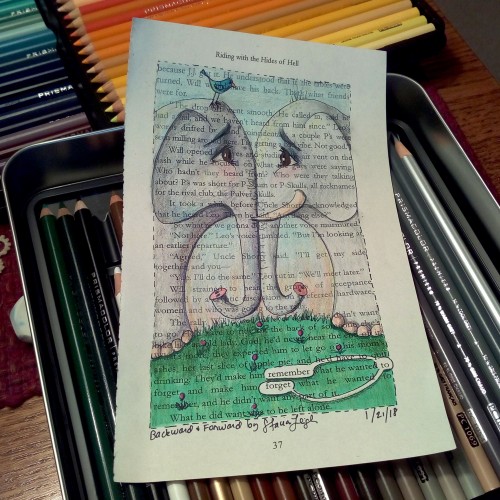
"Remember to forget. Forget to remember." ~ A blackout poem from a recycled page of Riding with the Hides of Hell--now titled Burnout--a Young Adult romance.
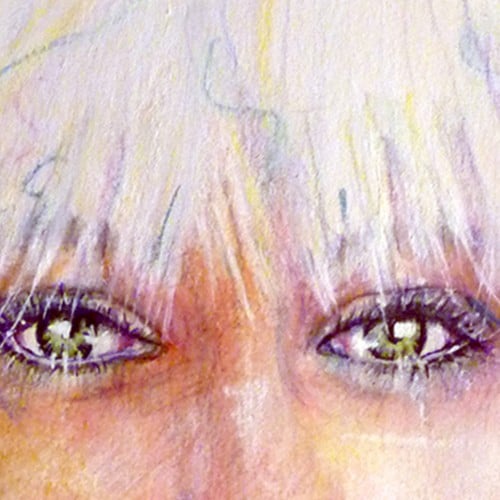
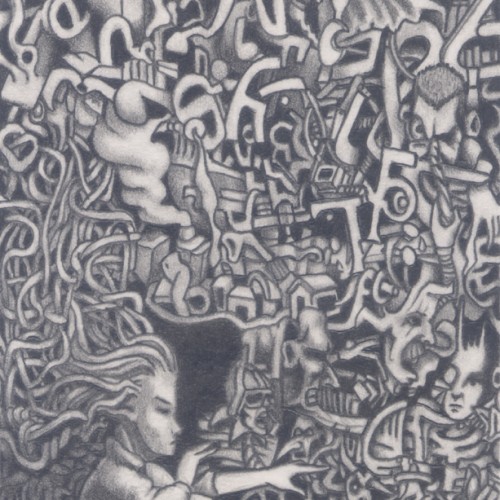
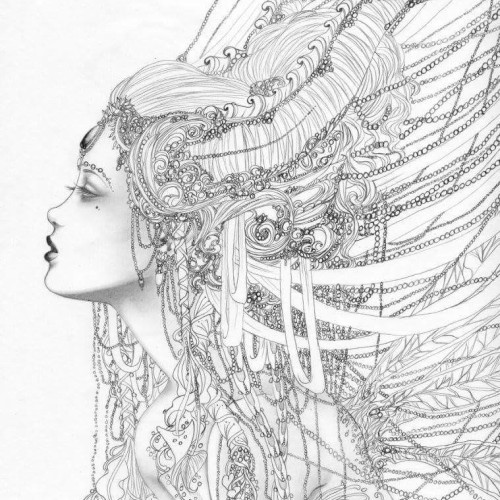
A Zentangled Fearie sketch I've been working on for a bit in my sketchbook. I can't wait to finally finish her! It's been fun doing all the little details.
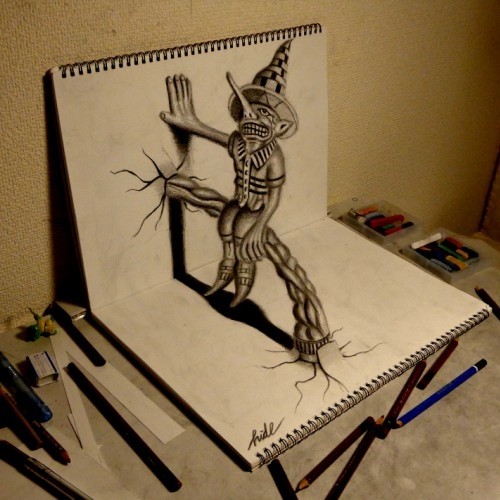
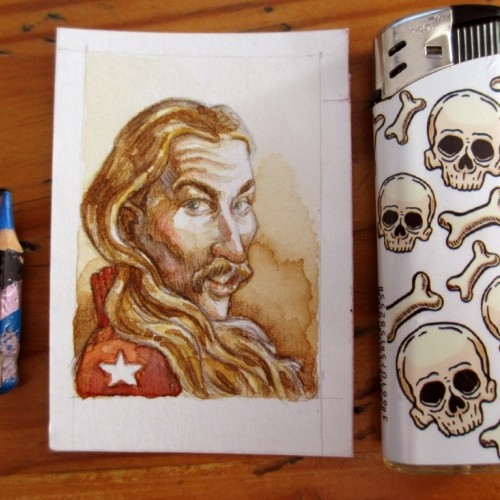
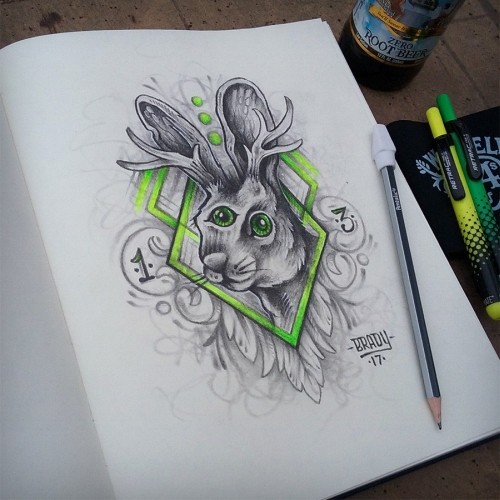
This little guy was drawn in a friend's sketchbook. I'm excited with how he turned out and now I want to draw one in my sketchbook too! Pencil, Ink & Highlighter.
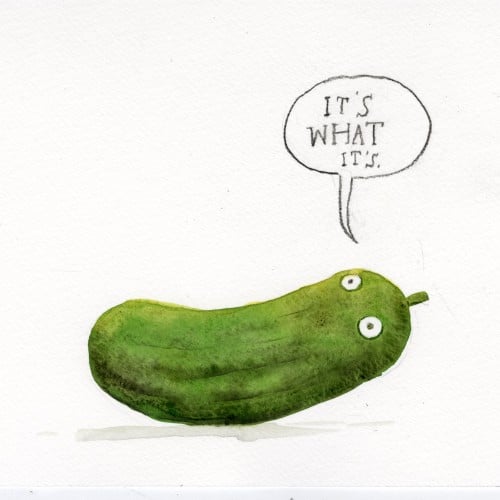
What a wonderful Kirkus review!
(Paired here with my favorite improper contraction.)
"A thoughtful look at life, in all its beauty and strangeness.
...
This delightfully deadpan musing on life urges compassion for others. Howden’s straightforward text is on the philosophical side, though also rooted in the absurd. Hahn’s spare black graphite pencil watercolor, mostly set against a white background, are imbued with humor and empathy for the pickle, with the foodstuff’s expressive eyes conveying many emotions at once. "
https://www.kirkusreviews.com/book-reviews/sarah-howden/the-wise-pickle/
THE WISE PICKLE
by Sarah Howden ;
illustrated by Sabina Hahn
RELEASE DATE: June 23, 2026
A solitary rowboat drifts across a muted, restless surface, unanchored and unattended. Rendered in charcoal, ink, and subtle white highlights, the vessel exists in a quiet state of motion—moving, yet going nowhere. The surrounding water is suggested through loose, rhythmic lines, emphasizing atmosphere and isolation over realism.
The boat is sharply defined against the hazy background, its dark contours and interior shadows contrasting with the soft, unsettled environment. Oars rest unevenly, implying recent human presence while reinforcing absence. The name Perditas—Latin for “lost”—is affixed to the hull, anchoring the emotional weight of the piece without explanation.
This work explores themes of solitude, uncertainty, and endurance. With no shoreline or destination in sight, Perditas becomes a reflection on drifting—physically, mentally, and emotionally—inviting the viewer to confront their own sense of direction within an undefined space.