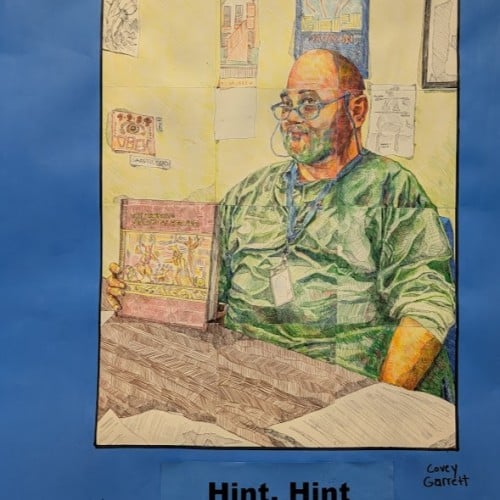
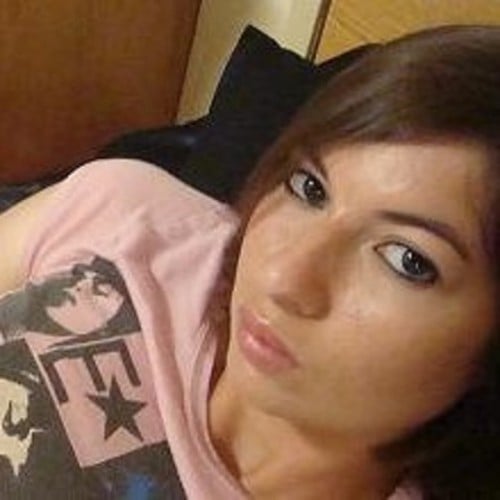
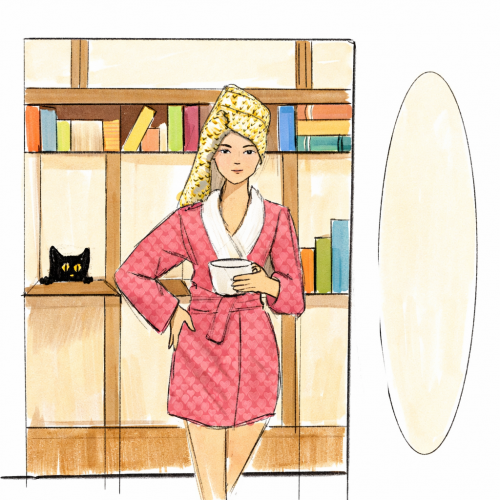
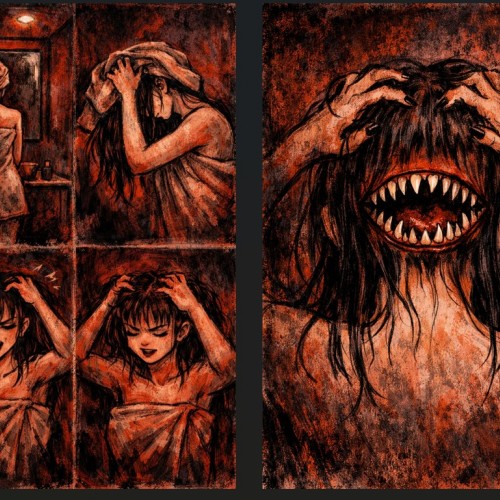
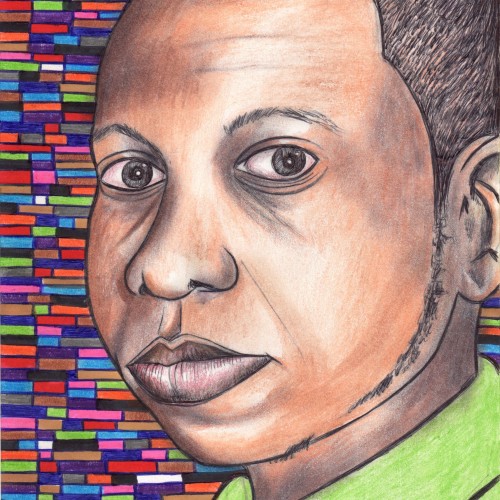
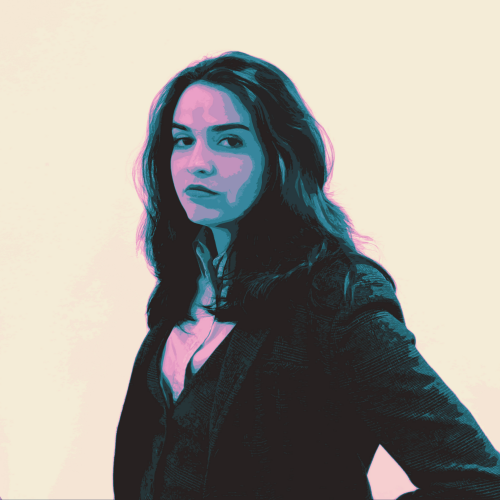
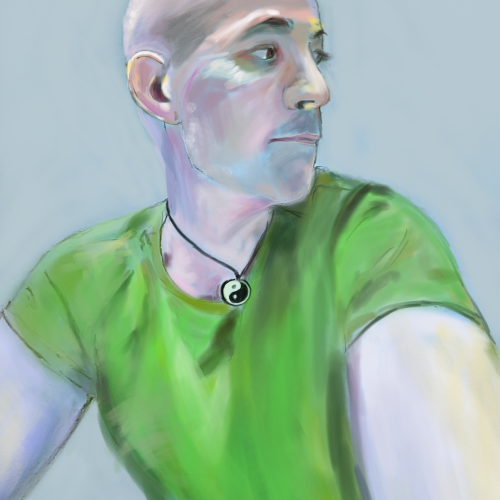
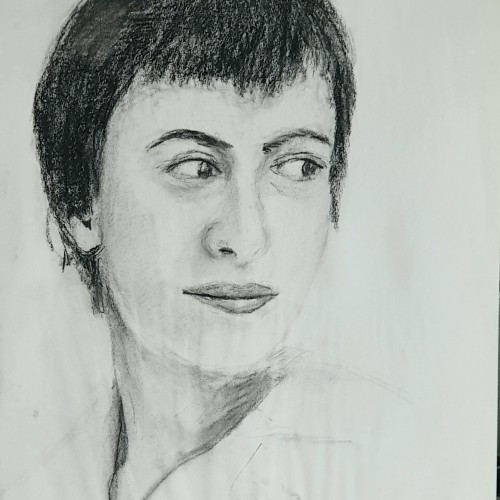
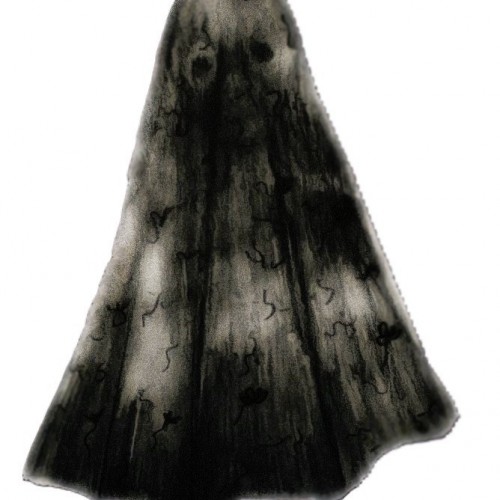
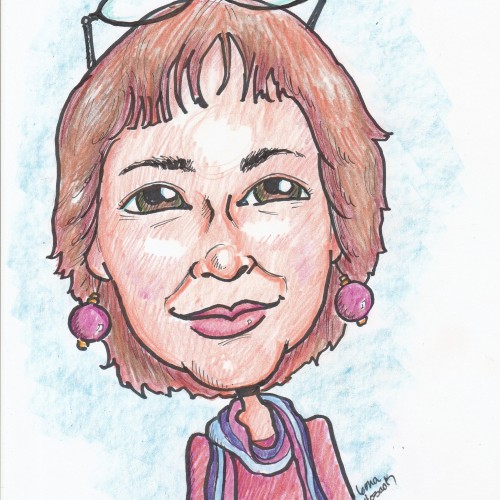
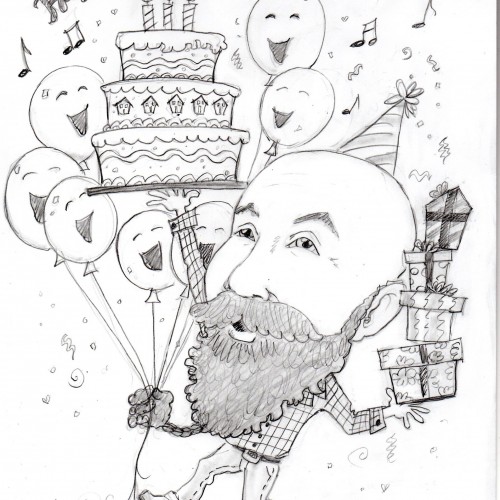
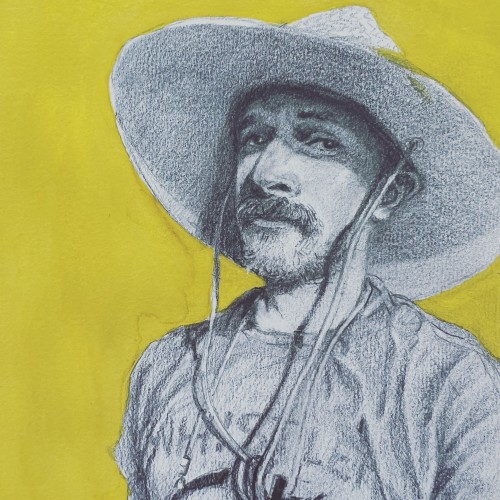
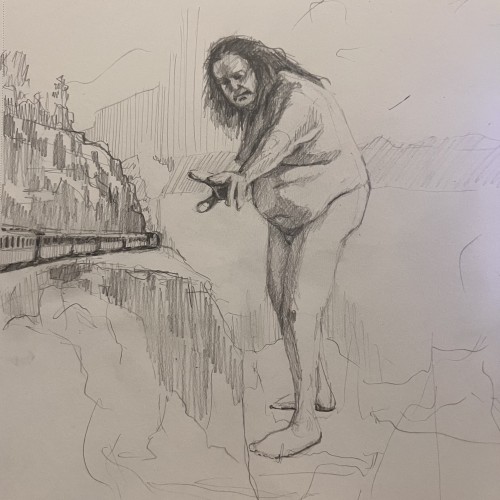
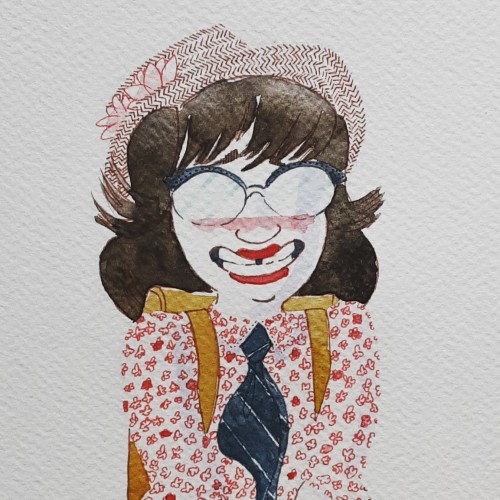
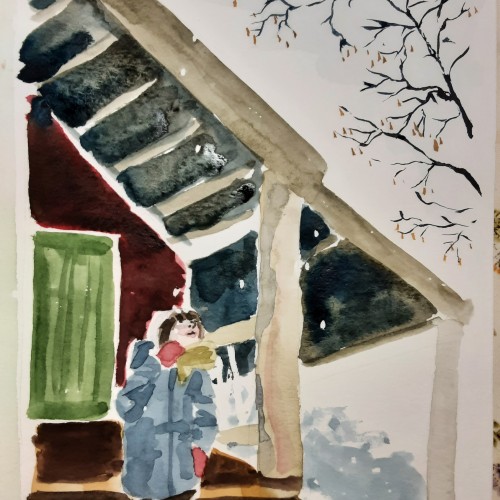
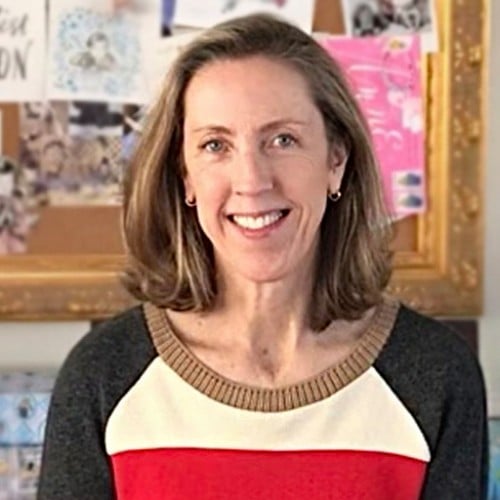
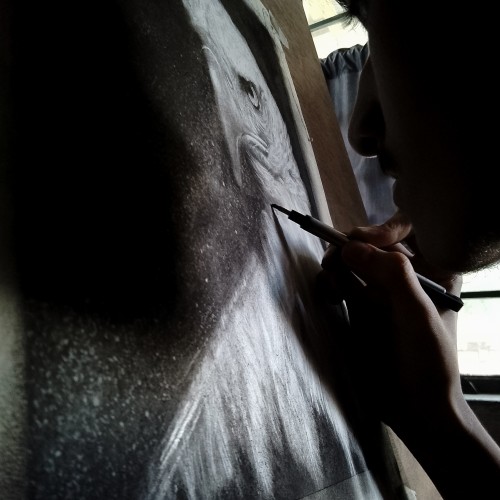
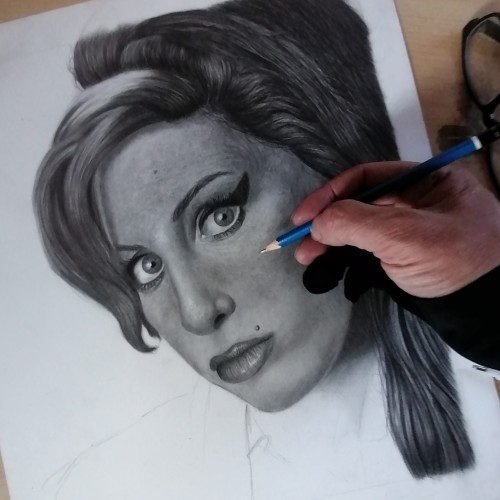
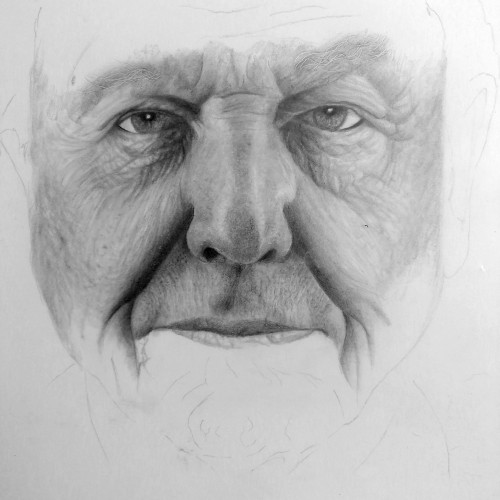
This portrait of Mr. Joshua Anderson—our resident Shakespeare whisperer—was drawn by student artist Covey Garrett as part of a school-wide tribute to our teachers. Students photographed, gridded, and drew 18x24” posters of their teachers, each paired with a favorite catchphrase. Mr. Anderson’s? A classic:
“Hint, hint. Wink, wink. Nudge, nudge.”
We think the Bard would approve.
"All the world's a stage, and all the men and women merely teachers..."
(okay, we may have paraphrased a bit).
I am an art teacher with a master’s degree—trained by brilliant professors who believed that art could do more than decorate walls. I offer safe spaces for teenagers to grow—nourishing soil where their imaginations can take root.
And yet… I am assigned to hallway duty.
This is compulsory education, after all.
So I sit—posted like a sentinel—watching young lives stream past.
“Get to class,” I say with a smile and a nudge.
The system wants attendance; I’m hungry for presence.
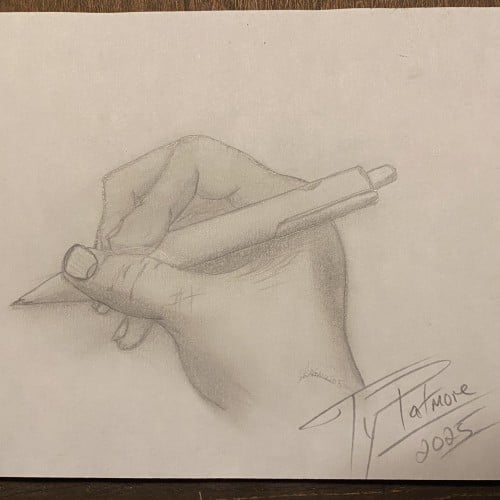
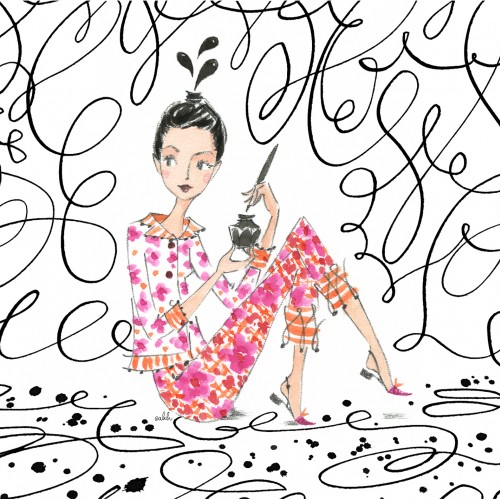
Armed not with a whistle or clipboard, but with a pen—
my scribble’s soft insurgency.
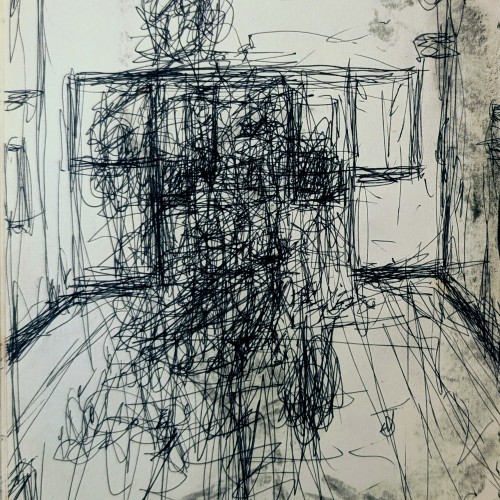
The hallway stretches out like a geometric hymn.
Columns and corners chant structure.
Teenagers swirl past—half-formed galaxies of limbs and laughter—
their orbits chaotic, their gravity pulling time forward.
I begin to draw.
Not their tardiness, but their motion.
A shoulder. A blur of sneakers.
A tilted head chasing freedom.
Feet flickering like seconds.
Each mark a pulse.
Each smudge a breath.
My paper becomes a seismograph of seeing—
trembling gently through the mundane.
This isn’t about making art for a frame or a feed.
It’s about refusing to leak away in the fluorescent hum of obligation.
It’s a quiet mutiny against the clock.
I do this on long car rides, too (passenger side, mind you).
Letting the lines grow wild, jagged, and unapologetic.
Not for polish—
but for presence.
This is how I remember I’m still alive.
Still growing.
Still watching.
Still choosing to see.
Because sometimes mental health looks like
a piece of scrap paper,
a moving pen,
and the simple, sacred act of
marking time with wonder.
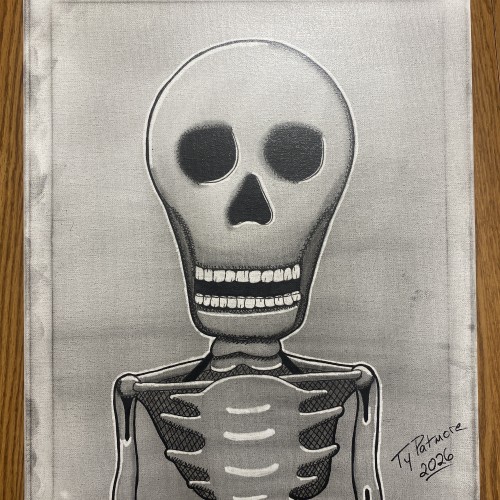
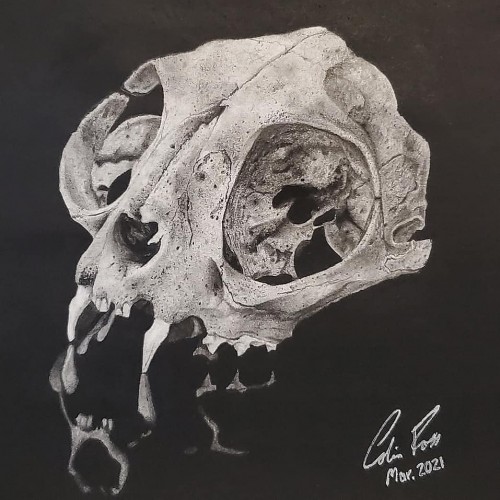
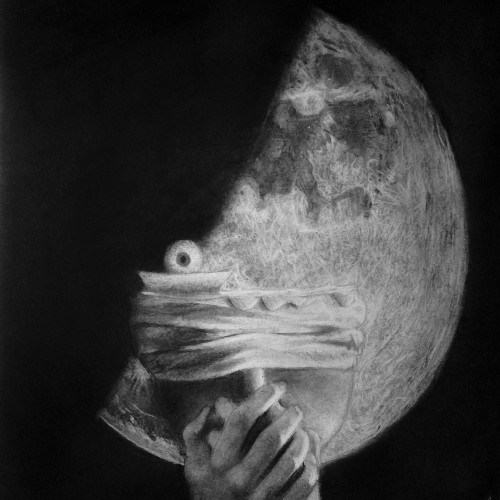
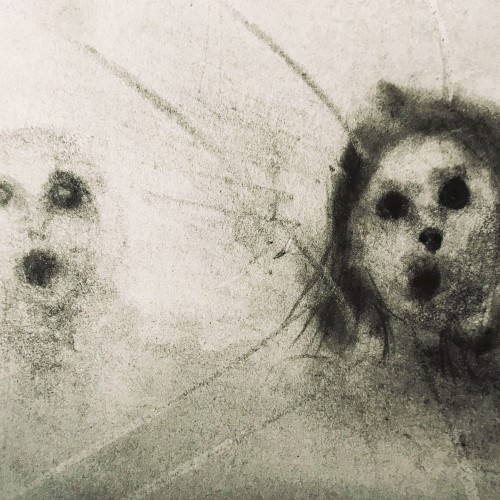
Stripped of skin, status, and story, what remains is the truth beneath it all. Bone Deep is a minimalist skeletal portrait rendered in graphite and ink on canvas, built through cross-hatching, stark contrast, and deliberate restraint. The exaggerated skull and hollow eyes confront the viewer directly — not with fear, but with inevitability.
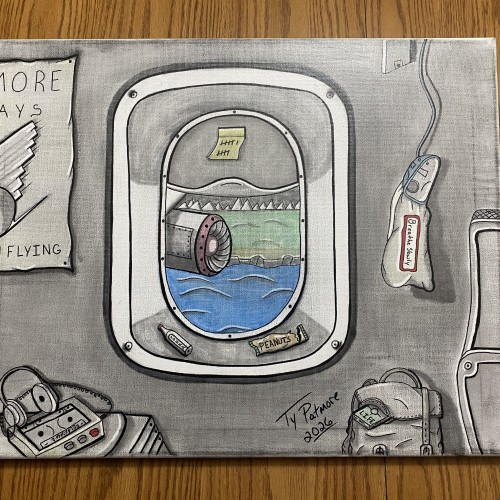
A quiet study of restraint at altitude. Framed through an aircraft window, the world below drifts by while the interior remains still—objects worn, familiar, and waiting. Subtle distortions in perspective and muted tones emphasize the tension between motion and pause, progress and endurance. This piece captures the discipline of waiting while suspended between departure and arrival, where patience is not passive, but practiced under pressure.
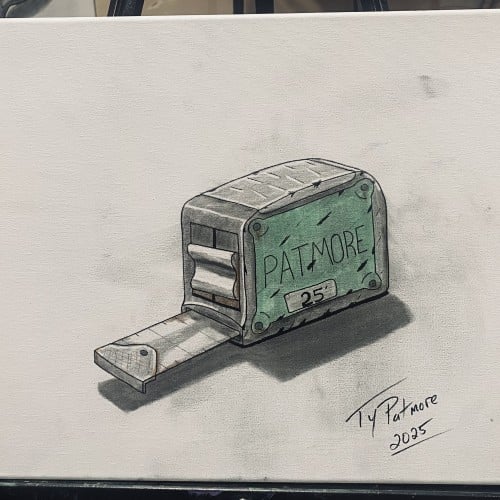
Another addition to my Tool Series—this time a tape measure, the symbol of accuracy, patience, and work ethic. I signed it with Patmore 25 as a nod to the years it has taken to become the artist I am today. Just graphite, ink, and intention… transformed into something that feels alive.
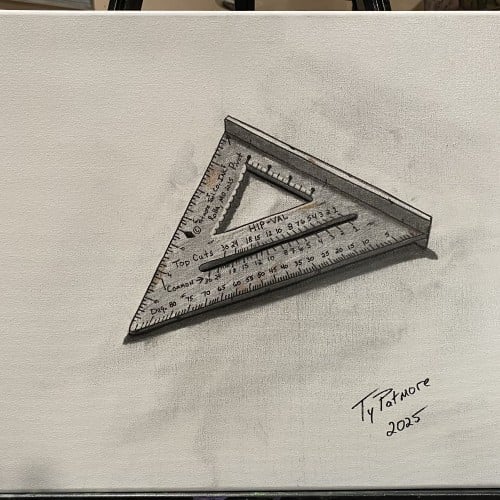
This piece continues my ongoing tool series, focusing on objects shaped by use, precision, and repetition. The speed square—an essential instrument of measurement and accuracy—is rendered with attention to wear, markings, and subtle imperfections left by time and handling.
Isolated against a minimal background, the tool becomes both subject and symbol: a quiet reflection on structure, angles, and the human need to measure and make sense of the physical world. Like the others in this series, it honors everyday labor and the overlooked beauty found in functional objects.
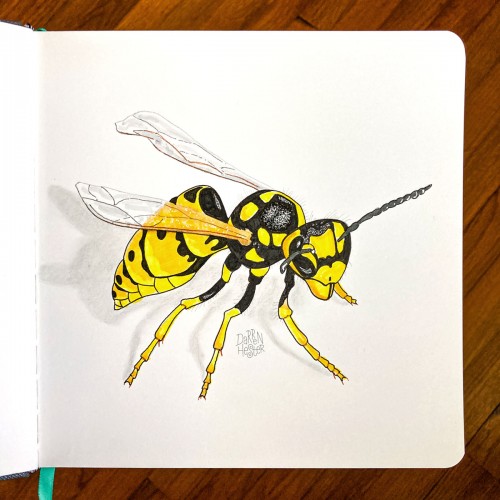
Continuing my insect series. This yellow jacket was drawn with Micron pens and water-based markers. I used graphite for the shadow and a Gelly Roll pen for highlights.
Trying to make sharp shadows without having everything blend toghether. My goal is to convey the warm, pinkish sunlight on the first day of spring, and light is not something i have given enough care to earlier. Removing colors from a photography is an effective way to get an idea of how sharp shadows actually are!
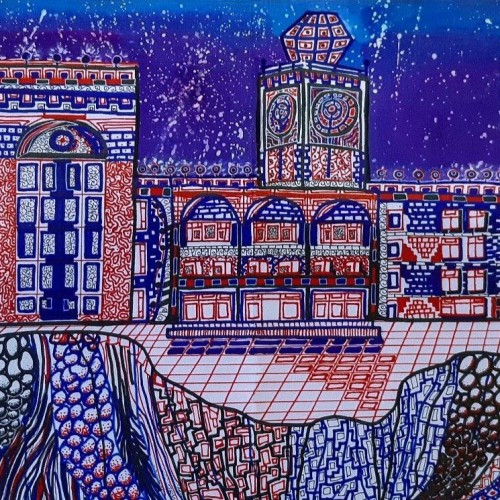
The materials that Meir uses in her works are not of the refined and so she is called an “arte povere” artist. At times she describes her work as someone dealing in alchemy - work develops as in a trial laboratory with different techniques and materials. She says, “ at times the artistic work process is a sort of puzzle demanding the filling in of all the empty squares “.
Some of her work focuses on women, and they incorporate criticism and cultural protest.
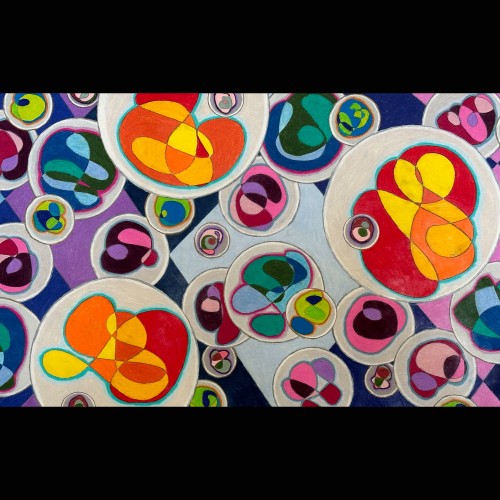
Meir has strong opinions about recycling and environmental protection that is represented in her works by use of materials and shapes. In her work she reacts to contemporary art that communicates with the eco system, waste, and she also searches for different worlds. Her works are made up of layers upon colorful layers that when we look at them it becomes clear that the mound of waste she chose is not coincidental. It actually becomes a colorful kaleidoscope of utopia.
Jaffa Meir is a multifaceted, autodidact artist working in painting, sculpture, photography, product design, carpets and furniture, painting on textile, and computer graphics.
The structural composition of some of the works is influenced also by her many years of working in the architects’ office.
Meir also worked in the developing of ideas within the field of ecosystems and recycling for factories such as Coca Cola, and during this process came up with ideas for designing parks and public game spaces using industrial waste products.