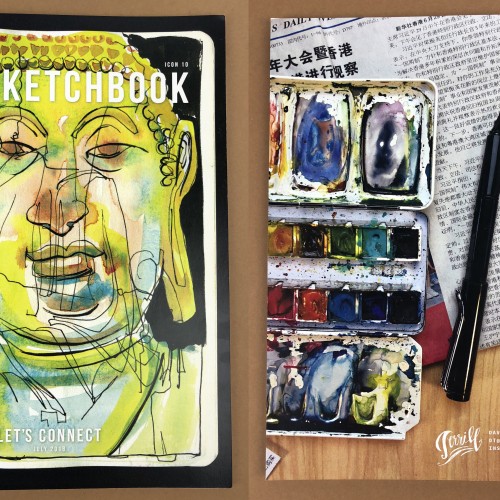
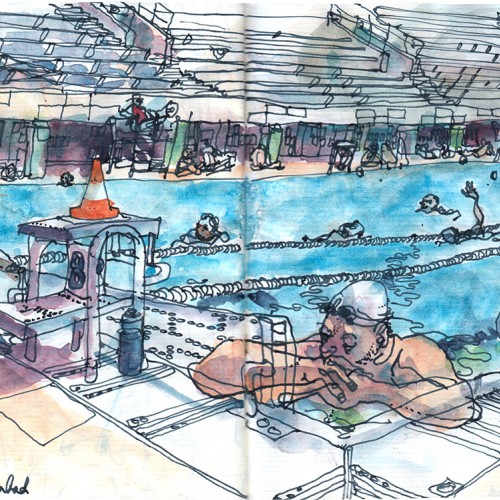
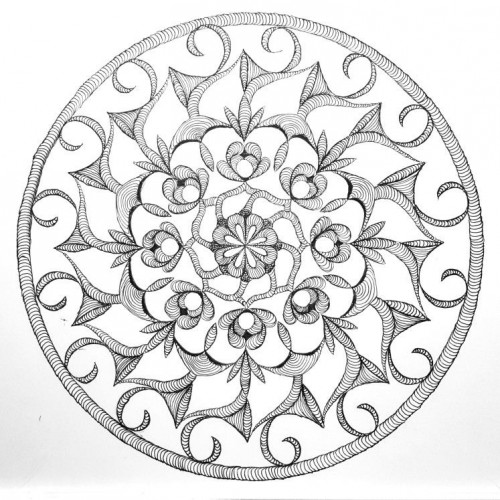
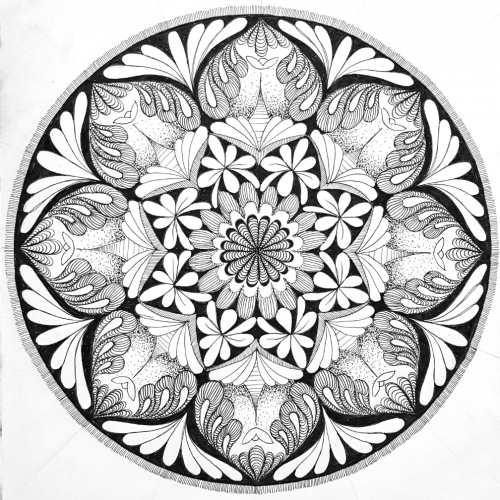
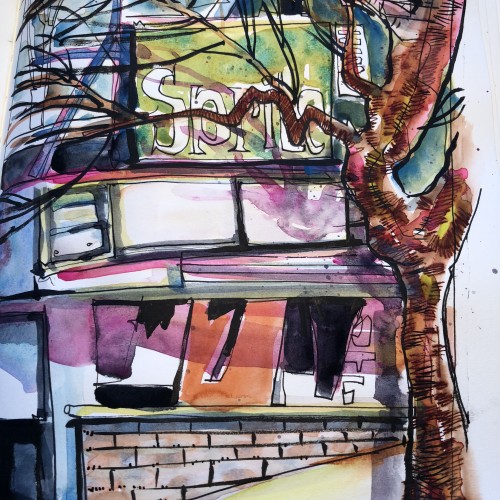
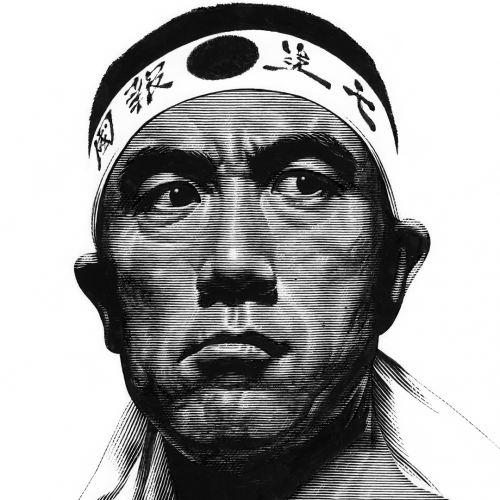
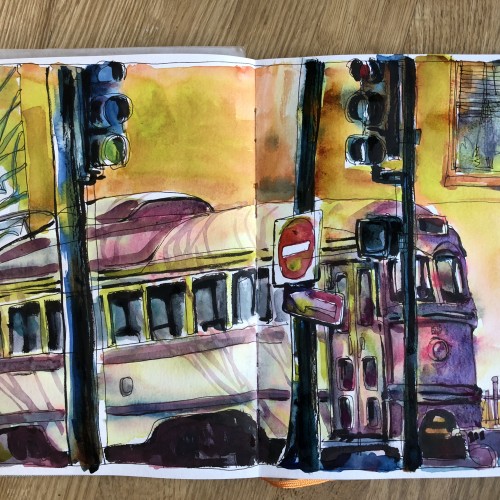
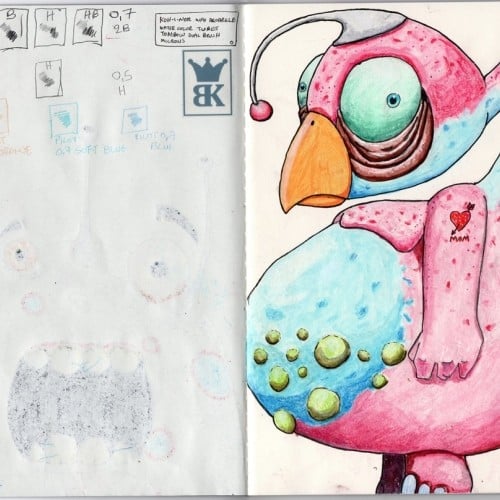
This is the book I made which contains the educational paper I wrote and illustrated about my trip to China in the summer of 2017. I gave a lecture entitled, The Sketchbook: Let's Connect at ICON10, The Illustration Conference in Detroit, MI this past July. I gave a few of these books out along with pocket sketchbooks to the audience. Below are a few spreads from the 40-page book.
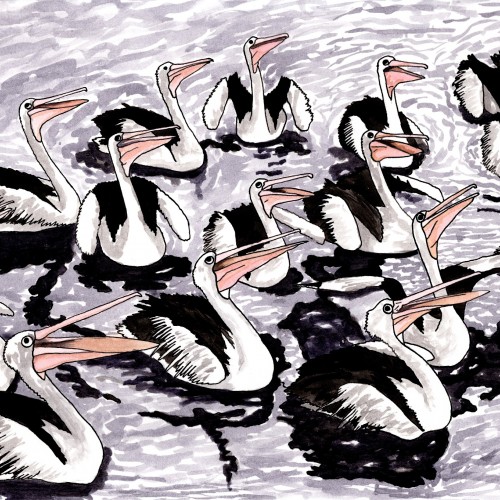
A flock of pelicans with their beaks open waiting for fishermen to throw out tasty morsels. I drew this from a photo I took last month, from a coastal vacation. India Inks and watercolours.
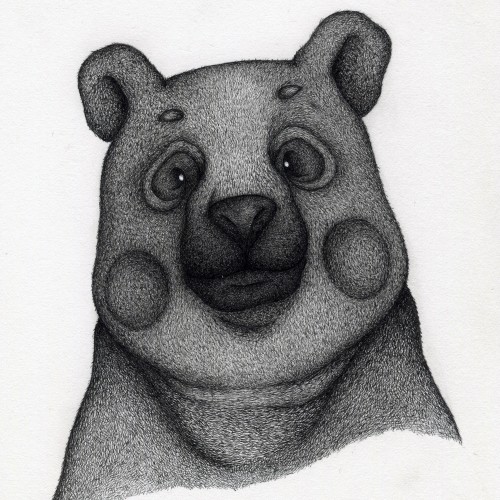
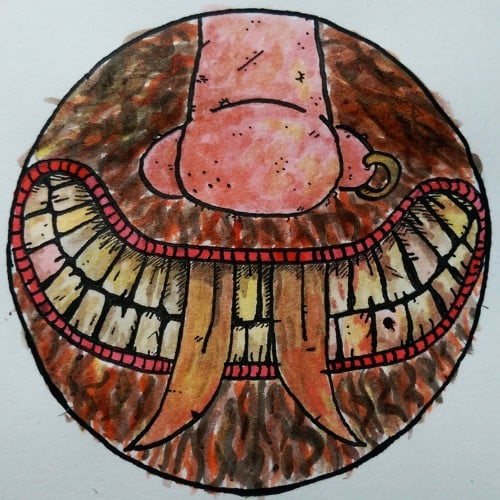
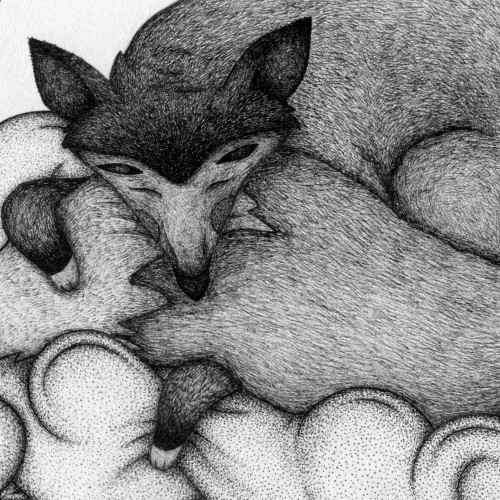
Hibernation time has definitely come to an end on this part of the globe. It is now time to eat the world and so this one decided to bring himself to life and cast some magick around. Drawings are a very powerful tool for that. This is the first bear that I have ever created on paper and I don't know much about why he came out like this but I'm sure that he knows very well all about that. He is the sigil and I trust his eyes
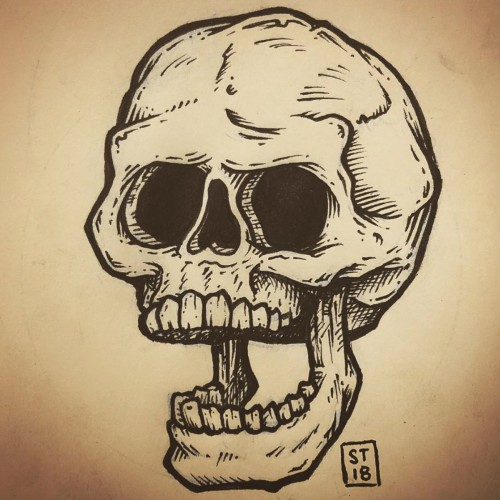
I have a little Moleskine (3.5 x 5.5) notebook that I only draw skulls in. I started in November of 2013 and I do one whenever the urge strikes me. It's not like a skull-a-day thing but sometimes I do get into a period where I will draw one every day for a while then I won't draw any for months. I even lost it for a while and was very sad. I think the longest gap between pages has been a year. This is the most recent skull, drawn on 05.28.2018. Most of them are posted on my Instagram but you have to scroll back a ways to get at the bulk of them.
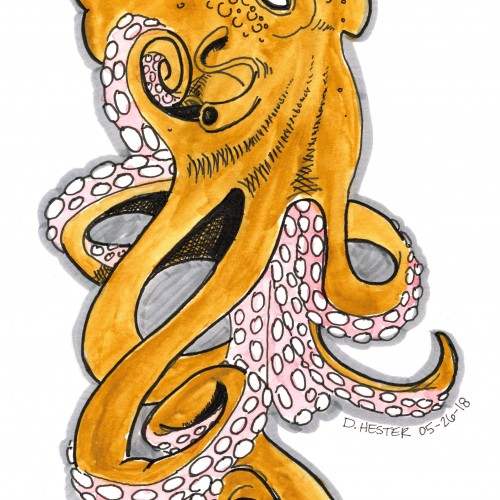
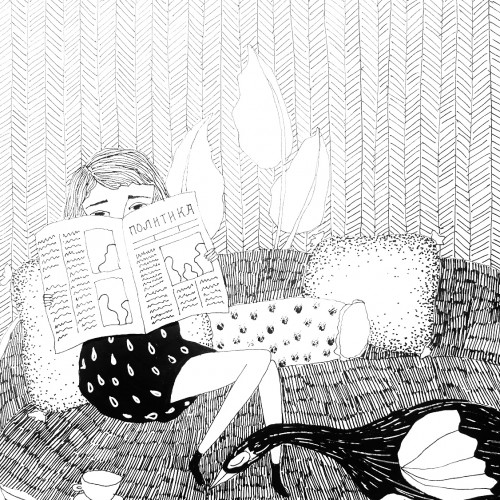
Ink and Watercolor sketch of octopus. Normally I start with a pencil outline, then go over it with micron pens. But I'm learning to skip the pencil step and just sketch with ink. I helps you not to overthink things. Once you lay the ink line down on the paper it's there to stay. You can't erase and there isn't an undo like you have when working digitally. You just have to work around any "mistakes" you make. I'm also working on sketching faster because I just don't have that much free time these days. Trying to produce a new sketch every day is a real challenge.
For me, it's the process of creating - not really the end result. Once something is done, it's done and you move on to the next process. Life is the ultimate process after all. We don't hang around and admire the dead body once it has finished what it needed to do...On the other hand, the end result of someone's process can be felt through what they have left behind. I hope this is what will eventually happen with the art I create.
Doodle with Pentel brush, and posca! A little bit note to self. "In between goals is a thing called life that has to be lived and enjoyed." by Sid Caesar.
"Man on the Train: Hey, are you a dreamer?
Wiley: Yeah.
Man on the Train: I haven’t seen too many around lately. Things have been tough lately for dreamers. They say dreaming is dead, no one does it anymore. It’s not dead it’s just that it’s been forgotten, removed from our language. Nobody teaches it so nobody knows it exists. The dreamer is banished to obscurity. Well, I’m trying to change all that, and I hope you are too. By dreaming, every day. Dreaming with our hands and dreaming with our minds. Our planet is facing the greatest problems it’s ever faced, ever. So whatever you do, don’t be bored, this is absolutely the most exciting time we could have possibly hoped to be alive. And things are just starting" - waking life (movie).
°
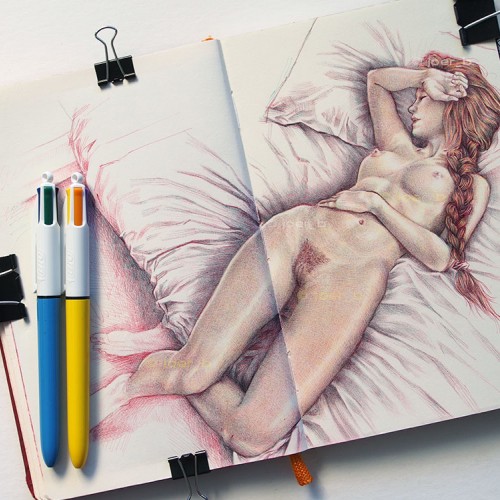
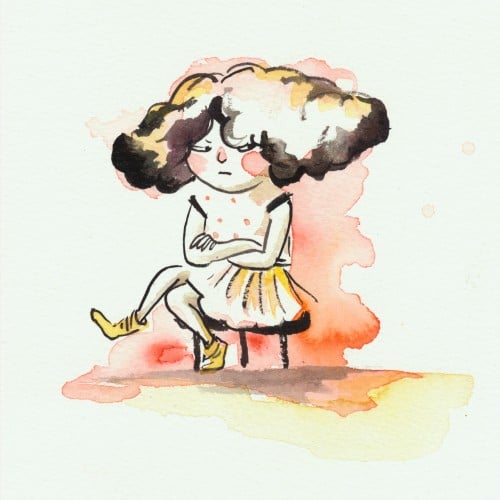
So the other day I had a beautiful conversation about lucid dreaming with some friends. We shared amazing dream memories that we all had experienced and right the next day this sleeping beauty started showing up on a piece of paper.
What about you, are you a dreamer? :)
♠️
Joseph Cornell (1903–1972)
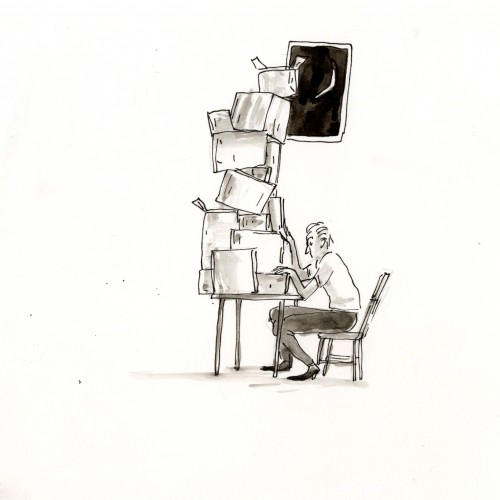
Cornell worked nights at the kitchen table, sorting and assembling materials for his boxes. It was not easy going. Some nights he felt too fatigued from his day job to concentrate on his art and would sit up reading instead, switching on the oven for warmth. In the mornings, his quarrelsome mother would scold him about the mess he’d left at the kitchen table; without a proper workroom, Cornell was forced to store his growing collection of magazine clippings and dime-store baubles out in the garage.
In 1940 Cornell finally mustered the courage to quit his job and pursue his art full-time—and even then his habits changed little. He still worked nights at the kitchen table, while his mother and brother slept upstairs. In the late morning he would head downtown for breakfast at his local Bickford’s restaurant, often satisfying his sweet tooth with a Danish or a slice of pie (and lovingly cataloging these indulgences in his diary).
- From Daily Rituals: How Artists Work by Mason Currey
#dailyrituals #inktober #JosephCornell @masoncurrey