Previous
Next
logo logo
logo logo
  • Discover Art
    • Trending
    • Most Recent
    • Most Faves
    • Most Views
    • Curated Galleries
  • Drawing Challenges
    • See All Challenges
  • Drawing Prompts
  • Artists
    • Most Popular
    • Most Recent
    • Available For Hire
    • Artist Spotlight
  • More
    • Marketplace
    • Art Discussions
    • Resources
    • News + Blog
Login
Most Recent
Select an option
  • Most Relevant
  • Most Faves
  • Most Views
  • Most Comments
  • Most Recent
SEARCH RESULTS FOR

plants

Nicole Nicole Plus Member
Enlarge
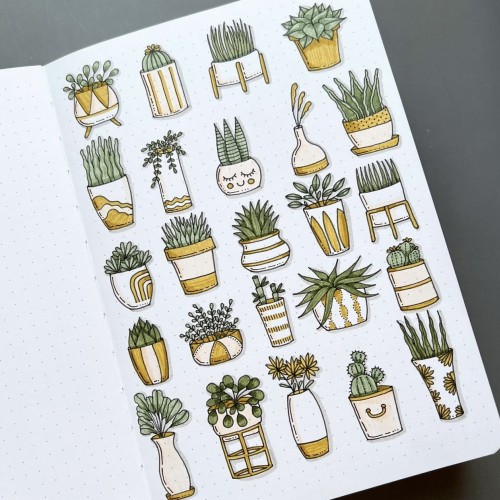
Plants

Archer & Olive A5 Dot Grid

  • 6
  • 6
  • 0
Nicole Nicole Plus Member
Enlarge
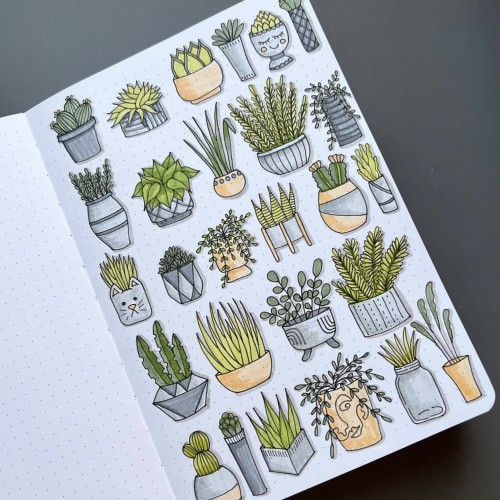
Plants

Archer & Olive A5 Dot Grid

  • 18
  • 10
  • 0
Ashima Bawa Ashima Bawa
Enlarge
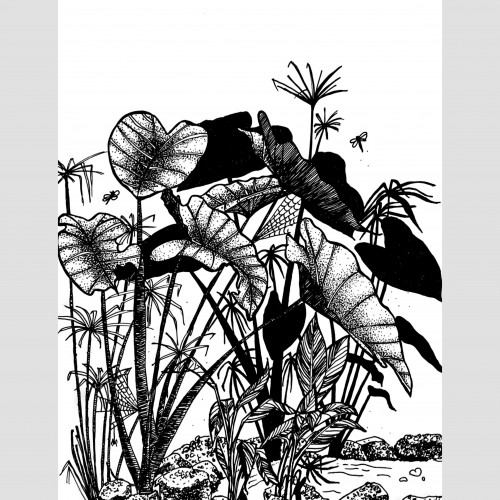
SarayaGoa Plant Drawings/Study

Living, breathing, and creating with nature When you wake up to the gentle sights and sounds of the pond, trees, plants, birds, bees, and dragonflies, inspiration flows effortlessly. So, when the owner asked for a menu design for @SarayaGoa Art Café, I thought—why not let nature speak for itself? Using pen and ink, I captured the beauty of my mornings here—each stroke reflecting the lush surroundings that make Saraya unique. Instead of focusing on just food items, I filled the cover and inside pages with illustrations of the vibrant life around us. Dining here means eating among the green, surrounded by the diverse plants of our permaculture gardens. This study is a tribute to the beauty that shapes every meal at Saraya.

  • 229
  • 4
  • 0
Annie Tate Annie Tate Plus Member
Enlarge
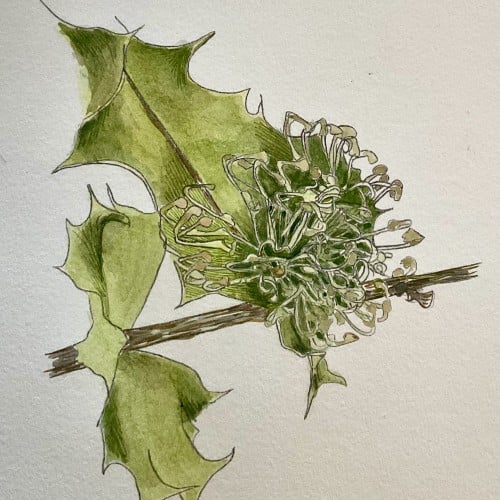
Prickly Hakea

Watercolour painting of a Prickly Hakea. I started drawing different plants last month from the area where I live. This month I am turning them into watercolours, with the Hakea being one of the first.

  • 10
  • 5
  • 1
Nestoras Papadopoulos Nestoras Papadopoulos
Enlarge
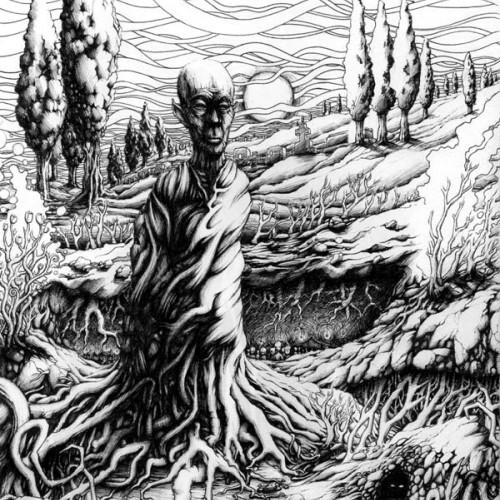
Still Life (Rooted in Nature)

This captivating ink drawing features a fantasy character standing still, deeply rooted to the earth and seamlessly merged with nature. Surrounded by a complex web of trees and plants, the figure embodies the essence of the natural world. In the background, a mesmerizing sunset casts a warm glow over abstract waves of clouds, creating a harmonious blend of light and shadow. This artwork symbolizes the profound connection between humanity and the environment, inviting viewers to reflect on the beauty of nature.

  • 6
  • 2
  • 1
Joer_B Joer_B
Enlarge
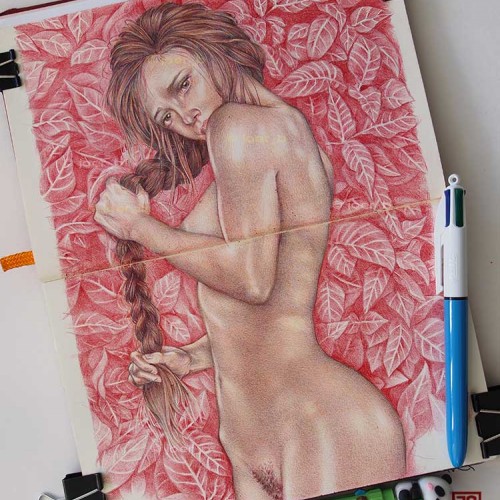
Recent sketchbook drawing…

Meadhbh in front of wall of plants. 2024, Ballpoint pens on 5” x 8” (10” x 8” Double page spread) acid free Moleskine sketchbook paper, Adobe Photoshop.

  • 189
  • 6
  • 6
Annie Tate Annie Tate Plus Member
Enlarge
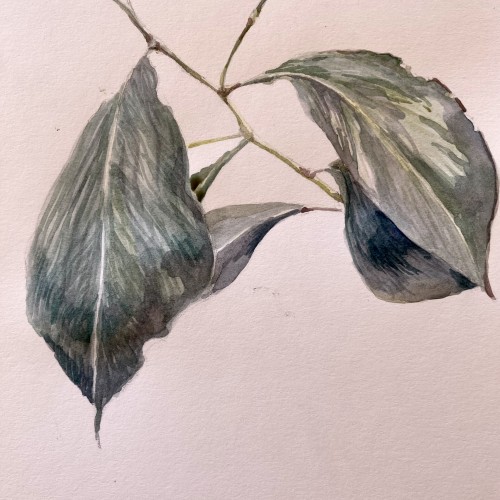
Wattle Leaves

The start of a new project drawing and painting plants in water colours. These leaves are from a Wattle also called an Acacia in the nearby forest.

  • 5
  • 3
  • 1
Joselo Rocha Joselo Rocha
Enlarge
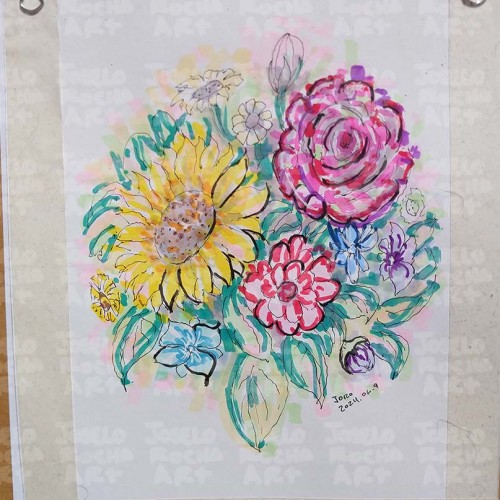
Stay where you flourish

Vibrant flowers, including a sunflower and a rose, dominate the forefront of the painting with their bright and colorful petals. Light, sketch-like strokes give the piece a playful and dynamic feel, with an array of greens creating a lively backdrop for the blooms.

  • 385
  • 4
  • 1
Joselo Rocha Joselo Rocha
Enlarge
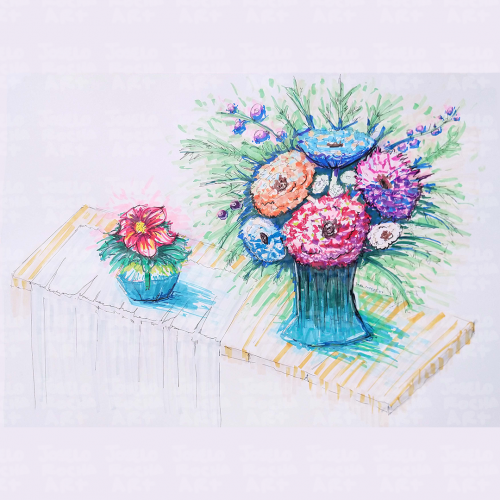
Flower bouquet colorful and vibrant

Flower bouquet colorful and vibrant

  • 130
  • 5
  • 0
Suzette Suzette
Enlarge
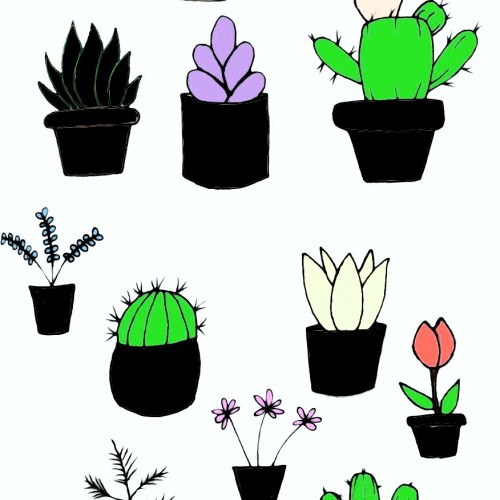
Simple Plant Drawings

  • 418
  • 5
  • 0
Enitsirhc Enitsirhc
Enlarge
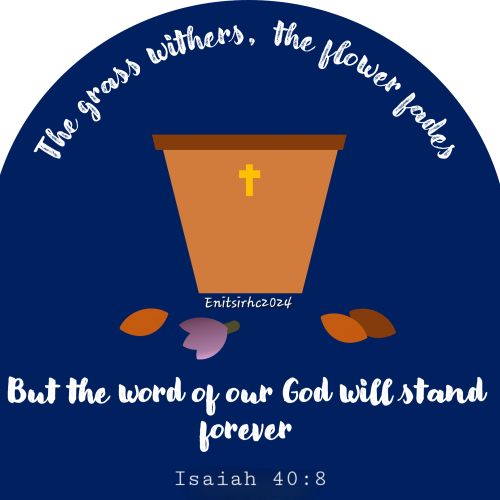
Forever Unchanging

‭‭In our little potted gardens, sometimes our plants thrive, and sometimes they don't. But what remains constant are the pots still being a pot. This reminds me of the Bible verse, which served as the inspiration for this week's post: -Isaiah‬ ‭40:8‬ ‭NIV‬‬- The grass withers and the flowers fall, but the word of our God endures forever. //There are 6 Sundays leading up to Good Friday. In observation of Lent, I will be posting 6 works inspired by the theme. This is for the 5th Sunday of Lent.

  • 12
  • 1
  • 0
n4mdia n4mdia
Enlarge
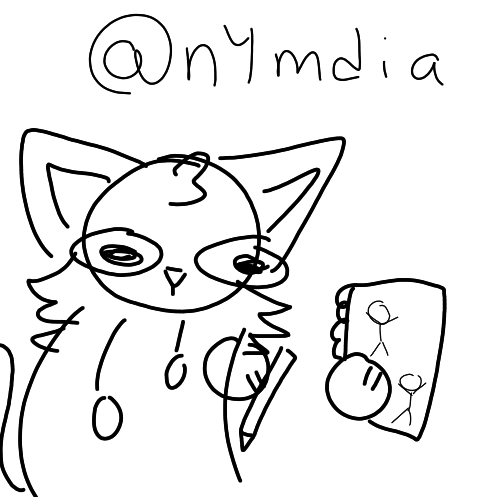
Being a blogger for the school page is hard.

Leo..wasnt the best at taking pictures for his school page. But at least the cat ones look good, right? No he just stole them from one of his favorite games. Dammit Leo! (still tired and sleepy..honk mimimimimimi but i have no clue what to draw next honsetly. IM THINKING OF STUFF I THINK, THE SIDE PHOTOS ARE CATTAIL FROM PLANTS VZ ZOMBIES. I LIKE CATTAIL!!!!) (just kill me already...............(again))

  • 7
  • 0
  • 0
Brianna Eisman Brianna Eisman
Enlarge
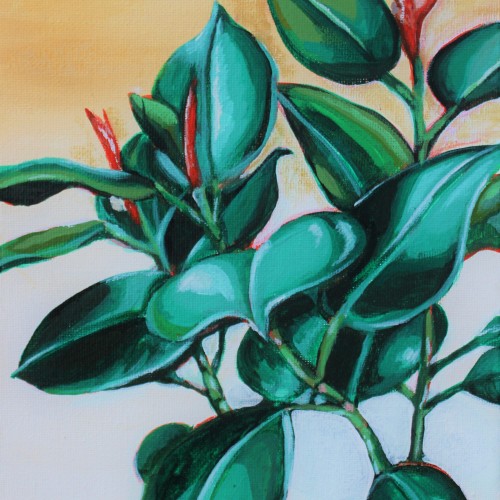
Pretty Plants #3

When I moved into my first apartment, I knew I wanted to create my own wall art. So like any Potterhead artist, I binged Harry Potter movies and painted for many hours straight. This painting is part of a three piece set featuring my favorite plants painted on a soft gradient background. This 8”x10” acrylic painting is made on pre-stretched canvas.

  • 223
  • 4
  • 0
Annie Tate Annie Tate Plus Member
Enlarge
Bush Medicine II

Continuing to look at the mysteries of plants used as bush medicine by Indigenous people in the East Kimberley of Western Australia. These two plants are common throughout the area. The one on the left is used for colds and the right for soap. How many of us would know what to look for?

  • 4
  • 0
  • 0
Annie Tate Annie Tate Plus Member
Enlarge
Bush Medicine 1

Many people walk past plants either without noticing them or with just a glance. For the Walmajarri people in the Kimberley region of Western Australia, and many other Indigenous groups, plants provide a source of food and medicine. These outlines are of plants that are used by Walmajarri people as either food or medicine. For most people they remain a mystery, hence the outline only.

  • 19
  • 5
  • 1
Jasmin Jasmin
Enlarge
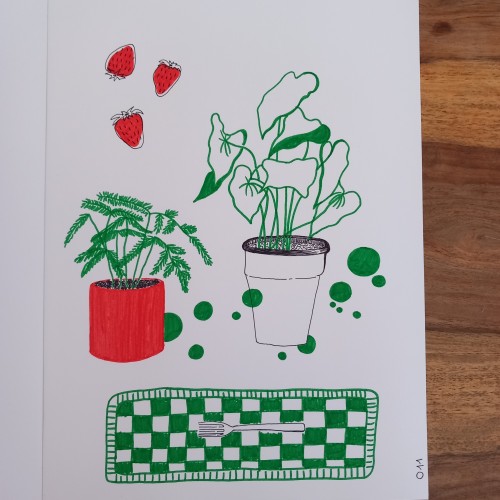
Still here, still life - Week 1

Taken from an instagram challenge. Done with markers and fineliner in my A4 sized sketchbook.

  • 391
  • 2
  • 0
BeastGurl1989 BeastGurl1989
Enlarge
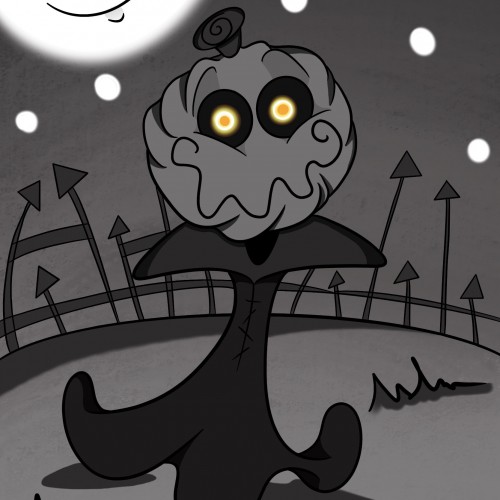
Billy-Boy

A new character for my Scribble universe. Species:Cucurbits Home: Gardens Likes: Plants, veggies, night time, he thinks the moon is friendly Dislikes: Fire, Ghoul (Ghoul is a big meanie)

  • 25
  • 2
  • 0
Brianna Eisman Brianna Eisman
Enlarge
Pretty Plants 2 - Acrylic on Canvas

I love the versatility of acrylic paint. You can change the consistency by adding water or acrylic mediums. These additions enable artists to create transparent glazes or thick impasto textures. The fast-drying nature of acrylics makes it easier to correct mistakes or make alterations during the painting process. This painting is part of a three piece set featuring my favorite plants painted on a soft gradient background.

  • 231
  • 3
  • 0
Jasmin Jasmin
Enlarge
House Plant

Acrylic paint on cardboard.

  • 188
  • 1
  • 0
Suzette Suzette
Enlarge
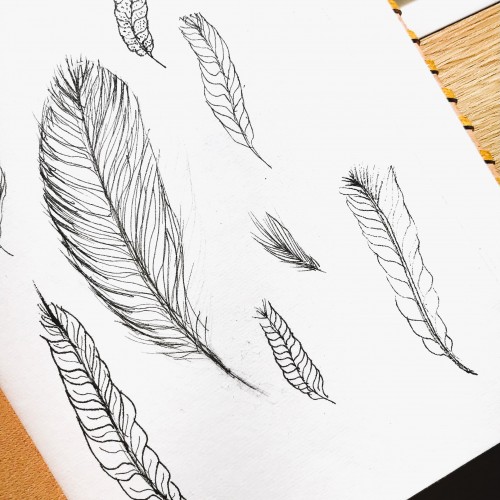
FeathersAndPlants

  • 217
  • 6
  • 2
Cédric Charrier Cédric Charrier
Enlarge
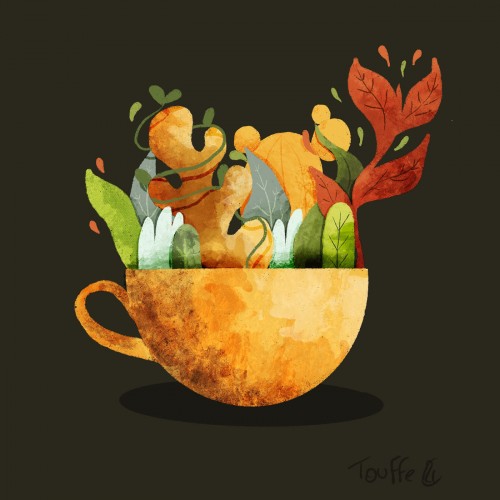
couleurs dautomne

J'adore cette période de l'année pour toutes ces jolies couleurs, les petites soirées blotties sous le plaide avec mon thé !

  • 48
  • 2
  • 0
Izabela Izabela
Enlarge
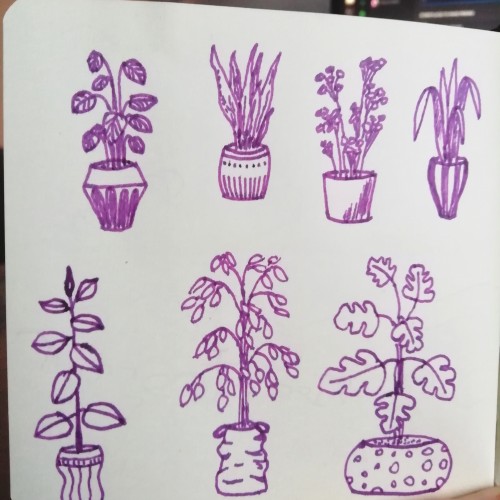
Plants.

Doodling in a sketchbook is very stress-relieving and calming. I recommend it to everyone :) You don't need any artistic skills. All you need is paper and a pen :) Or a sketchbook and a fountain pen with purple ink, as in my case.

  • 10
  • 4
  • 0
crais robert crais robert
Enlarge
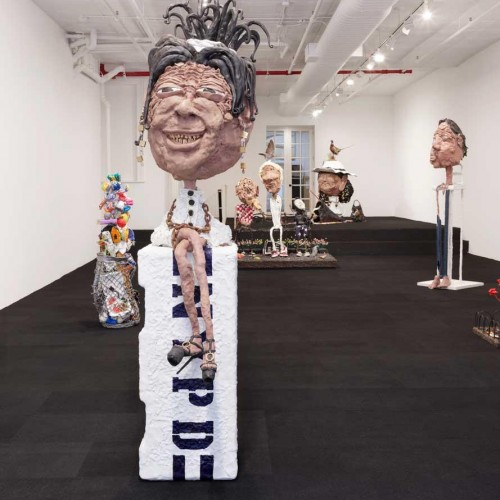
The House of Ryman: A Family of Artists

Take the Rymans, for instance. There is Robert Ryman (1930 – 2019), the patriarch whose paintings are indisputable icons of the modernist canon. Then there are his wives and children. Ethan Ryman (b. 1964) is the oldest of Robert’s three artist children. Though his mother was not an artist, Lucy Lippard (b. 1937) was still a scrappy and eloquent art critic, a feminist, a social activist, and an environmentalist. Ethan’s meticulously considered and crafted artworks might be characterized as somewhere between photography and sculpture, the abstract and the (f)actual. Though Lippard and Ryman divorced just six years after their 1961 marriage, their son is arguably the closest to his father’s methodologies if not his medium, and was certainly the last to become a visual artist. Robert Ryman went on to marry fellow artist Merrill Wagner (b. 1935) in 1969 and they had two sons. Though Wagner is more quietly acknowledged than Ryman, her boundless practice includes sculpture, painting, drawing, installation, and more. With an emphasis on materiality, her sites are indoors and out, her styles alternating. Will Ryman (b. 1969) is the elder son of Robert and Merrill. He started out as an actor and playwright though he too eventually assumed a visual art practice to become a sculptor. He is best known for his large-scale public artworks and theatrical installations that focus on the figurative and psychological, at times absurdist, narratives. Cordy Ryman (b. 1971) is the youngest, and the only one of the three who knew that he was going to be a visual artist early on. His work is abstract, the sophistication understated, and his output is prolific. With his mother’s DIY flair, his homely materials seem sourced from the overflow of construction projects, lumberyards, and Home Depot. Ethan Ryman said that, when he was young, he didn’t want to be a visual artist. Instead, he pursued music and acting, producing records for Wu-Tang Clan, among others, getting “my ears blown out.” But he was always surrounded by artists—Sol LeWitt, Carl Andre, Jan Dibbetts, William Anastasi, and countless others at his mother’s place on Prince Street in SoHo and at the Rymans’s 1847 Greek Revival brownstone on 16th Street in Manhattan, where everyone was often seated around the family dinner table. He would spend part of most weekends in the highly stimulating chaos that reigned there—birds, dogs, plants, toys, art, people, everywhere. “While nowhere near as overwhelming, I was also constantly exposed to artists, writers and other creative folks at my Mom’s place.” “While nowhere near as overwhelming, I was also constantly exposed to artists, writers and other creative folks at my Mom’s place.” Ethan Ryman Lippard was “a powerhouse.” She took Ethan on her lecture tours, readings, conferences, galleries, studios, wherever she had to go. And while that almost always breeds rebellion, at some point, he began noticing all the art around them—both what it looked like and how it was made. He began to take photographs of buildings and realized that “abstract color fields were all around us.” He also began to notice his father and Wagner’s work more carefully—how sensitively it was executed and how reactive it was to its surroundings. “Once you’re interested, you notice. When I asked my dad questions, I would most likely get a one-word response. I had to go to his lectures for answers where he broke down modern art for me. After listening to him, it seemed to me we should all be painting, otherwise what were we doing with our lives?” Will Ryman, on the other hand, said that all his work has a narrative component. His background is in theatre and his interests have always been film and plays, his narratives about New York City and American culture and history. “It’s a city I love,” he said. “I try to observe culture in a bare-bones way and I’ve always been interested in telling stories—we’re the only species that tells stories to each other. It comes from an intuitive, cathartic place in me. I want to stay away from preconceived notions, although that’s not completely possible. I have no plan except to do something honest, with a little bit of a political bent and humor but I’m not an activist. I’m interested in exploring a culture and its flaws as an interaction between human beings.” His interests and his work are very different from his last name. There is no connection to minimalism. He didn’t go to art school, drawn instead to theatre workshops and theatre troupes. “I didn’t become involved with the visual arts until my mid-thirties. It’s easy to say what I make is a reaction, but I dismiss that. And I also wouldn’t say it’s rebellious after twenty years.” Of his family, he said, “we’re a normal family, a close family, with all the dynamics and complications that go along with that. And while everyone who came to 16th Street were artists, they were also just family friends. I have no other measure for how a family interacts. It was just the way it was.” Cordy Ryman was the only one of the three who went to art school, earning a BFA from the School of Visual Arts, but it was reportedly awkward for him, since all his teachers knew his parents. “When I started making abstract paintings, it was kind of push and pull but it became more interesting to me than my earlier figurative or narrative work. That’s when I started to know where I came from. I realized that I had a visual memory, and the language was there, a language I didn’t know I knew. We all had different ways of working; our processes are very different and it’s hard to compare us. Ethan and I use a similar inherited language but he thinks about what he does more. I work very fast, the ideas come from the process itself. I work in two or three modes simultaneously and bounce around.” At home, they were around Wagner’s work since her studio was there. “Will and I were always in her studio, helping her, going to her installation sites with her, adjusting her boulders or whatever the project was she was working on. That was special and made a deep impression, but I didn’t realize it then.” All five Rymans have in common an acute consciousness of space and of place as an integral component of their work. For the brothers, part of that consciousness might stem from their parents, but also from their attachment to their family home, which was a crucible of sorts for them, where everyone was an artist. To Cordy, the house was a “living, breathing thing, and the art in it felt alive, growing, and occupying any space that was available. It was the structure of our world. When I’m making work, it doesn’t need to be the most beautiful thing ever, but it needs to have its own life, its own space, like the art we grew up with.” And the next generation of Rymans, also all sons—what about them? Will said his son is still too young to know. Cordy thought the same about his two younger children; his oldest is in the art world, but not as an artist—so far. Ethan perhaps summed it up best: my two sons are artists; they just don’t know it yet.

  • 12
  • 1
  • 0
Mara Mara
Enlarge
Gräser

From 2020. I think that the style is from somewhere, but I do not remember it clearly.

  • 5
  • 4
  • 0
Mara Mara
Enlarge
Vorhang

From 2020, when I found Tombow markers. A pack of 5 was so expensive, but I liked using them.

  • 6
  • 3
  • 0
OKAT OKAT Plus Member
Enlarge
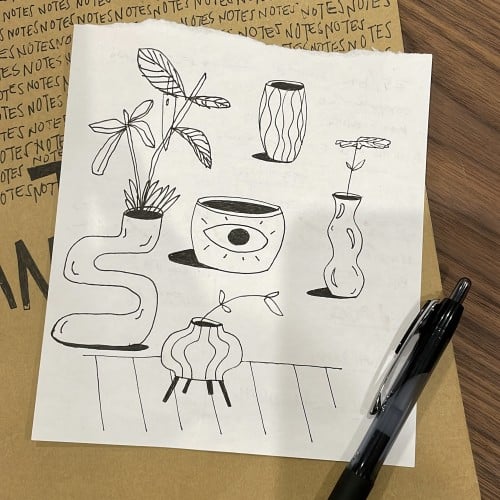
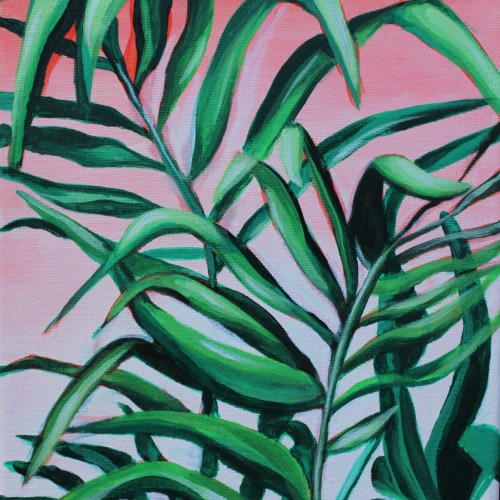
Random doodles of quirky vases

In response to last week's doodle prompt.
  • 548
  • 36
  • 1
Anna Anna
Enlarge
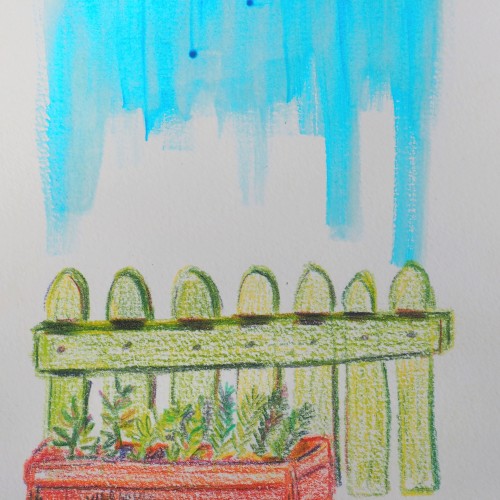
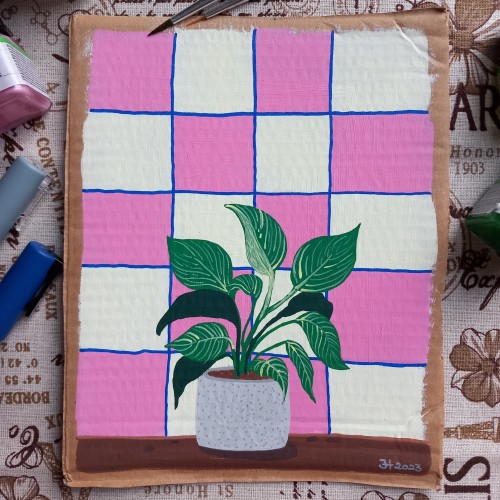
Pot IV: Blue (last one)

Drawing of plants in a pots from the garden in colored pencils and acrylic paint. I made postal cards if anyone interested send me a message :)
  • 82
  • 3
  • 0
Anna Anna
Enlarge
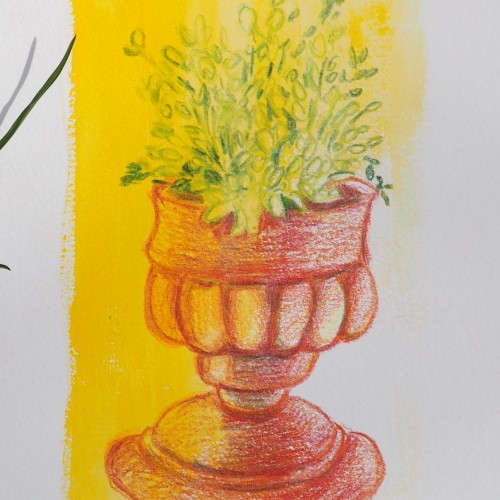
Pot III: Yellow

Drawing of plants in a pots from the garden in colored pencils and acrylic paint

  • 79
  • 5
  • 0
Anna Anna
Enlarge
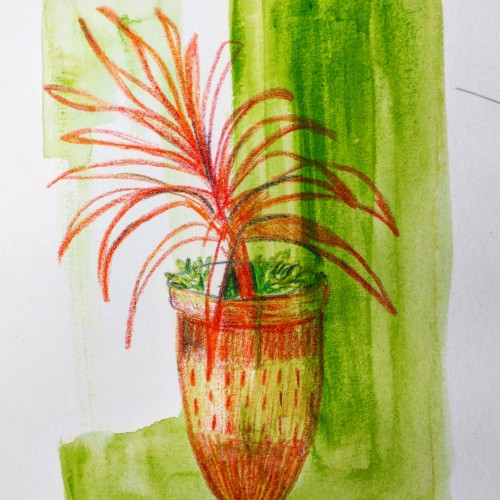
Pot II: Green

Drawing of plants in a pots from the garden in colored pencils and acrylic paint

  • 358
  • 5
  • 0
Anna Anna
Enlarge
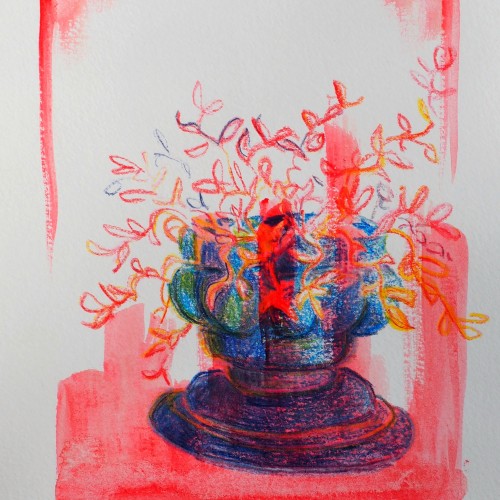
Pot I : Red

Drawing of plants in a pots from the garden in colored pencils and acrylic paint

  • 81
  • 9
  • 0
« Previous
Next »

Doodle Addicts

Navigate
  • Discover Art
  • Drawing Challenges
  • Weekly Drawing Prompts
  • Artist Directory
  • Art Marketplace
  • Resources
Other
  • News + Blog
  • About Us
  • Contact Us
Newsletter
© 2026 Doodle Addicts™ — All Rights Reserved Terms & Conditions / Privacy Policy / Community Guidelines
Add Doodle Addicts to your home screen to not miss an update!
Add to Home Screen