Previous
Next
logo logo
logo logo
  • Discover Art
    • Trending
    • Most Recent
    • Most Faves
    • Most Views
    • Curated Galleries
  • Drawing Challenges
    • See All Challenges
  • Drawing Prompts
  • Artists
    • Most Popular
    • Most Recent
    • Available For Hire
    • Artist Spotlight
  • More
    • Marketplace
    • Art Discussions
    • Resources
    • News + Blog
Login
Most Recent
Select an option
  • Most Relevant
  • Most Faves
  • Most Views
  • Most Comments
  • Most Recent
SEARCH RESULTS FOR

artists

Sabina Hahn Sabina Hahn
Enlarge
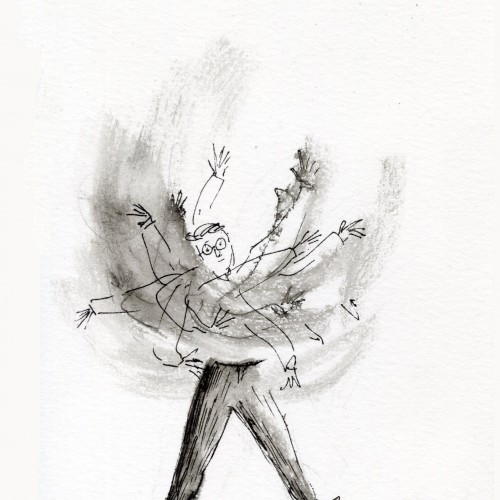
Dmitry Shostakovich (1906–1975)

Dmitry Shostakovich (1906–1975) Shostakovich’s contemporaries do not recall seeing him working, at least not in the traditional sense. The Russian composer was able to conceptualize a new work entirely in his head, and then write it down with extreme rapidity—if uninterrupted, he could average twenty or thirty pages of score a day, making virtually no corrections as he went. But this feat was apparently preceded by hours or days of mental composition—during which he “appeared to be a man of great inner tensions,” the musicologist Alexei Ikonnikov observed, “with his continually moving, ‘speaking’ hands, which were never at rest.” Shostakovich himself was afraid that perhaps he worked too fast. “I worry about the lightning speed with which I compose,” he confessed in a letter to a friend. Undoubtedly this is bad. One shouldn’t compose as quickly as I do. Composition is a serious process, and in the words of a ballerina friend of mine, “You can’t keep going at a gallop.” I compose with diabolical speed and can’t stop myself.… It is exhausting, rather unpleasant, and at the end of the day you lack any confidence in the result. But I can’t rid myself of the bad habit. - From Daily Rituals: How Artists Work by Mason Currey #dailyrituals #inktober #shostakovich @masoncurrey

  • 432
  • 8
  • 0
Sabina Hahn Sabina Hahn
Enlarge
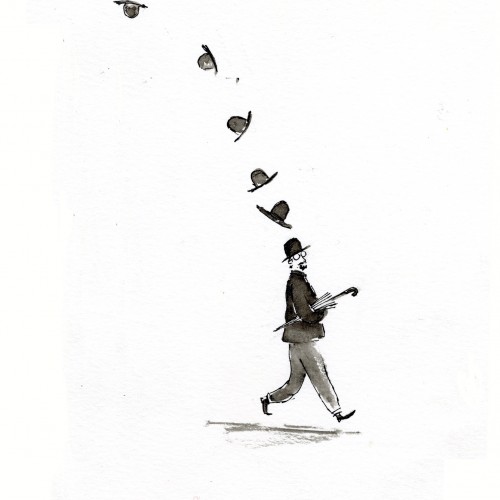
Erik Satie

Erik Satie (1866–1925) In 1898, Satie moved from Paris’s Montmartre district to the working-class suburb of Arcueil, where he would live for the rest of his life. Most mornings, however, the composer returned to the city on foot, walking a distance of about six miles to his former neighborhood, stopping at his favorite cafés along the way. According to one observer, Satie “walked slowly, taking small steps, his umbrella held tight under his arm. When talking he would stop, bend one knee a little, adjust his pince-nez and place his fist on his hip. Then he would take off once more, with small deliberate steps.” His dress was also distinctive: the same year that he moved to Arcueil, Satie received a small inheritance, which he used to purchase a dozen identical chestnut-colored velvet suits, with the same number of matching bowler hats. Locals who saw him pass by each day soon began calling him the Velvet Gentleman. The last train back to Arcueil left at 1:00 A.M., but Satie frequently missed it. Then he would walk the several miles home, sometimes not arriving until the sun was about to rise. Nevertheless, as soon as the next morning dawned, he would set off to Paris once more. The scholar Roger Shattuck once proposed that Satie’s unique sense of musical beat, and his appreciation of “the possibility of variation within repetition,” could be traced to this “endless walking back and forth across the same landscape day after day.” Indeed, Satie was observed stopping to jot down ideas during his walks, pausing under a streetlamp if it was dark. During the war the streetlamps were often extinguished, and rumor had it that Satie’s productivity dropped as a result. - From Daily Rituals: How Artists Work by Mason Currey

  • 288
  • 5
  • 0
Sabina Hahn Sabina Hahn
Enlarge
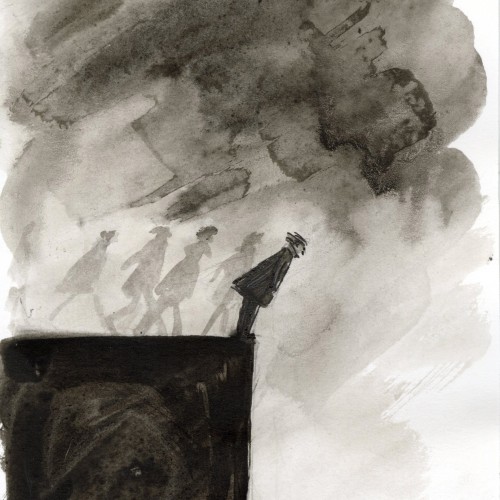
Samuel Beckett

Samuel Beckett (1906–1989) On a late-night walk near Dublin harbor, Beckett found himself standing on the end of a pier in the midst of a winter storm. Amid the howling wind and churning water, he suddenly realized that the “dark he had struggled to keep under” in his life—and in his writing, which had until then failed to find an audience or meet his own aspirations—should, in fact, be the source of his creative inspiration. “I shall always be depressed,” Beckett concluded, “but what comforts me is the realization that I can now accept this dark side as the commanding side of my personality. In accepting it, I will make it work for me.” - From Daily Rituals: How Artists Work by Mason Currey #dailyrituals #inktober #samuelbeckett @masoncurrey

  • 438
  • 11
  • 6
Sabina Hahn Sabina Hahn
Enlarge
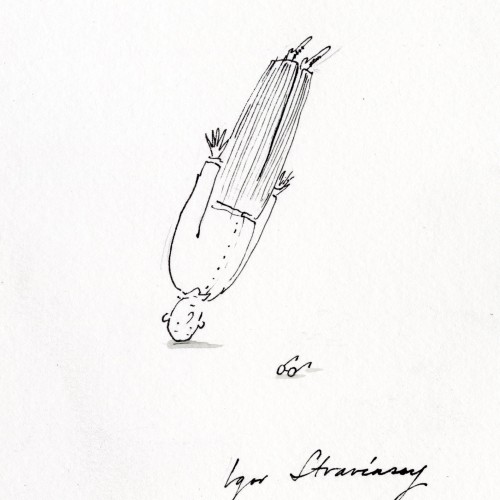
Igor Stravinsky

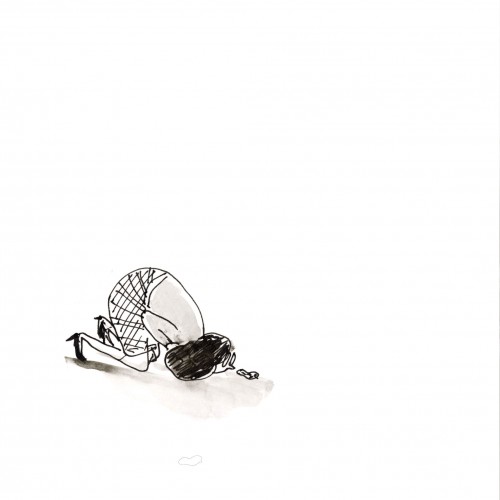
Igor Stravinsky (1882–1971) “I get up at about eight, do physical exercises, then work without a break from nine till one,” Stravinsky told an interviewer in 1924. Generally, three hours of composition were the most he could manage in a day, although he would do less demanding tasks—writing letters, copying scores, practicing the piano—in the afternoon. Unless he was touring, Stravinsky worked on his compositions daily, with or without inspiration, he said. He required solitude for the task, and always closed the windows of his studio before he began: “I have never been able to compose unless sure that no one could hear me.” If he felt blocked, the composer might execute a brief headstand, which, he said, “rests the head and clears the brain.” - From Daily Rituals: How Artists Work by Mason Currey

  • 360
  • 2
  • 1
Sabina Hahn Sabina Hahn
Enlarge
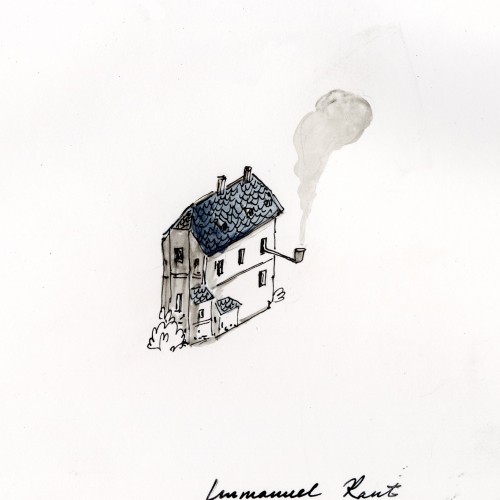
Immanuel Kant

Immanuel Kant (1724–1804) Kant’s biography is unusually devoid of external events. As Heinrich Heine wrote: The history of Kant’s life is difficult to describe. For he neither had a life nor a history. In actual fact, as Manfred Kuehn argues in his 2001 biography, Kant’s life was not quite as abstract and passionless as Heine and others have supposed…. If he failed to live a more adventurous life, it was largely due to his health: the philosopher had a congenital skeletal defect that caused him to develop an abnormally small chest, which compressed his heart and lungs and contributed to a generally delicate constitution. In order to prolong his life with the condition—and in an effort to quell the mental anguish caused by his lifelong hypochondria—Kant adopted what he called “a certain uniformity in the way of living and in the matters about which I employ my mind.” This routine was as follows: Kant rose at 5:00 A.M., after being woken by his longtime servant, a retired soldier under explicit orders not to let the master oversleep. Then he drank one or two cups of weak tea and smoked his pipe. According to Kuehn, “Kant had formulated the maxim for himself that he would smoke only one pipe, but it is reported that the bowls of his pipes increased considerably in size as the years went on.” - From Daily Rituals: How Artists Work by Mason Currey #dailyrituals #inktober #ImmanuelKant @masoncurrey

  • 338
  • 8
  • 2
TimShch TimShch
Enlarge
50heads #2

Artists I'm inspired by. For every head different material: pencil, ballpoint pen, brush pen, colored pencils + ink, watercolour

  • 44
  • 4
  • 0
Piotr Piwko Piotr Piwko
Enlarge
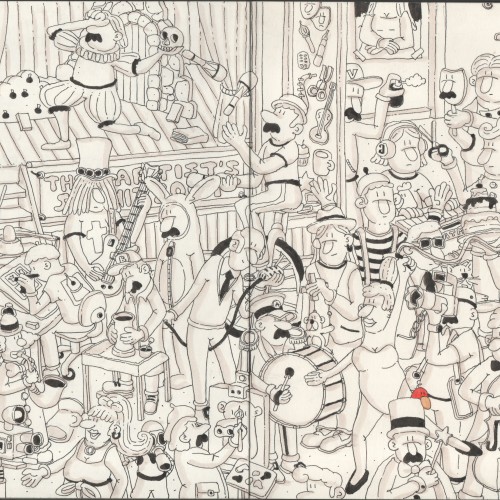
The Artists Summit 2024

  • 116
  • 5
  • 2
Steven Steven
Enlarge
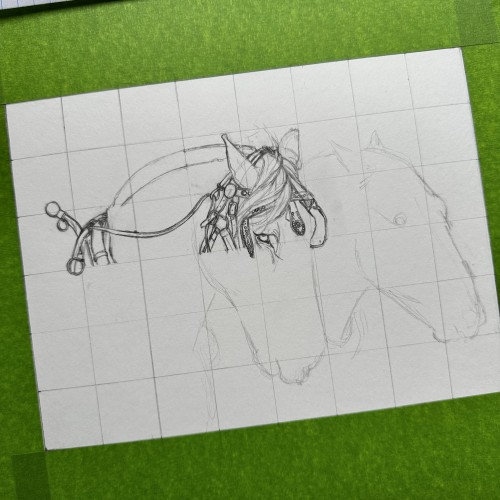
Some drawings of mine
1/5

All my drawings are random ideas from my head. I actually just started drawing in pencil about a year ago. I love to normally use felt tip pens. I just hope all like what they see. We're all artists here so everyone should know that we are our own worst critics lol.

  • 4
  • 2
  • 0
Sabina Hahn Sabina Hahn
Enlarge
Joyce Carol Oates

Joyce Carol Oates (b. 1938) The first several weeks of a new novel, Oates has said, are particularly difficult and demoralizing: “Getting the first draft finished is like pushing a peanut with your nose across a very dirty floor.” From Daily Rituals: How Artists Work by Mason Currey #dailyrituals #inktober #JoyceCarolOates @masoncurrey

  • 489
  • 1
  • 0
Sabina Hahn Sabina Hahn
Enlarge
Joan Miró

Joan Miró (1893-1983) Miró always maintained a rigidly inflexible daily routine—both because he disliked being distracted from his work, and because he feared slipping back into the severe depression that had afflicted him as a young man, before he discovered painting. To help prevent a relapse, his routine always included vigorous exercise—boxing in Paris; jumping rope and Swedish gymnastics at a Barcelona gym; and running on the beach and swimming at Mont-roig, a seaside village where his family owned a farmhouse. Miró hated for this routine to be interrupted by social or cultural events. As he told an American journalist, “Merde! I absolutely detest all openings and parties! They’re commercial, political, and everybody talks too much. They get on my tits!” From Daily Rituals: How Artists Work by Mason Currey

  • 451
  • 6
  • 0
Hermit Hermit
Enlarge
CBA - FOUR

(Gel Fineliner on A5 Paper) An artist isn't being stroppy when they don't want to do any work. It's literally because they "can't be arsed!"

  • 309
  • 3
  • 0
Sabina Hahn Sabina Hahn
Enlarge
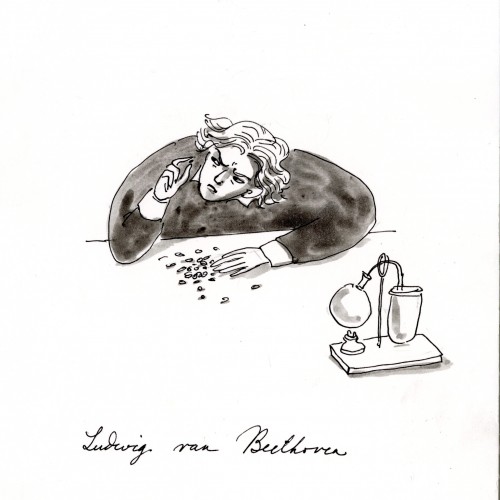
Ludwig van Beethoven

Ludwig van Beethoven (1770–1827) Beethoven rose at dawn and wasted little time getting down to work. His breakfast was coffee, which he prepared himself with great care—he determined that there should be sixty beans per cup, and he often counted them out one by one for a precise dose. From Daily Rituals : How Artists Work by Mason Currey. #dailydrawing #dailyritual #beethoven #coffee #inktober @masoncurrey

  • 225
  • 4
  • 0
Sabina Hahn Sabina Hahn
Enlarge
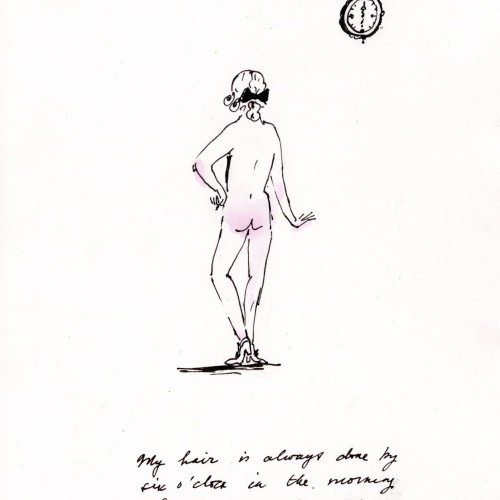
Wolfgang Amadeus Mozart

Wolfgang Amadeus Mozart In a 1782 letter to his sister, he gave a detailed account of these hectic days in Vienna: "My hair is always done by six o’clock in the morning and by seven I am fully dressed. I then compose until nine. From nine to one I give lessons. Then I lunch..." From "Daily Rituals: How Artists Work", edited and with text by Mason Currey.

  • 350
  • 3
  • 0
Hermit Hermit
Enlarge
CUSTOMER SERVICE

(Gel Fineliner on A5 Paper) A piece for Inktober, but one which references the way some artists self-censor so as not to offend anyone.

  • 229
  • 2
  • 0
Sabina Hahn Sabina Hahn
Enlarge
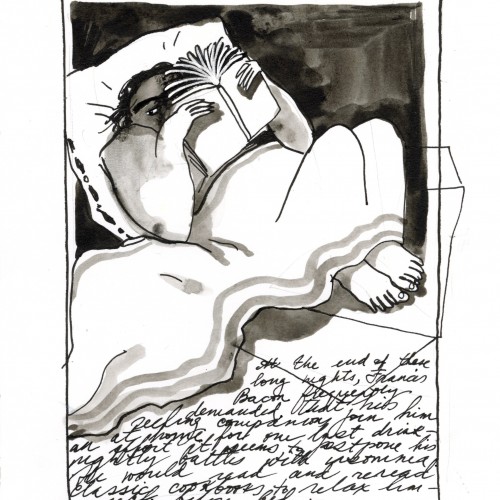
Francis Bacon

I was feeling listless about this inktober until I picked up Daily Rituals : How artists work by Mason Currey. I immediately knew that I want to do these portraits for the inktober. FRANCIS BACON. At the end of these long nights, Bacon frequently demanded that his reeling companions join him at home for one last drink - an effort, it seems, to postpone his nightly battles with insomnia. Bacon depended on polls to get to sleep, and he would read and reread classic cookbooks to relax himself before bed. #inktober #portraits #francisBacon

  • 253
  • 2
  • 0
Joselo Rocha Joselo Rocha
Enlarge
Abstract Sepia

For some reason I can't stop looking at it.

  • 129
  • 5
  • 2
Doug Dutton Doug Dutton
Enlarge
Chaos- smoking rabbit

https://www.redbubble.com/shop/ap/157162852

  • 5
  • 0
  • 0
Duncan Weller Duncan Weller
Enlarge
The Artists

The background of this painting is created by these two girls. I had daughters of a friend paint a canvas and then I painted them into their painting. It could be a commentary on modern art, but it's ore just for fun and makes for a cool image.

  • 215
  • 1
  • 0
Brianna Eisman Brianna Eisman
Enlarge
Pretty Plants 2 - Acrylic on Canvas

I love the versatility of acrylic paint. You can change the consistency by adding water or acrylic mediums. These additions enable artists to create transparent glazes or thick impasto textures. The fast-drying nature of acrylics makes it easier to correct mistakes or make alterations during the painting process. This painting is part of a three piece set featuring my favorite plants painted on a soft gradient background.

  • 230
  • 3
  • 0
Roger Warn Roger Warn
Enlarge
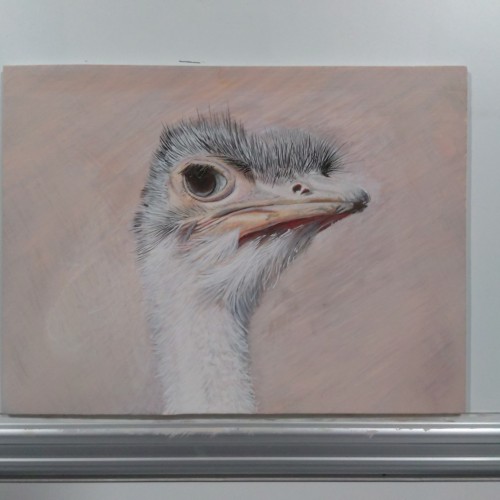
Ostrich.  Egg tempera on panel. 23cm x 30cm

This is my first attempt at traditional egg tempera painting. The panel is a Masonite board from Michaels, but I need to use true gesso because the egg tempera will not adhere to acrylic gesso. Some of my favorite artists used egg tempera. Andrew Wyeth, Robert Vickrey, and Colin Fraser are all masters of this ancient and archival medium. I have been self studying this technique for months and I was very excited to start experiencing the medium. Egg tempera is like layering stained glass on top of stained glass. the painter can expect a luminous glow to take shape as the colors blend visually through the layers of paint - assisted by the chalk of the true gesso. Egg tempera has been described as the closest painting technique to drawing, hence my draw to this medium.

  • 10
  • 1
  • 0
erik cheung erik cheung
Enlarge
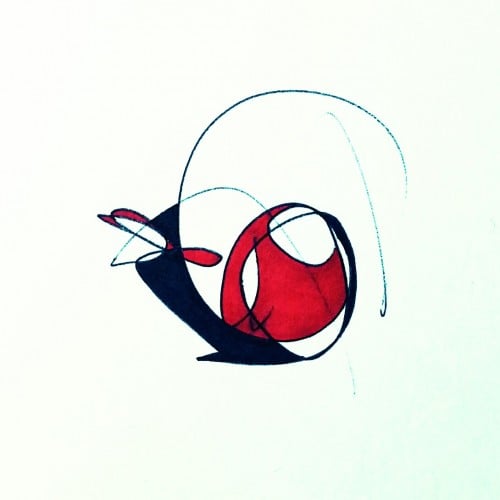
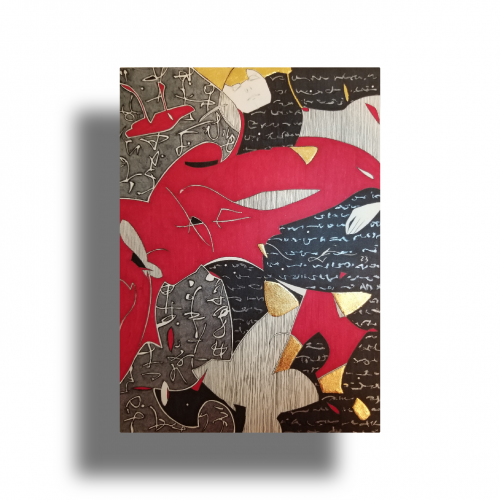
Civilization

The idea is to show a figure crossing over two ` scripts’ with a bilingual suggestion. By standing in between worlds, we see opposing viewpoints. Many artists have incorporated typography as symbols in their paintings since the 60s, but no one has attempted to approach lines in this `written’ manner. How different it is are the two writing styles of the East and the West; one with angular lines while the other in a smooth flow! This work juxtaposes the symbolism of cultures – script. At the same time, it questions the need to grasp the full meaning of the script to appreciate the aesthetic flow of calligraphic lines.

  • 11
  • 2
  • 0
Stephen Stephen
Enlarge
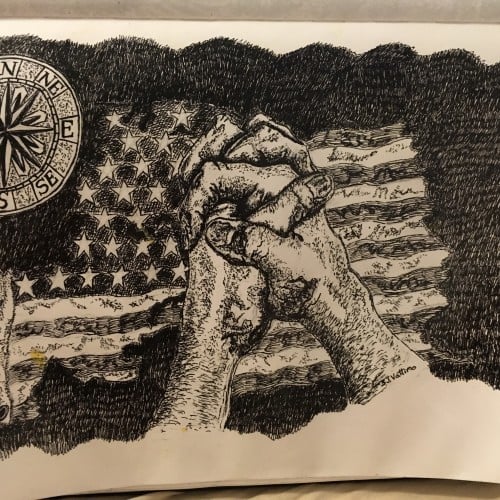
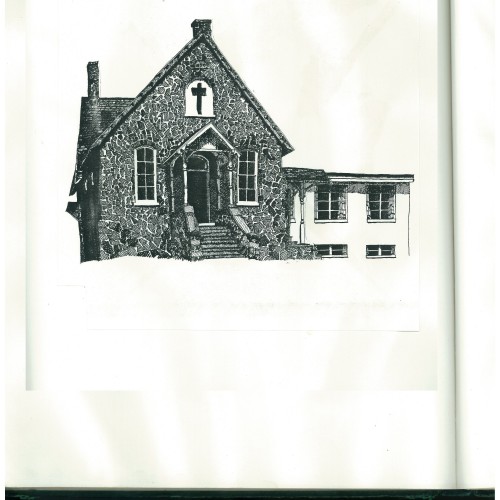
Foundation of America

This pen-and-ink illustration was done for the cover of a church statement of faith. I named this illustration Foundation of America because I believe this country was founded by Christians who had strong faith in the God of the Bible, and through faith, prayer, and sacrifice, the patriots overcame the mighty British military. By the hand of God, a new nation was born: the United States of America. When the United States was filled with God-fearing people, God raised the country to be a super power, and the world envied the United States and flocked to her shores, the land of freedom and opportunity. Now this country has forgotten the God who gave birth to her and now is setting up new idols to worship: idols of wood, stone, metals that do not hear or see or care. Because the United States has forgotten God, it has been plagued with storms, tornadoes, floods, droughts and her enemies are waging war with her, waiting to celebrate her fall. It is my hope and prayer that people who love this country will return to honoring God and return to giving Him thanks for all the great works He has done for this nation and turn from our sins and follow God by obeying His Word: the Holy Bible. That God will remove His hand of judgment and His blessing may return to our country. This church was fist built in 1890 and is still being used as a church. It is in Norristown, Pennsylvania. This was the first Bible-believing church I attended when I became a Christian. (October 28, 2017)

  • 345
  • 5
  • 0
Will (Bampi) Edwards Will (Bampi) Edwards
Enlarge
Black Capped Chickadee

#blackcappedchickadee Facts A bird almost universally considered “cute” thanks to its oversized round head, tiny body, and curiosity about everything, including humans. The chickadee’s black cap and bib; white cheeks; gray back, wings, and tail; and whitish underside with buffy sides are distinctive. Its habit of investigating people and everything else in its home territory, and quickness to discover bird feeders, make it one of the first birds most people learn. Want to know more check out this link https://www.allaboutbirds.org/guide/Black-capped_Chickadee/overview

  • 163
  • 4
  • 4
Sneezy Sneezy
Enlarge
Rocklord

I created this piece yr 2016 as portfolio to get into a company doing sketch card art, but by asking some sketch card artists on this site about how much you get paid for doing this sketch card art`and it was so ridiculous that I decided to not send this portfolio piece to the trading card company also you have to give up your original artwork to the company cuz they need to put this sketch card art in the pack of trading cards so lucky buyer will get the original sketch card that is the idea. For how much they paying the artists for giving up their original art did not make any sense to me . Done 2016 with color pencil and ink on 2.5 x 3.5 bristol. It is sketch card. Original art $20+s/h and I am open for commission using color pencil or lead pencil for original artwork. Sizes range from 8.5x11, 9x12, 11x14, 11x17. The Commission rate starts from $20 and up. If your interested leave a comment or jungmeister4@yahoo.com My artbook is ready for purchase If interested you can purchase each book by clicking on the link https://www.artwanted.com/artist.cfm?ArtID=115637&Tab=Books&CPID=1133

  • 142
  • 0
  • 0
Ellis Illustrations Ellis Illustrations
Enlarge
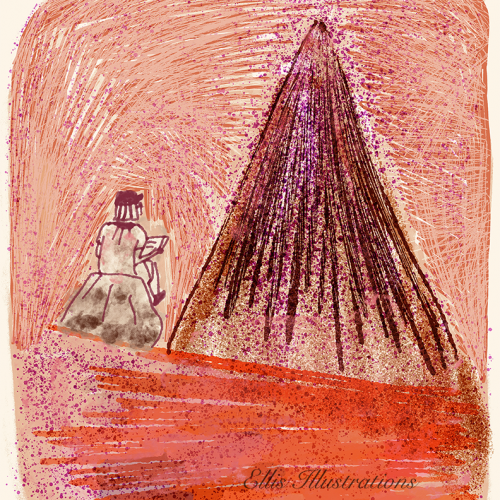
Reading a book outside any thing wrong with that?!

A beautiful stylish woman reading a book outside beside a brown coloured mountain. Use your imagination. Originals downloads sold elsewhere and anyone selling these is liable to prosecution for art theft and illegal art dealing. By the way, if it doesn’t say your name on the description its obviously not you! Busy with new things that don’t include your name sorry it not you! She actually is reading literature fiction in particular and most definitely not newspapers..! No Stalkers from ‘downstairs’ please. You are not part of the picture sorry! Well, Life goes on get over it because I had two angry men stalkers walking behind me too close the other day dressed in red and black trying to bully me on the street. These people understand nothing about art and are illegal hackers and they pretend to be offering employment possibly part of the same company that I mentioned earlier. Haha! no one replied to their offer! If they bother you too freely report them. They could be one here pretending to be artists and bullying people. Don’t give negativity a chance! And I will keep reposting this picture without this negativity at the mosh pit ‘bottom’. Interesting stories to accompany my very beautiful illustrations. Interested in buying? Even better! I am still smiling!

  • 93
  • 3
  • 0
Stephen Stephen
Enlarge
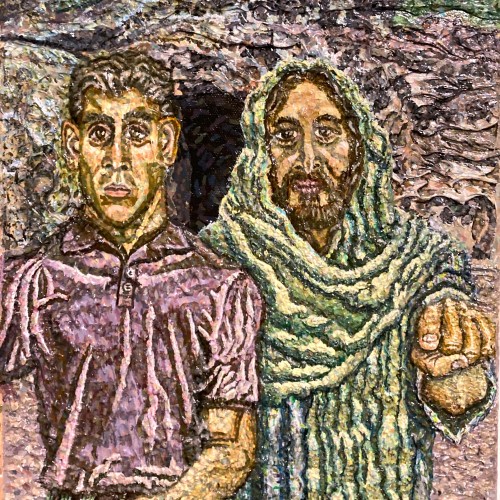
God Provides

Keep Your Eyes on the Lamp Bearer. Don’t walk around aimlessly. Don’t leave your armor on your bed chamber’s floor. Keep your eyes and ears focused on Jesus. He is the lamp bearer, who illuminates the path you should travel. Don’t walk around aimlessly! Don’t leave your armor on your bedchamber’s floor. Specters are crouched in the shadows of the thicket that line your path. They plot to ambush you as soon as you wander aimlessly into the thicket. Keep your eyes and ears focused on Jesus. He is the lamp bearer, who illuminates the path you should travel. If you have walked into a fog and lost your focus, If you have walked aimlessly into the shadows the thicket If you find yourself in the clutches of the specters of the dark Don’t be anxious. Don’t lose hope. Humble yourself and call out to your commander. He will send in his angelic army to retrieve you To restore you back to the ranks of His army Don’t walk around aimlessly. Don’t leave your armor on your bedchamber’s floor! Keep your eyes and ears focused on Jesus. He is the lamp bearer, who illuminates the path you should travel. (December 3, 2016)

  • 196
  • 0
  • 0
Bohdi Bohdi
Enlarge
Zilla Kami

I made a spread for one of my favorite artists Zilla Kami. I used prisma color pencils to color it!

  • 7
  • 3
  • 0
Art Craft Land Art Craft Land
Enlarge
Tightrope - walkers in eternity  by Esfir Shapiro | ArtCraftLand

segments , steps, blindfolded, a difference of language between the body and something subtle , lack of movement.click -switch! the union of body and soul , the disappearance of the blindfold from the eyes and the flight between the immensely endless bright layers of fields .I am very curious about the sophisticated nature of things and phenomena: myself, people the Universe, I like to consider and feel them like a multi-layered cake, where each layer has its own history, worldview, and even its own temperature. I love to listen lectures of charismatic lovers of philosophy, design, music, human psychology and I enjoy the excitement it brings and the birth of new layers inside me. I rarely manage to silence my inner critic and for many years I have been learning how to be able to do it productively. I am still in the process though. I treat my life as a long voyage, changing directions and yes - sometimes those around me. I understand that even 24 hours a day is not enough and I definitely realize that my life today is much more colorful and interesting than when I was 20 years old.

  • 32
  • 2
  • 0
Bailey DeWolf Bailey DeWolf
Enlarge
Sketch

After a long (very long) stretch of artists block i think i’ve finally gotten past it enough to get this started. But who knows how long it will take me to finish it lol.

  • 120
  • 1
  • 0
crais robert crais robert
Enlarge
The House of Ryman: A Family of Artists

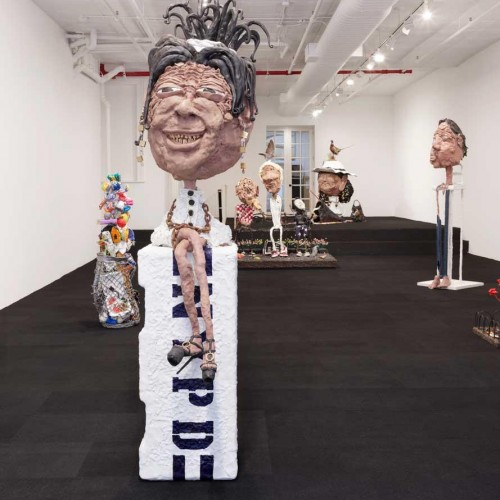
Take the Rymans, for instance. There is Robert Ryman (1930 – 2019), the patriarch whose paintings are indisputable icons of the modernist canon. Then there are his wives and children. Ethan Ryman (b. 1964) is the oldest of Robert’s three artist children. Though his mother was not an artist, Lucy Lippard (b. 1937) was still a scrappy and eloquent art critic, a feminist, a social activist, and an environmentalist. Ethan’s meticulously considered and crafted artworks might be characterized as somewhere between photography and sculpture, the abstract and the (f)actual. Though Lippard and Ryman divorced just six years after their 1961 marriage, their son is arguably the closest to his father’s methodologies if not his medium, and was certainly the last to become a visual artist. Robert Ryman went on to marry fellow artist Merrill Wagner (b. 1935) in 1969 and they had two sons. Though Wagner is more quietly acknowledged than Ryman, her boundless practice includes sculpture, painting, drawing, installation, and more. With an emphasis on materiality, her sites are indoors and out, her styles alternating. Will Ryman (b. 1969) is the elder son of Robert and Merrill. He started out as an actor and playwright though he too eventually assumed a visual art practice to become a sculptor. He is best known for his large-scale public artworks and theatrical installations that focus on the figurative and psychological, at times absurdist, narratives. Cordy Ryman (b. 1971) is the youngest, and the only one of the three who knew that he was going to be a visual artist early on. His work is abstract, the sophistication understated, and his output is prolific. With his mother’s DIY flair, his homely materials seem sourced from the overflow of construction projects, lumberyards, and Home Depot. Ethan Ryman said that, when he was young, he didn’t want to be a visual artist. Instead, he pursued music and acting, producing records for Wu-Tang Clan, among others, getting “my ears blown out.” But he was always surrounded by artists—Sol LeWitt, Carl Andre, Jan Dibbetts, William Anastasi, and countless others at his mother’s place on Prince Street in SoHo and at the Rymans’s 1847 Greek Revival brownstone on 16th Street in Manhattan, where everyone was often seated around the family dinner table. He would spend part of most weekends in the highly stimulating chaos that reigned there—birds, dogs, plants, toys, art, people, everywhere. “While nowhere near as overwhelming, I was also constantly exposed to artists, writers and other creative folks at my Mom’s place.” “While nowhere near as overwhelming, I was also constantly exposed to artists, writers and other creative folks at my Mom’s place.” Ethan Ryman Lippard was “a powerhouse.” She took Ethan on her lecture tours, readings, conferences, galleries, studios, wherever she had to go. And while that almost always breeds rebellion, at some point, he began noticing all the art around them—both what it looked like and how it was made. He began to take photographs of buildings and realized that “abstract color fields were all around us.” He also began to notice his father and Wagner’s work more carefully—how sensitively it was executed and how reactive it was to its surroundings. “Once you’re interested, you notice. When I asked my dad questions, I would most likely get a one-word response. I had to go to his lectures for answers where he broke down modern art for me. After listening to him, it seemed to me we should all be painting, otherwise what were we doing with our lives?” Will Ryman, on the other hand, said that all his work has a narrative component. His background is in theatre and his interests have always been film and plays, his narratives about New York City and American culture and history. “It’s a city I love,” he said. “I try to observe culture in a bare-bones way and I’ve always been interested in telling stories—we’re the only species that tells stories to each other. It comes from an intuitive, cathartic place in me. I want to stay away from preconceived notions, although that’s not completely possible. I have no plan except to do something honest, with a little bit of a political bent and humor but I’m not an activist. I’m interested in exploring a culture and its flaws as an interaction between human beings.” His interests and his work are very different from his last name. There is no connection to minimalism. He didn’t go to art school, drawn instead to theatre workshops and theatre troupes. “I didn’t become involved with the visual arts until my mid-thirties. It’s easy to say what I make is a reaction, but I dismiss that. And I also wouldn’t say it’s rebellious after twenty years.” Of his family, he said, “we’re a normal family, a close family, with all the dynamics and complications that go along with that. And while everyone who came to 16th Street were artists, they were also just family friends. I have no other measure for how a family interacts. It was just the way it was.” Cordy Ryman was the only one of the three who went to art school, earning a BFA from the School of Visual Arts, but it was reportedly awkward for him, since all his teachers knew his parents. “When I started making abstract paintings, it was kind of push and pull but it became more interesting to me than my earlier figurative or narrative work. That’s when I started to know where I came from. I realized that I had a visual memory, and the language was there, a language I didn’t know I knew. We all had different ways of working; our processes are very different and it’s hard to compare us. Ethan and I use a similar inherited language but he thinks about what he does more. I work very fast, the ideas come from the process itself. I work in two or three modes simultaneously and bounce around.” At home, they were around Wagner’s work since her studio was there. “Will and I were always in her studio, helping her, going to her installation sites with her, adjusting her boulders or whatever the project was she was working on. That was special and made a deep impression, but I didn’t realize it then.” All five Rymans have in common an acute consciousness of space and of place as an integral component of their work. For the brothers, part of that consciousness might stem from their parents, but also from their attachment to their family home, which was a crucible of sorts for them, where everyone was an artist. To Cordy, the house was a “living, breathing thing, and the art in it felt alive, growing, and occupying any space that was available. It was the structure of our world. When I’m making work, it doesn’t need to be the most beautiful thing ever, but it needs to have its own life, its own space, like the art we grew up with.” And the next generation of Rymans, also all sons—what about them? Will said his son is still too young to know. Cordy thought the same about his two younger children; his oldest is in the art world, but not as an artist—so far. Ethan perhaps summed it up best: my two sons are artists; they just don’t know it yet.

  • 12
  • 1
  • 0
« Previous
Next »

Doodle Addicts

Navigate
  • Discover Art
  • Drawing Challenges
  • Weekly Drawing Prompts
  • Artist Directory
  • Art Marketplace
  • Resources
Other
  • News + Blog
  • About Us
  • Contact Us
Newsletter
© 2026 Doodle Addicts™ — All Rights Reserved Terms & Conditions / Privacy Policy / Community Guidelines
Add Doodle Addicts to your home screen to not miss an update!
Add to Home Screen