Title: Heart and Soul
Medium: illustration pens on sketch book paper
Style: surreal
Category: illustration
Created: Dec-Jan 2024-2024
Artist: Stephen J. Vattimo
Heart and Soul
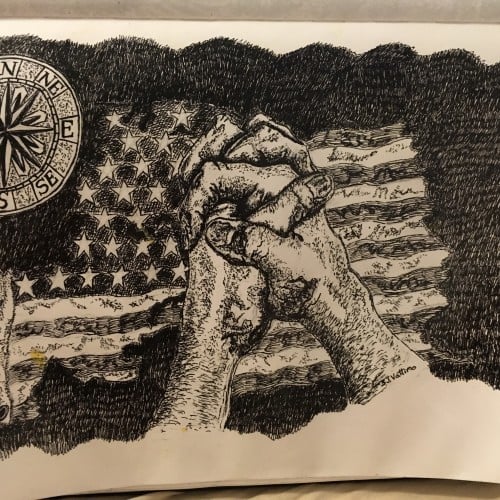
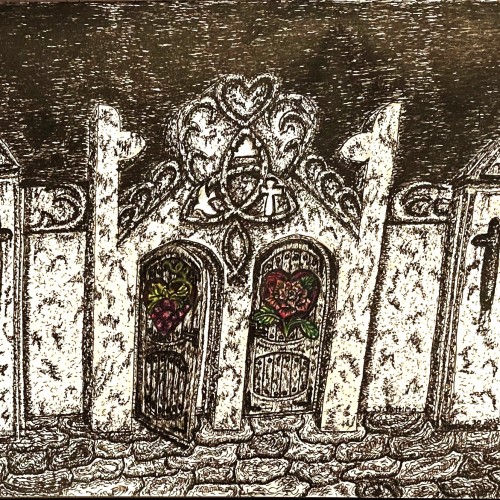
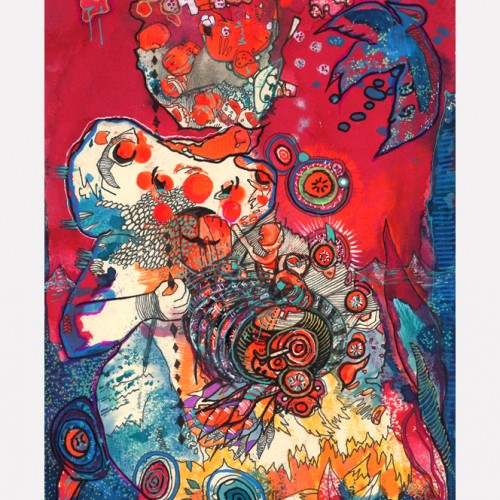
This is preliminary drawing for a painting I am about to begin. The concept for this illustration started as a design for a pumpkin carving contest.
I feel the message of the design is so important for people to hear, I decided to make it into a painting.
The original design, done in pen and ink. The design only shows the two doors of the entrance to a fortress. It was designed for a live pumpkin carving event in mind.
At this type of event, the carver must create their piece of art live on site with spectators watching and asking questions, and there is a time limit.
The evolution of the design?
I added a wall on each side of the entrance, with matching pillars.
Explaining the design of the pillars
The triangle top: the triune God. Representing three persons of God: Father, Son, Holy Spirit.
The cross shape opening in the pillars: The cross is the only path to God, to have the debt of sin satisfied. To reconcile humankind back to himself.
To be released from being a slave to the Devil. To be a new creation empowered by God Spirit.
Explaining the design of the entrance way(gate)
The top of the entrance is in the shape of a heart, represents the seat of human passion, ambition, and allegiance.
The cultic three petal flower is used to represent God in three persons united.
The symbol inside the flower: God’s ministry toward humankind.
Crown: Highest authority
Cross: God’s loving salvation and restoration plan.
The dove: Spiritualty made alive, fellowship with God, empowerment to weather the storm of life, and equip for service to God.
Change in the design of the door.
In the original design, one door had roses carved on it. The pattern took up the whole door.
The other door had a grape vine carved on it. The pattern took up the whole door.
I modified the emblem on the doors by making them smaller and simplified, so I could place them inside heart shapes, so the new images would more clearly communicate what they are meant to represent.
I also added color to the emblems(color pencil) to make them clear of what they are, because of their size and the ink medium ,they were hard to interpret.
Understanding the symbol of the two doors.
The door with the rose inside the heart emblem represents a heart whose passions, ambitiousness, allegiance are focused on the cares, worries, and abstaining riches of the world. Only giving God lip service.
I chose the rose to represent the heart of spiritual allegiance to the world, because roses are pretty, but you can’t eat them to nourish your body. They also have thorns that can cause injury to the body.
So, the parallel point is, just as flower fade and turn to dust, so will the person who chases the thing of the world and has no time for God. For life is very short, we know not which will be our last breath on this side of eternity.
But if a person leaves this earth without excepting the gift God offered them which is salvation from penalty of sin and given enteral life through the work that was done on the cross by God’s son.
Then that soul will appear before Jesus, and just as they did not know him in their life on earth, He will tell them he knows them not.
Into the lake of fire, they will spend eternity.
The door with the grape vine in the heart emblem represents a heart whose passions, ambitiousness, allegiance are for God. To know Him intimately, to obey His teachings, to serve his will.
I chose the grapevine to represent the heart of spiritual allegiance to God, because grapes are nourishing to the body. Jesus also used a grape vine in one of his parables.
He paralleled the spiritual relationship he had with his disciples and the grapevine.
He told them just as branches of a vine must depend on the base of the vine to live and bare fruit, so they must abide him to have abundant life.
Abiding in Christ is not a religious act. It is outside of religion. It is an intimate relationship.
Example: you can belong to a fan club of Paul McCartney and know a lot of things you have heard about him, but he doesn’t even know you exist. Where, if Paul is your father, and you have a good parent to child relationship, then you know him intimately.
So, abiding in God, we commune with him through read his word and living by its teachings. It is spending time in prayer. Sharing our hearts with God and spending time listing to him. Trusting in him as our provider and giving thanks for his provision. Living our lives, with the purpose of pleasing him with the work of our hand and loving our neighbors in the workplace as well as in the community.
Just as a healthy grapevine continues to grow and produce much fruit. Having an imitate relationship with God should be more and more evident in the way we live our lives.
So, when the angel of death pays you an unexpected visit, he escorts you to Jesus’s throne, you know for certain he going to welcome you with loving arms and said welcome home my faithful servant.
Now to which door I chose for my life? It’s the one that is open.
This bible verse one of a couple that inspired me to design this illustration.
1 Corinthians 3:12-13
King James Version
12 Now if any man builds upon this foundation gold, silver, precious stones, wood, hay, stubble.
13 Every man's work shall be made manifest: for the day shall declare it, because it shall be revealed by fire; and the fire shall try every man's work of what sort it is.
This verse is not referring to the rebellious people who have rejected God, this is referring to people who are children of God, who failed to serve God faithful.
Written by Stephen J. Vattimo. 3 Jan 2024
.