David Lynch (1946-2025)
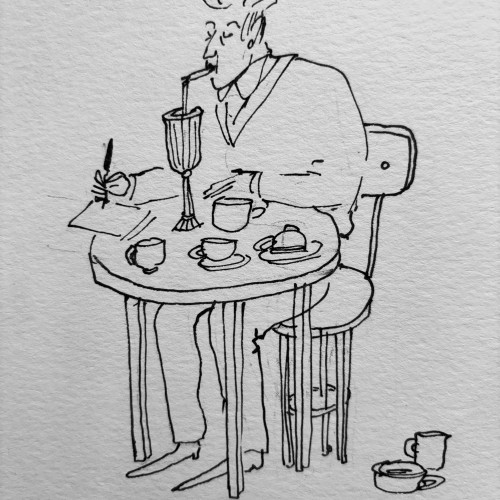
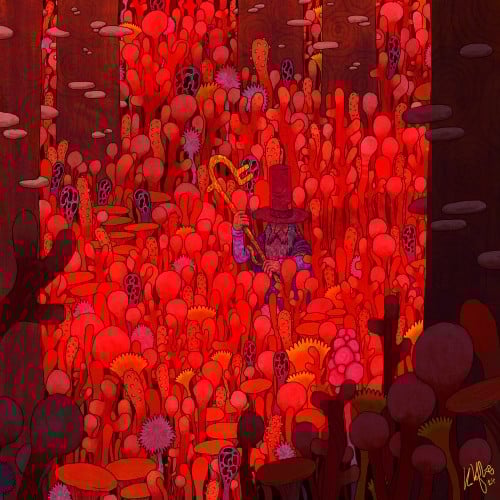
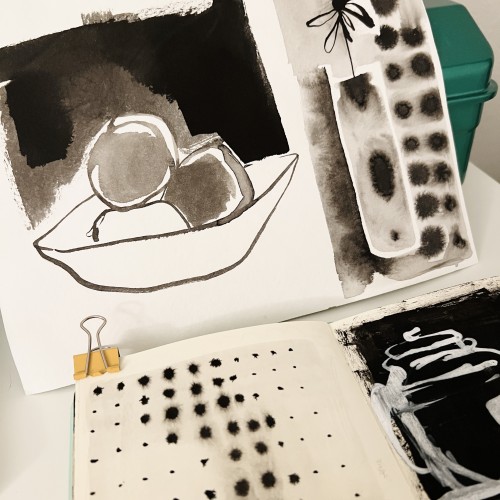
I like things to be orderly,” Lynch told a reporter in 1990. For seven years I ate at Bob’s Big Boy. I would go at 2:30, after the lunch rush. I ate a chocolate shake and four, five, six, seven cups of coffee—with lots of sugar. And there’s lots of sugar in that chocolate shake. It’s a thick shake. In a silver goblet. I would get a rush from all this sugar, and I would get so many ideas! I would write them on these napkins. It was like I had a desk with paper. “
- From Daily Rituals: How Artists Work by Mason Currey
“I don't think it was pain that made [Vincent Van Gogh] great - I think his painting brought him whatever happiness he had.”
― David Lynch
Thank you for all your amazing art!
#dailyrituals #inktober #DavidLynch #goals @masoncurrey
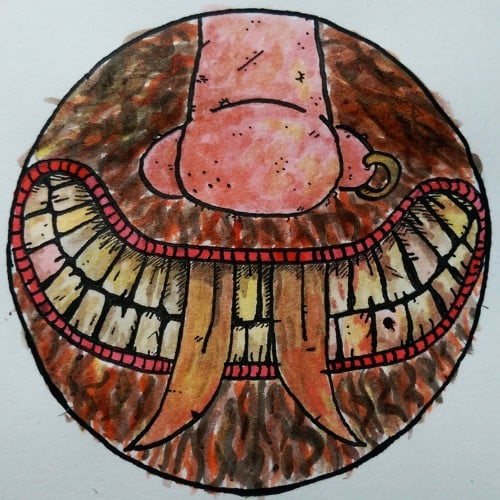
Dmitry Shostakovich (1906–1975)
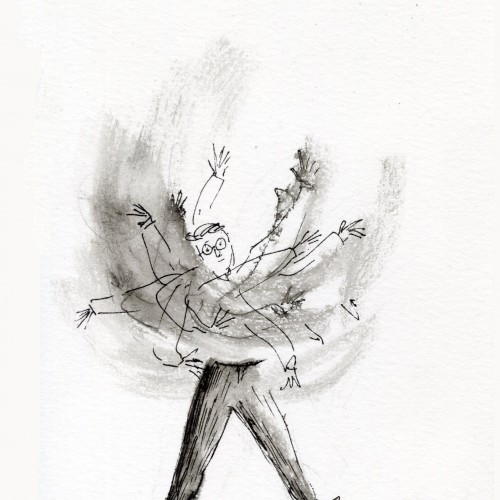
Shostakovich’s contemporaries do not recall seeing him working, at least not in the traditional sense. The Russian composer was able to conceptualize a new work entirely in his head, and then write it down with extreme rapidity—if uninterrupted, he could average twenty or thirty pages of score a day, making virtually no corrections as he went.
But this feat was apparently preceded by hours or days of mental composition—during which he “appeared to be a man of great inner tensions,” the musicologist Alexei Ikonnikov observed, “with his continually moving, ‘speaking’ hands, which were never at rest.”
Shostakovich himself was afraid that perhaps he worked too fast. “I worry about the lightning speed with which I compose,” he confessed in a letter to a friend. Undoubtedly this is bad. One shouldn’t compose as quickly as I do. Composition is a serious process, and in the words of a ballerina friend of mine, “You can’t keep going at a gallop.” I compose with diabolical speed and can’t stop myself.… It is exhausting, rather unpleasant, and at the end of the day you lack any confidence in the result. But I can’t rid myself of the bad habit.
- From Daily Rituals: How Artists Work by Mason Currey
#dailyrituals #inktober #shostakovich @masoncurrey
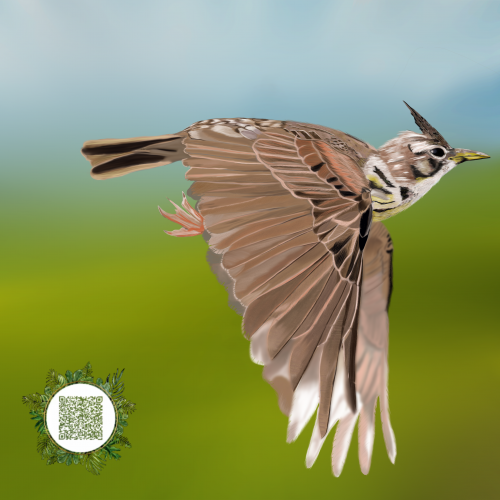
I just finished the Calandra Lark. Here are some facts about this beautiful bird...
Appearance: It's a large lark, about 17.5-20 cm long, with a robust build, a heavy bill, and noticeable pale eyebrows
. Its plumage is mainly greyish-brown streaked above and white below, with large black patches on the breast sides.
Habitat: This species is found in open plains, steppes, pastures, and dry cereal cultivations. It's mainly resident in the west of its range but Russian populations migrate further south in winter.
Diet: Their main food source is seeds, but they also consume insects when nesting.
Behaviour: Calandra Larks are known to be gregarious outside the breeding season, often forming large flocks.
Song: Their song is considered musical and slower than the Skylark's. It has been historically popular as a cagebird.
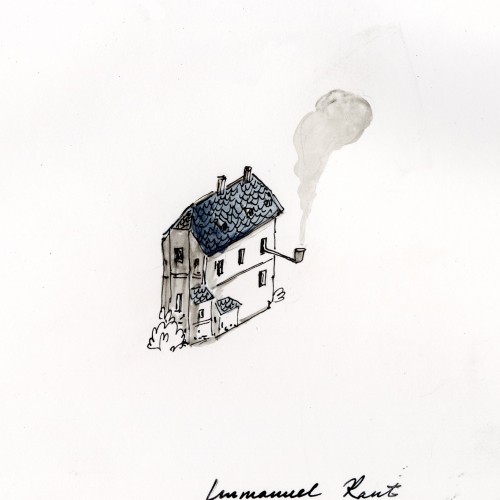
Immanuel Kant (1724–1804)
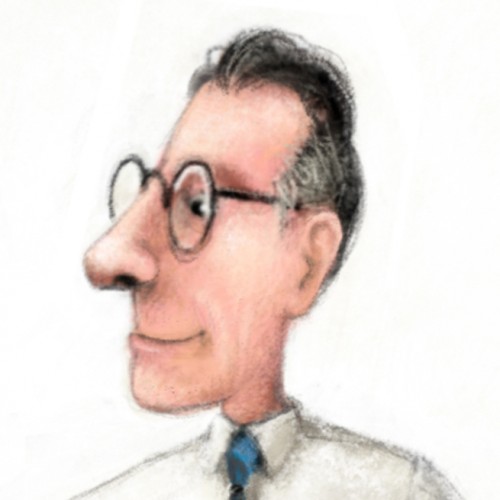
Kant’s biography is unusually devoid of external events.
As Heinrich Heine wrote: The history of Kant’s life is difficult to describe. For he neither had a life nor a history.
In actual fact, as Manfred Kuehn argues in his 2001 biography, Kant’s life was not quite as abstract and passionless as Heine and others have supposed…. If he failed to live a more adventurous life, it was largely due to his health: the philosopher had a congenital skeletal defect that caused him to develop an abnormally small chest, which compressed his heart and lungs and contributed to a generally delicate constitution. In order to prolong his life with the condition—and in an effort to quell the mental anguish caused by his lifelong hypochondria—Kant adopted what he called “a certain uniformity in the way of living and in the matters about which I employ my mind.”
This routine was as follows: Kant rose at 5:00 A.M., after being woken by his longtime servant, a retired soldier under explicit orders not to let the master oversleep. Then he drank one or two cups of weak tea and smoked his pipe. According to Kuehn, “Kant had formulated the maxim for himself that he would smoke only one pipe, but it is reported that the bowls of his pipes increased considerably in size as the years went on.”
- From Daily Rituals: How Artists Work by Mason Currey
#dailyrituals #inktober #ImmanuelKant @masoncurrey
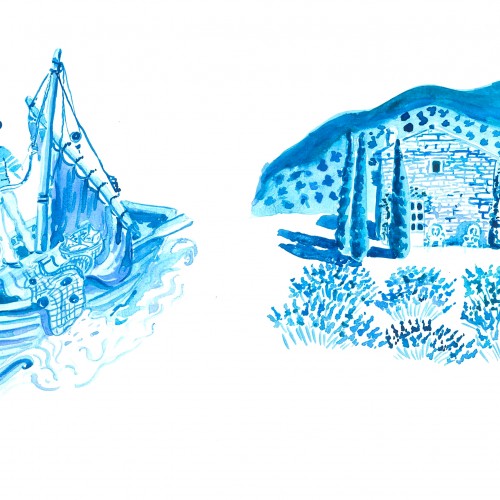
Watercolor commissions I did for a wedding theme around Mediterrano and Provence, here are a fisherman on his little sail boat, and a typical house within the lavender fields in Provence
Just looking at these furry buddies will let your body release all the oxytocin that your body needs to make your day a whole lot better! Even though science tells us that dogs can only make their faces appear to smile. But we know better, they do smile at us especially when we have a lot going on in our lives
Hello everyone! Last month I was catching up with this art! Finally I can introduce you to the new OC ❤ Her name is Aurora and she is a mage. Together with her brother they fight the darkness! https://www.youtube.com/watch?v=YH1dxIufLdE
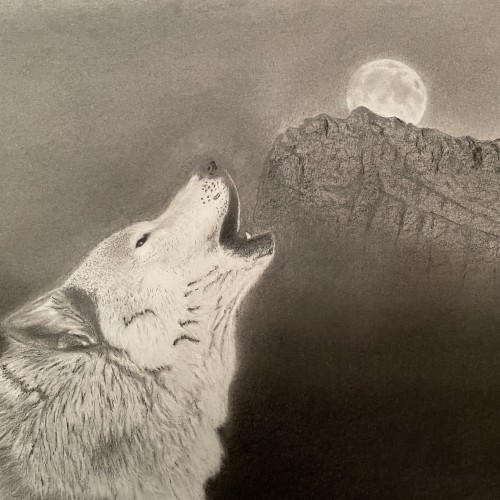
Had some doubts on this one. Originally planned for more in the back and foreground. Felt it might take away from the wolf as the focal point. Graphite pencils. Black was charcoal pencils.
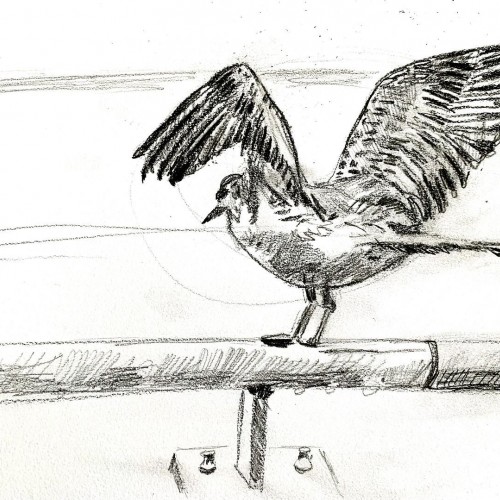
I live by the water (Torontos inner harbour) and managed to capture a seagull in mid flight. Did my best in not coloring it , and focused on the ✏️ pencil
New triptych painting. Each one is an acrylic painting on a 5x7 wood board and then framed with a background filled with doodles. Go to my Instagram to see the time-lapse painting of each panel.
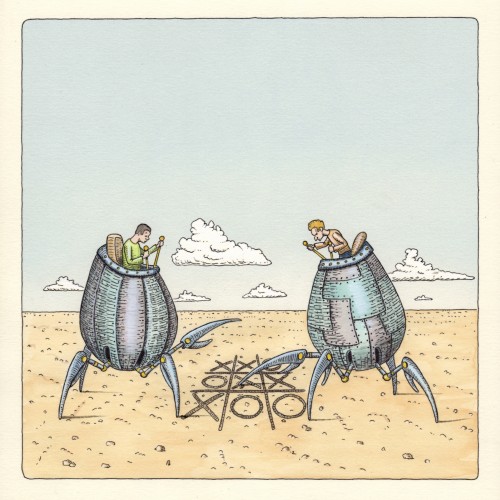
This piece was heavily inspired by the amazing designs of Ian McQue and it was one of the very first test-drawings on my remarkable 2 e-Ink tablet. So I was still in the process of adapting to this new tech :)