Previous
Next
logo logo
logo logo
  • Discover Art
    • Trending
    • Most Recent
    • Most Faves
    • Most Views
    • Curated Galleries
  • Drawing Challenges
    • See All Challenges
  • Drawing Prompts
  • Artists
    • Most Popular
    • Most Recent
    • Available For Hire
    • Artist Spotlight
  • More
    • Marketplace
    • Art Discussions
    • Resources
    • News + Blog
Login
Most Views
Select an option
  • Most Relevant
  • Most Faves
  • Most Views
  • Most Comments
  • Most Recent
SEARCH RESULTS FOR

sim

Ty patmore Ty patmore
Enlarge
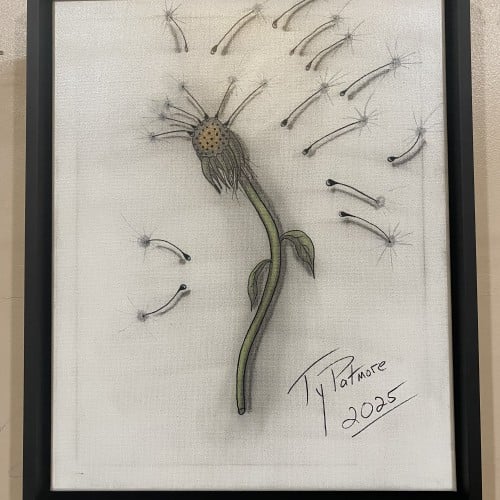
Isn’t she a Dandy.

This captivating drawing by Ty Patmore (2025) beautifully illustrates the final stage of a dandelion's life cycle, transforming the common weed into a subject of elegant art. The central, spent head of the flower is rendered with intricate texture, while the detached seeds are given a light, airy quality as they float away. The subtle shading and focused color on the stem provide a grounding element to the otherwise ethereal composition, making it a perfect piece for anyone who cherishes the simple, magical moments in nature.

  • 13
  • 2
  • 1
A2X A2X
Enlarge
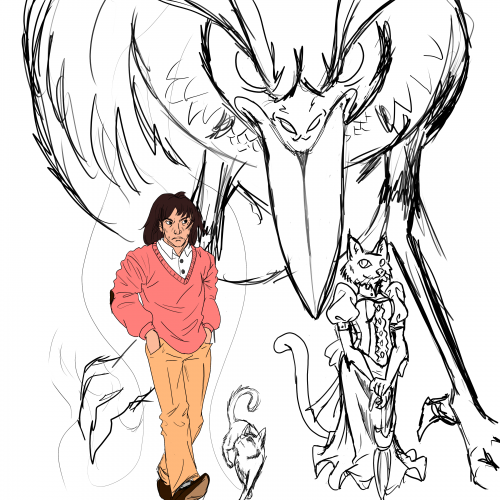
Series IV | 05/17

“If you’re not a fan of the work, simply scroll pass and move on. Just an idea.”

  • 13
  • 1
  • 0
Andrijan Andrijan
Enlarge
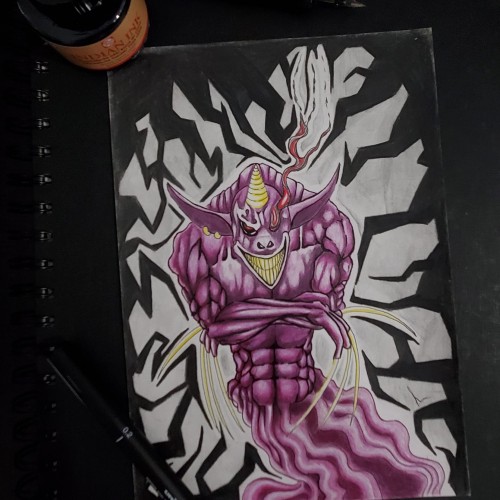
Stalker from shadows,Vampis

This one I designed when I was 7 years old,hence the silly name and simple design,but effective......I Recently stumbled upon yugioh card "ryu kishin" and really liked pose he was drawn in,so I tried to redraw my Vampis in that pose while using ink and polychromos colored pencils. I always imagined Vampis being some kind of mischeavius minion using shadows to move around doing all sort of childish pranks,like throwing rocks at windows,or setting houses on fire....it's one of the two monsters that I remember from young age and I kept redrawing him every year or so.

  • 13
  • 2
  • 0
Margaret Langston Margaret Langston
Enlarge
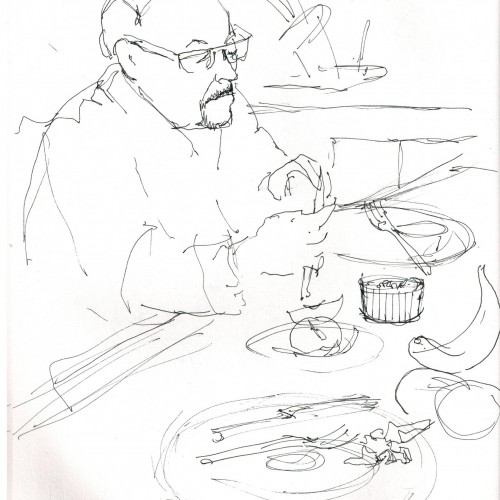
Mark after Dinner 042521

I haven't uploaded in awhile, simply because I'm not doing much that's - interesting. Just lots of exercises. I did this spontaneous pen sketch of my husband the other day and was pretty pleased.

  • 13
  • 5
  • 2
Natalie Golier Natalie Golier
Enlarge
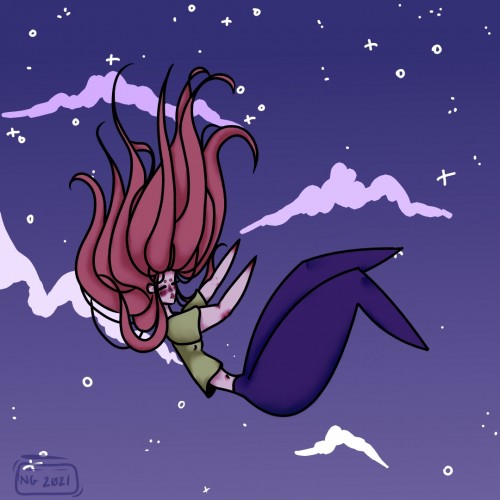
Falling Further Faster

Developing a new art style, the shading is similar to LavenderTowne but the linework/color scheme/form is definitely a trademark of mine,

  • 13
  • 2
  • 0
William Bulmer William Bulmer
Enlarge
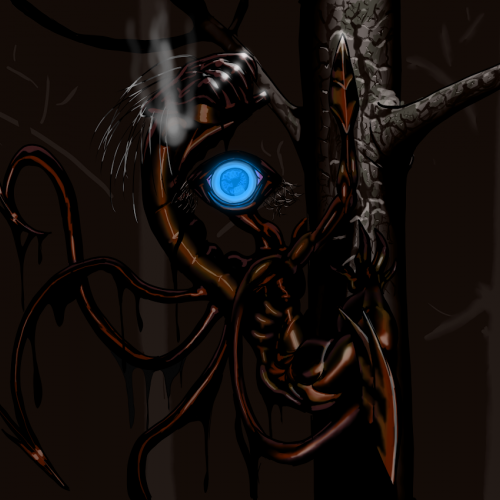
Niter (art trade)

My half of the art trade with OptimisticJerk (https://www.deviantart.com/optimisticjerk). The trade was to draw a monster as made up by your counterpart without seeing a reference image, based only on the description. Here is her half (which is awesome): www.deviantart.com/optimisticj… For mine, I had to draw a monster called a "niter" based off of his description: "Niters communicate in whispers. Nocturnal. Shy away from light. They’re black and oily and emanate a bluish glow. Large, looming 6 foot shadow things with massive hind legs, clawed for climbing trees and they have ‘maws’ instead of arms, claw-like appendages they stab people with and only one gaping blue eye. Their mouths open up and they swallow their victims whole." What's funny is that I didn't see the fact that they emanate a bluish glow until now. So, the glow from the eye is purely by coincidence. Figuring out the hind legs of this creature was difficult, and so I sought reference images, and of all things, the koala turned out to be a pretty good reference. For a while, there, it was looking like Carnage from Spiderman, but I toned down the reddish-hue a bit. The intention was to give the appearance of motor oil. So, now to find out how badly I failed at drawing this... This art trade was fun, though, and I would do a similar one, again. But I am le tired.

  • 13
  • 2
  • 0
Lana Lana Plus Member
Enlarge
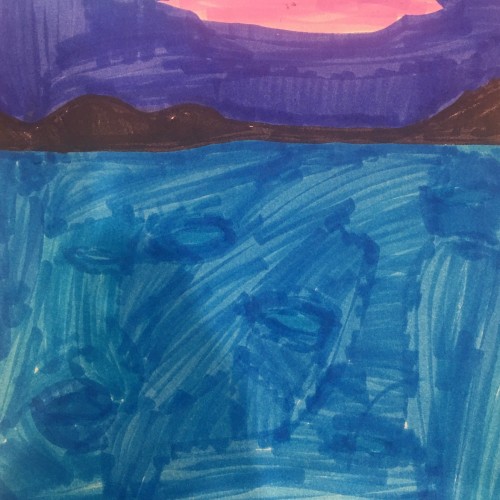
Aroura

Its like Antartica SIMEPLE.

  • 12
  • 2
  • 1
Ty patmore Ty patmore
Enlarge
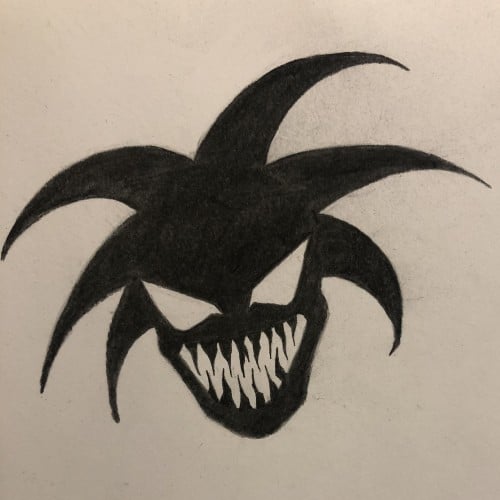
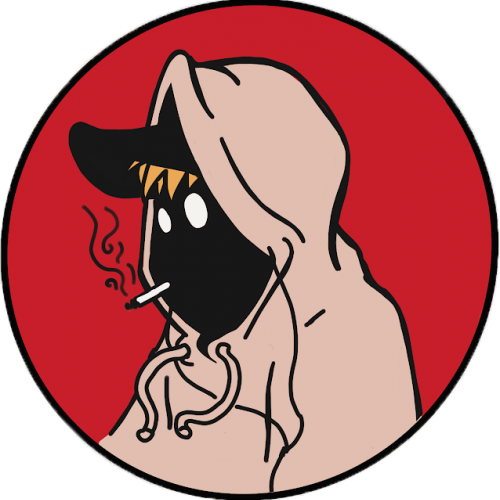
See No Evil (The Consumer)

This piece critiques the modern tendency to hide identity behind brands and consumerism. * Visual Focus: The mask is partially obscured by a fitted baseball cap, with the bill pulled down to cover one eye. The cap itself is a symbol of brand identity and fast-fashion culture. The uncovered eye retains an unsettling, almost mechanical gaze. * Symbolism: * The Cap: Represents the societal practice of hiding behind brands and allowing consumerism to dictate self-worth and block out unwanted truths. The act of seeing is deliberately curtailed. * The Mask: Emphasizes that the consumer identity is often a façade-a manufactured mask that prevents others from truly "seeing" the individual, while simultaneously restricting the individual's full sight of the world.

  • 12
  • 3
  • 0
Shad-Owl Shad-Owl
Enlarge
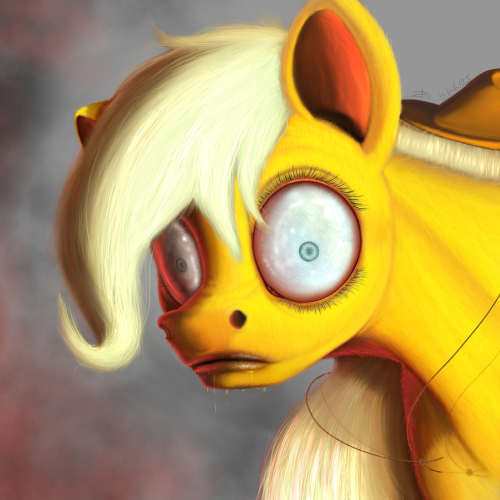
AppleHeck

Just some weird AppleJack fanart because it's fun.

  • 12
  • 3
  • 2
Shad-Owl Shad-Owl
Enlarge
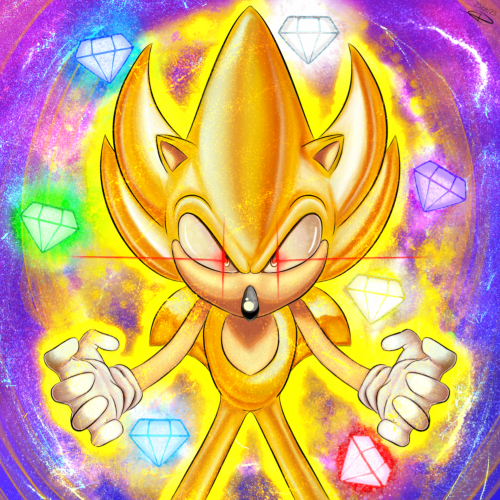
Super Sonic

Trying something on new app and tablet.

  • 12
  • 5
  • 2
David Meehan David Meehan
Enlarge
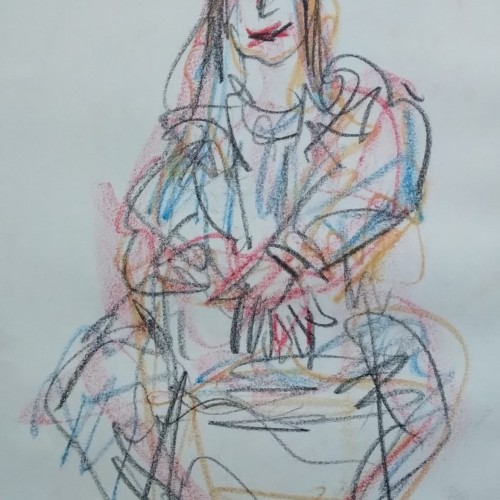
Drawing FACES 15€
1/5

Drawing FACES 15€ I'm compiling simple slapdash 5 min. drawings of people + sharing their story. Book 1 = story behind your name If u wanna be drawn plz get in touch 10€ a drawing Dave +351 969 534 520 https://artdavidmeehan.blogspot.com/p/7.html https://www.facebook.com/artdavidmeehan/ https://www.facebook.com/davidmeehan99/ https://www.instagram.com/artdavidmeehan/

  • 12
  • 2
  • 0
crais robert crais robert
Enlarge
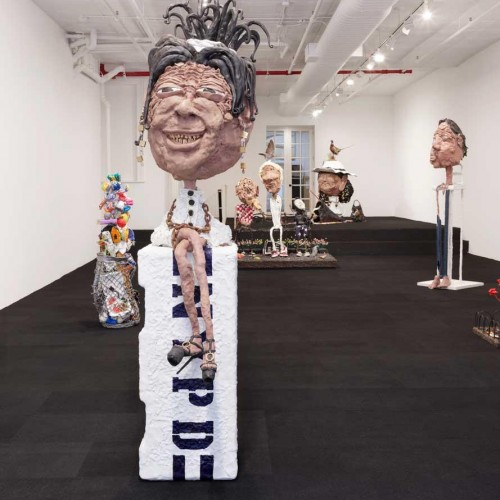
The House of Ryman: A Family of Artists

Take the Rymans, for instance. There is Robert Ryman (1930 – 2019), the patriarch whose paintings are indisputable icons of the modernist canon. Then there are his wives and children. Ethan Ryman (b. 1964) is the oldest of Robert’s three artist children. Though his mother was not an artist, Lucy Lippard (b. 1937) was still a scrappy and eloquent art critic, a feminist, a social activist, and an environmentalist. Ethan’s meticulously considered and crafted artworks might be characterized as somewhere between photography and sculpture, the abstract and the (f)actual. Though Lippard and Ryman divorced just six years after their 1961 marriage, their son is arguably the closest to his father’s methodologies if not his medium, and was certainly the last to become a visual artist. Robert Ryman went on to marry fellow artist Merrill Wagner (b. 1935) in 1969 and they had two sons. Though Wagner is more quietly acknowledged than Ryman, her boundless practice includes sculpture, painting, drawing, installation, and more. With an emphasis on materiality, her sites are indoors and out, her styles alternating. Will Ryman (b. 1969) is the elder son of Robert and Merrill. He started out as an actor and playwright though he too eventually assumed a visual art practice to become a sculptor. He is best known for his large-scale public artworks and theatrical installations that focus on the figurative and psychological, at times absurdist, narratives. Cordy Ryman (b. 1971) is the youngest, and the only one of the three who knew that he was going to be a visual artist early on. His work is abstract, the sophistication understated, and his output is prolific. With his mother’s DIY flair, his homely materials seem sourced from the overflow of construction projects, lumberyards, and Home Depot. Ethan Ryman said that, when he was young, he didn’t want to be a visual artist. Instead, he pursued music and acting, producing records for Wu-Tang Clan, among others, getting “my ears blown out.” But he was always surrounded by artists—Sol LeWitt, Carl Andre, Jan Dibbetts, William Anastasi, and countless others at his mother’s place on Prince Street in SoHo and at the Rymans’s 1847 Greek Revival brownstone on 16th Street in Manhattan, where everyone was often seated around the family dinner table. He would spend part of most weekends in the highly stimulating chaos that reigned there—birds, dogs, plants, toys, art, people, everywhere. “While nowhere near as overwhelming, I was also constantly exposed to artists, writers and other creative folks at my Mom’s place.” “While nowhere near as overwhelming, I was also constantly exposed to artists, writers and other creative folks at my Mom’s place.” Ethan Ryman Lippard was “a powerhouse.” She took Ethan on her lecture tours, readings, conferences, galleries, studios, wherever she had to go. And while that almost always breeds rebellion, at some point, he began noticing all the art around them—both what it looked like and how it was made. He began to take photographs of buildings and realized that “abstract color fields were all around us.” He also began to notice his father and Wagner’s work more carefully—how sensitively it was executed and how reactive it was to its surroundings. “Once you’re interested, you notice. When I asked my dad questions, I would most likely get a one-word response. I had to go to his lectures for answers where he broke down modern art for me. After listening to him, it seemed to me we should all be painting, otherwise what were we doing with our lives?” Will Ryman, on the other hand, said that all his work has a narrative component. His background is in theatre and his interests have always been film and plays, his narratives about New York City and American culture and history. “It’s a city I love,” he said. “I try to observe culture in a bare-bones way and I’ve always been interested in telling stories—we’re the only species that tells stories to each other. It comes from an intuitive, cathartic place in me. I want to stay away from preconceived notions, although that’s not completely possible. I have no plan except to do something honest, with a little bit of a political bent and humor but I’m not an activist. I’m interested in exploring a culture and its flaws as an interaction between human beings.” His interests and his work are very different from his last name. There is no connection to minimalism. He didn’t go to art school, drawn instead to theatre workshops and theatre troupes. “I didn’t become involved with the visual arts until my mid-thirties. It’s easy to say what I make is a reaction, but I dismiss that. And I also wouldn’t say it’s rebellious after twenty years.” Of his family, he said, “we’re a normal family, a close family, with all the dynamics and complications that go along with that. And while everyone who came to 16th Street were artists, they were also just family friends. I have no other measure for how a family interacts. It was just the way it was.” Cordy Ryman was the only one of the three who went to art school, earning a BFA from the School of Visual Arts, but it was reportedly awkward for him, since all his teachers knew his parents. “When I started making abstract paintings, it was kind of push and pull but it became more interesting to me than my earlier figurative or narrative work. That’s when I started to know where I came from. I realized that I had a visual memory, and the language was there, a language I didn’t know I knew. We all had different ways of working; our processes are very different and it’s hard to compare us. Ethan and I use a similar inherited language but he thinks about what he does more. I work very fast, the ideas come from the process itself. I work in two or three modes simultaneously and bounce around.” At home, they were around Wagner’s work since her studio was there. “Will and I were always in her studio, helping her, going to her installation sites with her, adjusting her boulders or whatever the project was she was working on. That was special and made a deep impression, but I didn’t realize it then.” All five Rymans have in common an acute consciousness of space and of place as an integral component of their work. For the brothers, part of that consciousness might stem from their parents, but also from their attachment to their family home, which was a crucible of sorts for them, where everyone was an artist. To Cordy, the house was a “living, breathing thing, and the art in it felt alive, growing, and occupying any space that was available. It was the structure of our world. When I’m making work, it doesn’t need to be the most beautiful thing ever, but it needs to have its own life, its own space, like the art we grew up with.” And the next generation of Rymans, also all sons—what about them? Will said his son is still too young to know. Cordy thought the same about his two younger children; his oldest is in the art world, but not as an artist—so far. Ethan perhaps summed it up best: my two sons are artists; they just don’t know it yet.

  • 12
  • 1
  • 0
Timothy Simpson Timothy Simpson
Enlarge
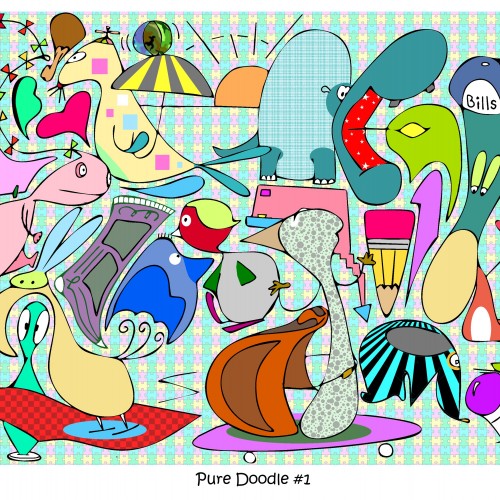
Pure Doodle #1

Normally i start w an idea or whim & doodle away trying to capture my thots. On this one i simply scribbled onto a page & then looked hard for shapes, animals, faces & any other unorthodox item. Then i simply added some color. I plan to do more of these mostly as a gr8 exercise for fresh runaway doodles hot off the press!

  • 12
  • 3
  • 2
Antony Siganakis Antony Siganakis
Enlarge
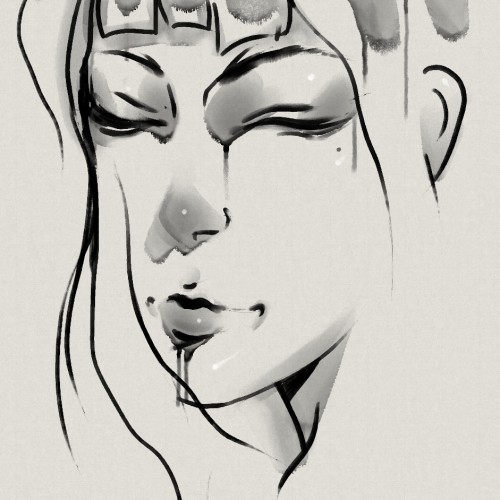
Girls face

  • 12
  • 2
  • 0
Doodtangler Doodtangler
Enlarge
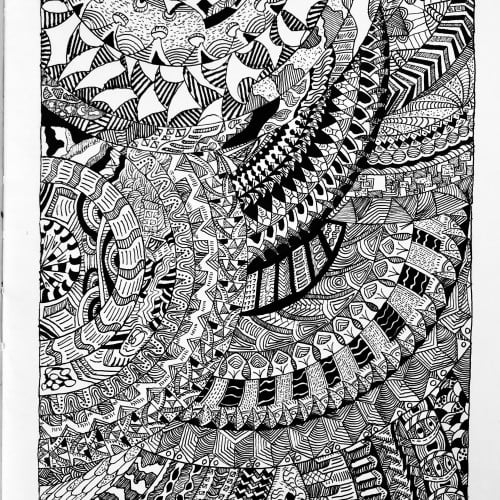
Tangle 1

First A5 tangle using a simple fineliner.

  • 12
  • 4
  • 0
Sulema Sulema
Enlarge
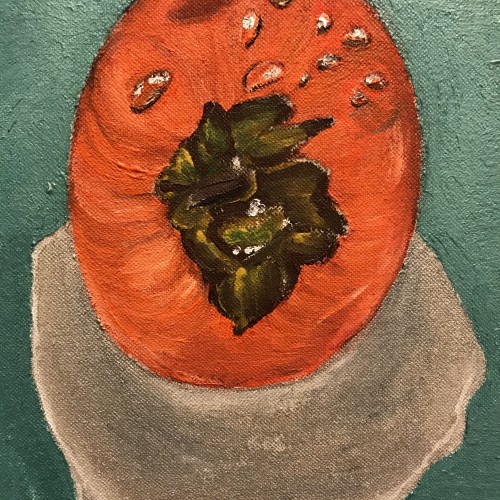
Persimmon

Acrylic on canvas

  • 12
  • 3
  • 0
Indiandoodler Indiandoodler
Enlarge
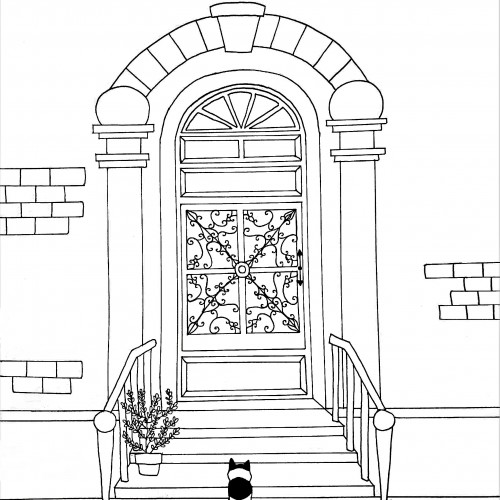
The cat and the door

Sometimes simplicity is the best medicine....like this simple door and this simple cat staring at the door.............I can stare at this image of the cat staring at the door all day....................Is that weird?

  • 12
  • 2
  • 0
LeBoucher LeBoucher
Enlarge
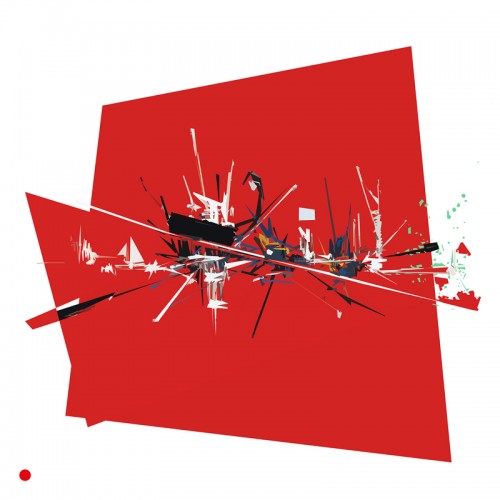
Remake : Georges - Mathieu : Rouge

Français : L’Appropriationnisme ou le « Remake » est un concept simple. En effet, il suffit de reprendre le travail d’un artiste et signer la nouvelle production de son nom. Il ne s’agit, en aucun cas, de copier l’œuvre comme pourrait le faire un faussaire. Il ne s’agit pas non plus de plagier l’œuvre. En ce qui me concerne, j’utilise l’œuvre célèbre d’un artiste reconnu. En réutilisant une œuvre originale préexistante et célèbre, condition sine qua non, je propose de rendre un hommage. Il ne s’agit en aucun cas d’un manque d’inspiration surtout lorsque l’on sait maintenant que : « l’art naît de l’art et non de la nature » : Ernst Gombrich. Dans cette série, j’ai voulu revisiter des œuvres célèbres en utilisant ma technique graphique de l’éloge de l’approximation mettant en évidence la problématique de la défaillance et de la mémoire vaporeuse. English: Appropriationism or Remake is a simple concept. Indeed, it is enough to take again the work of an artist and to sign the new production of his name. It is not a question of copying the work as a forger could do. It is not a question of plagiarizing the work. As far as I'm concerned, I use the famous work of a recognized artist. By reusing a pre-existing and famous original work, condition sine qua non, I propose to pay tribute. It is by no means a lack of inspiration especially when we now know that: "art is born of art and not of nature": Ernst Gombrich. In this series, I wanted to revisit famous works using my graphic technique of praising the approximation highlighting the problem of failure and vaporous memory
  • 12
  • 3
  • 0
kim feint kim feint
Enlarge
Ink play

This started of as a simple doodle that became a bit more complicated. I used copic liner,gold ink and a bit of watercolor for shadowing.

  • 12
  • 5
  • 1
Annie Tate Annie Tate Plus Member
Enlarge
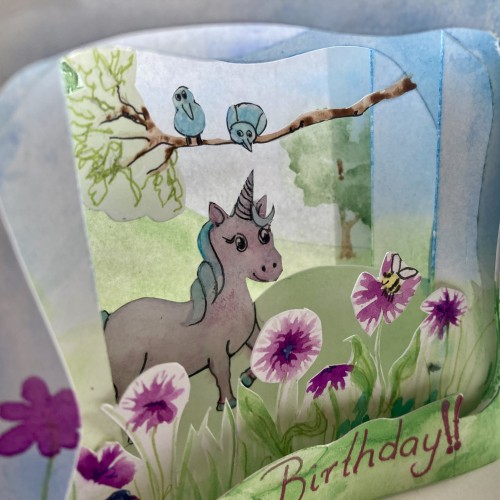
Happy Birthday
1/4

My first attempt at a concertina birthday card. While simple to make, it can be a bit fiddly and getting the proportions and placement of objects right for each layer is important so that everything can be seen once the layers are overlapped. It reminds me of printing processes, where each layer is gradually added. It was quite an enjoyable process.

  • 11
  • 5
  • 1
Ty patmore Ty patmore
Enlarge
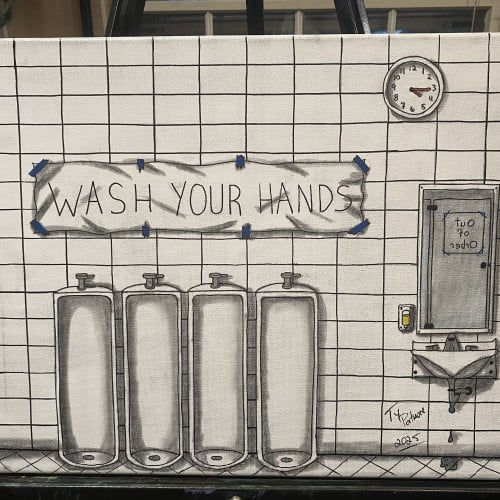
Hygiene is Elementary

In this memory-driven piece, Patmore reconstructs the bathroom from his third-grade elementary school, capturing the sterile brightness, the tiled repetition, and the institutional reminder to “WASH YOUR HANDS.” But the scene is not pristine — a leaky sink, an out-of-order stall, and a taped-up sign reveal the quiet decay behind childhood places we assume were orderly and safe. Patmore blends nostalgia with unease, transforming a simple restroom into a study of what it means to grow up: how the lessons we learn early (“hygiene,” discipline, responsibility) stay with us even after the walls begin to crack. The small pop of blue tape emphasizes the DIY fragility of rules meant to guide us. This piece stands at the intersection of memory and maintenance — of spaces, of bodies, and of ourselves.

  • 11
  • 3
  • 0
Alan Williamson Alan Williamson
Enlarge
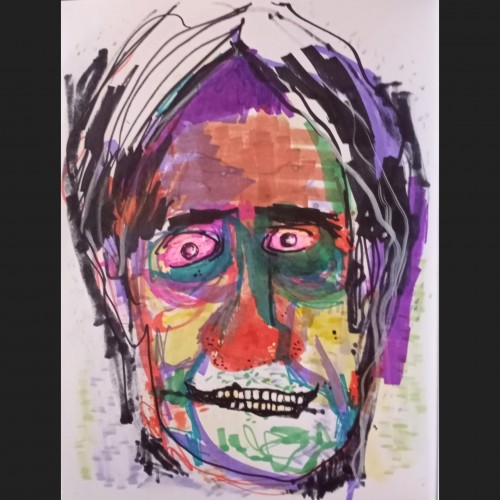
Giggly Gyllenhaal

A marker drawing on paper, plain and simple.

  • 11
  • 3
  • 3
Richard Olsen Richard Olsen
Enlarge
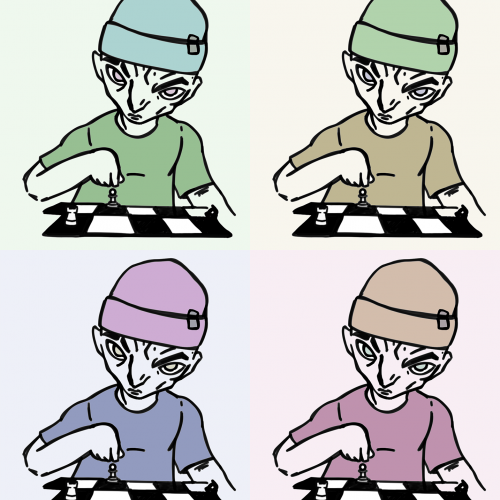
My turn!

Street Chess Player

  • 11
  • 1
  • 0
Richard Olsen Richard Olsen
Enlarge
Shy to meet

  • 11
  • 1
  • 0
Shruti Sood Shruti Sood
Enlarge
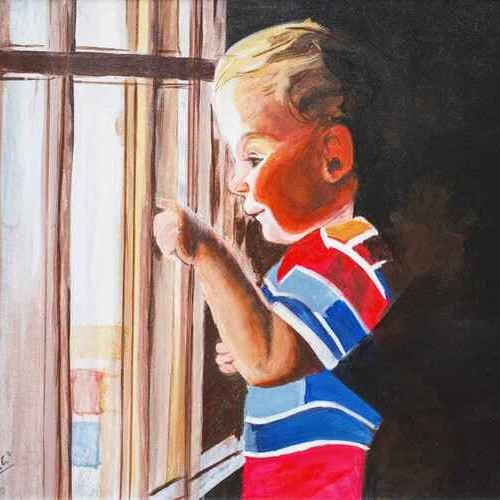
Appreciation Acrylic painting for kids room | acrylic painting canvas

Nature, beauty, and appreciation is the innate need of every being. Innocence and eyes speak a different language. This portrait on canvas is a perfect piece of art for kid's room décor. Acrylic painting canvas, acrylic painting simple, acrylic painting for bedroom, acrylic painting abstract. #acrylicpainting #acrylicpaintingideas

  • 11
  • 5
  • 0
Lukas Lukas
Enlarge
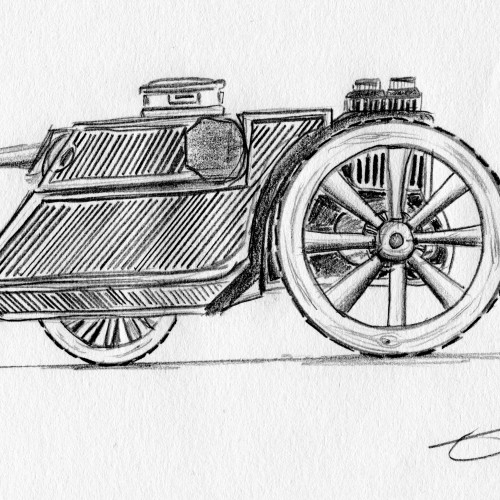
Steam Tank 1

Inspired by Warhammer. Multiple Designs, this is one of the simple ones.

  • 11
  • 1
  • 0
Jeff Brown Jeff Brown
Enlarge
A simple boat

  • 11
  • 3
  • 0
Chelsea Litfin Chelsea Litfin
Enlarge
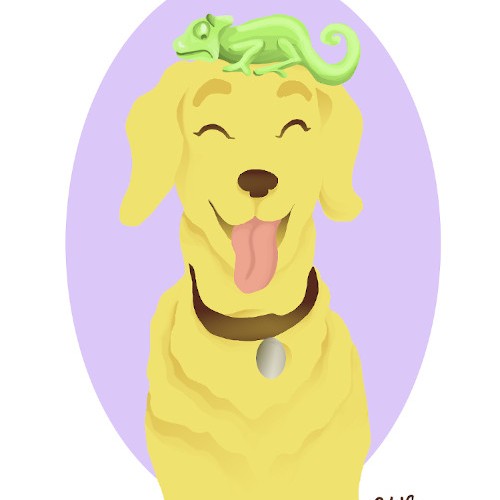
Chameleon & Labrador

Inspired by a drawing challenge to draw two objects based on the first letters of your first and last name. I thought a chameleon and labrador would be fun to draw together, because it reminds me of the friendship that forms when an extrovert adopts an introvert ^_^ This is my first digital drawing that I tried without using line art. It was challenging to get the hang of, but I like the bright and simple effect of it.

  • 11
  • 4
  • 2
BHAVANI BHAVANI
Enlarge
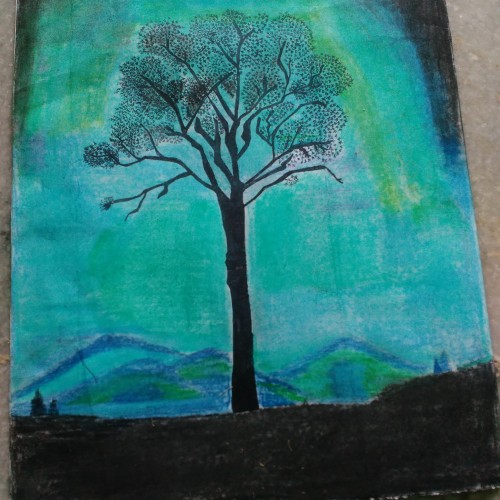
silhouette of a tree

A silhouette of a tree in the moon light .It may looks simple but inctricated with repeated strikes for leaves . back ground done with oilpastels crayons.

  • 11
  • 2
  • 1
Liz Liz
Enlarge
sugar

inspired by my sim Sugar Burritos

  • 11
  • 6
  • 1
« Previous
Next »

Doodle Addicts

Navigate
  • Discover Art
  • Drawing Challenges
  • Weekly Drawing Prompts
  • Artist Directory
  • Art Marketplace
  • Resources
Other
  • News + Blog
  • About Us
  • Contact Us
Newsletter
© 2026 Doodle Addicts™ — All Rights Reserved Terms & Conditions / Privacy Policy / Community Guidelines
Add Doodle Addicts to your home screen to not miss an update!
Add to Home Screen