55 mins
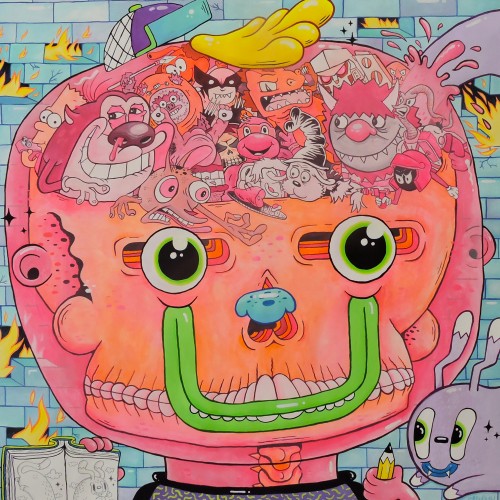
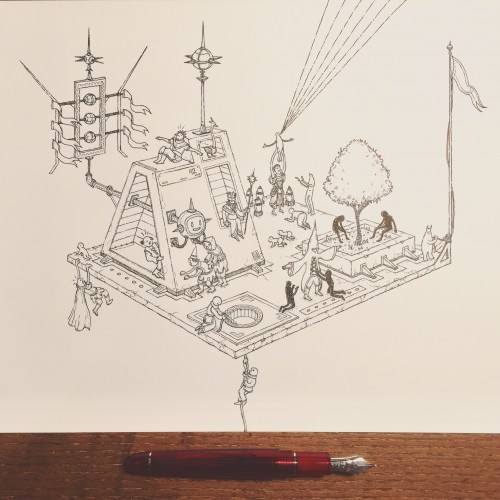
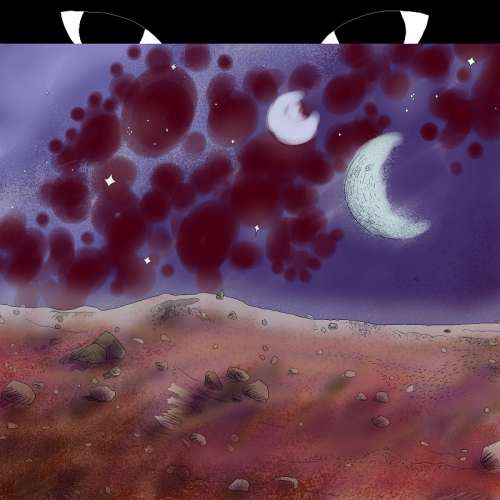
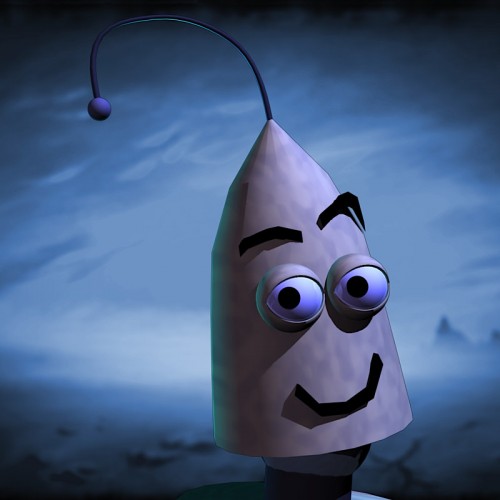
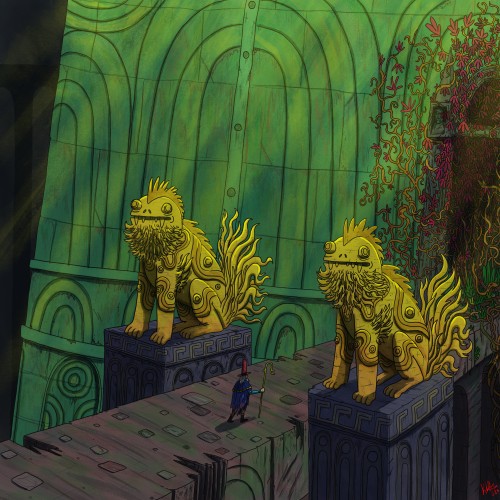
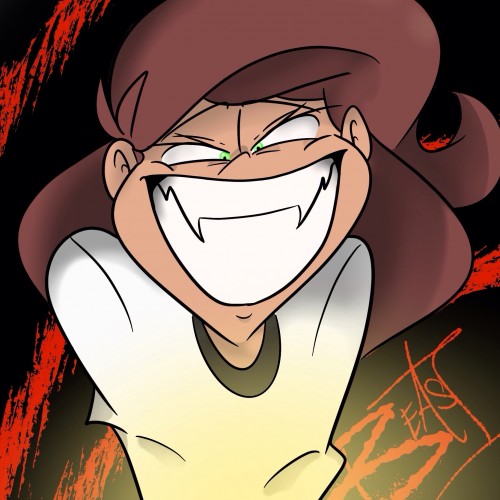
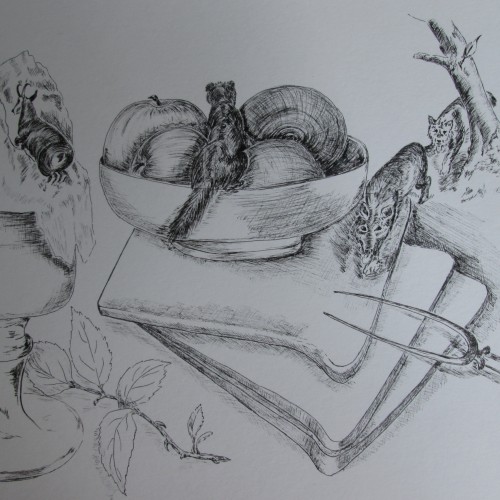
“I Never Noticed The House Was On Fire” This is a painting for an upcoming group exhibition about memories. When I was a kid I grew up in a household where my parents were functioning alcoholics. They gave me toys, put me in front of the tv, and sent me outside to play to keep me distracted from what was going on. When I look back almost all of my childhood memories revolve around these things. I became obsessed with these imaginary worlds and I learned to draw by copying my favorite cartoons and characters from children’s books. It was not until I was much older, that the truth could no longer be hidden from me. The imaginary world of cartoons and books kept me shielded from the harsh realities of home. As I grew into an adult that form of coping grew with me as I created my own imaginary places inspired by the ones I loved as a child. A healthy place to escape.
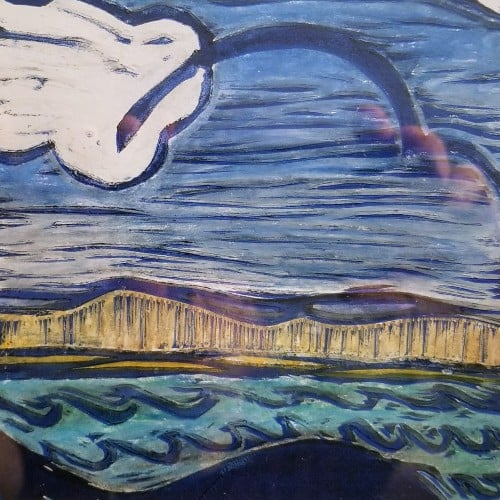
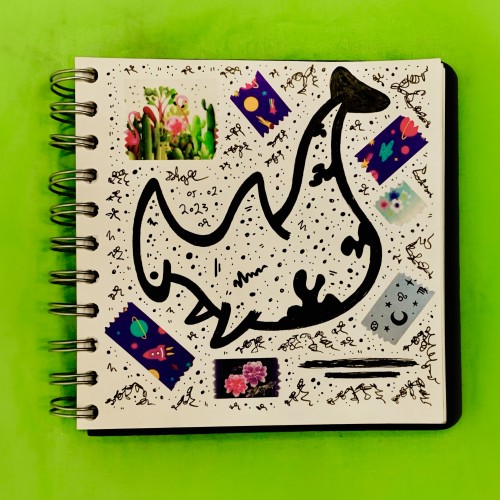
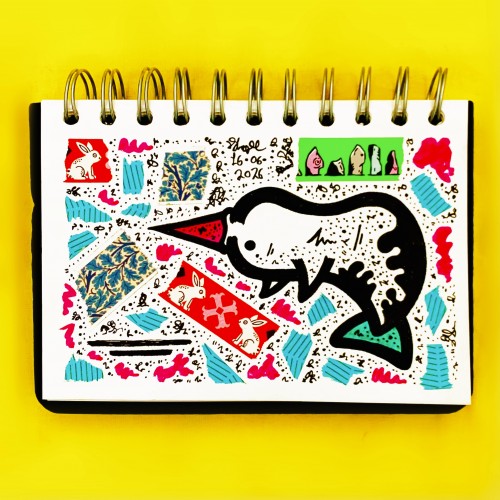
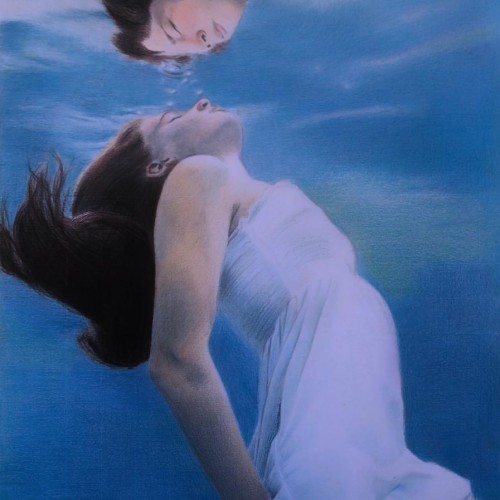
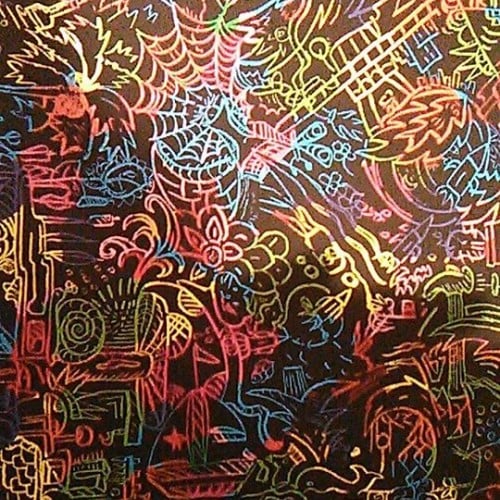
Lino cut print over pastel. The story goes: The bird fell in love with the whale the first time she saw him break through the ocean’s surface, sunlight dancing on his back. From high above, she sang to him, and deep below, he answered with a song as old as the tides.
She longed to dive, to join him in the rolling blue. He wished to rise, to fly beside her in the endless sky. But air and water would not trade places.
So each day, at dawn and dusk, they met at the edge of their worlds—she on the wind, he in the waves—singing a love song carried by the breeze and the tide, never together but never apart.
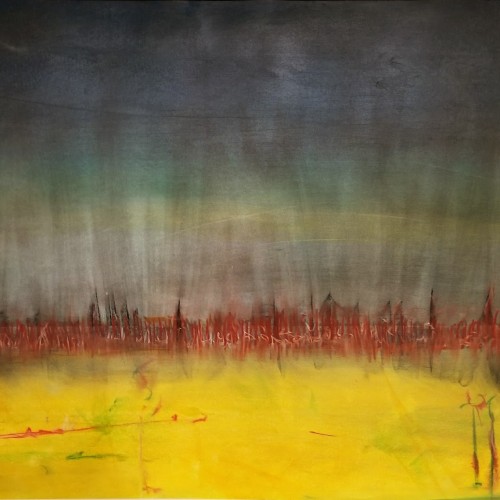
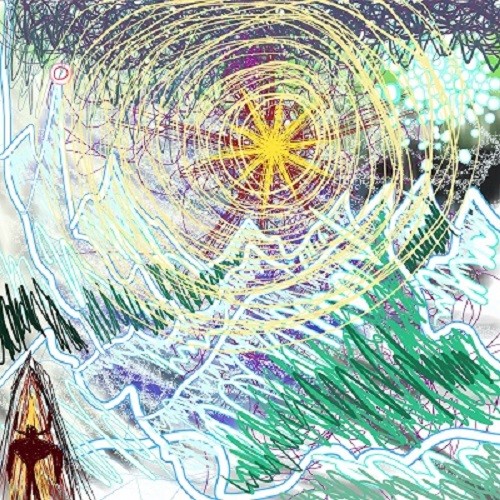
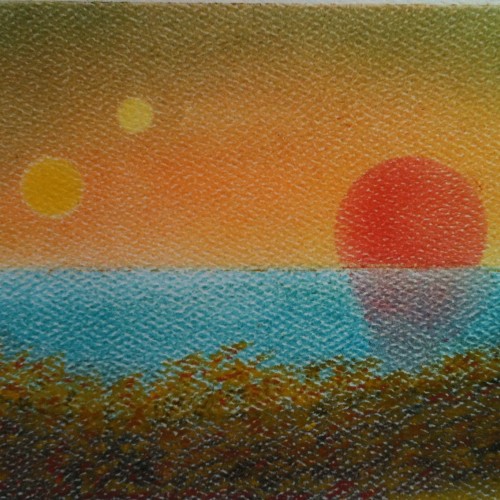
This is no landscape you could ever stand in.
No observational drawing, no safe horizon line.
This chalk experiment is a dream unfolding in color: a golden field lit from within, a scarlet seam of fire at its edge, and a storm-heavy sky pressing down with ancient weight.
It feels like a place between worlds—where the conscious and unconscious meet, where memory and imagination blur. Some might see a battlefield, others a meadow after rain, and still others a veil between life and death. That is the beauty: the painting does not tell you what it is; it invites you to confess what you see.
Psychologists say we project ourselves onto images like these. So—what do you notice first? The light? The darkness? The burning red?
Perhaps that is not about the drawing at all, but about you.
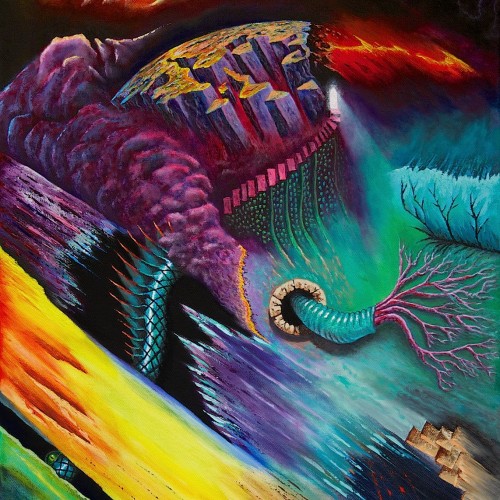
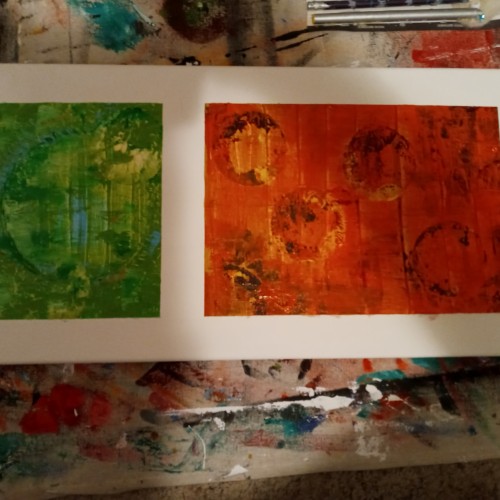
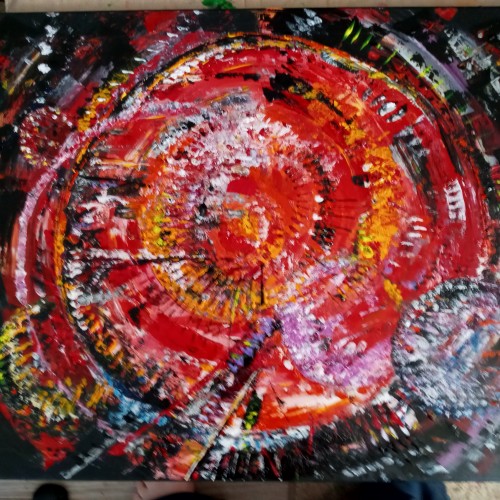
Acrylic on canvas.
50cm x 70cm.
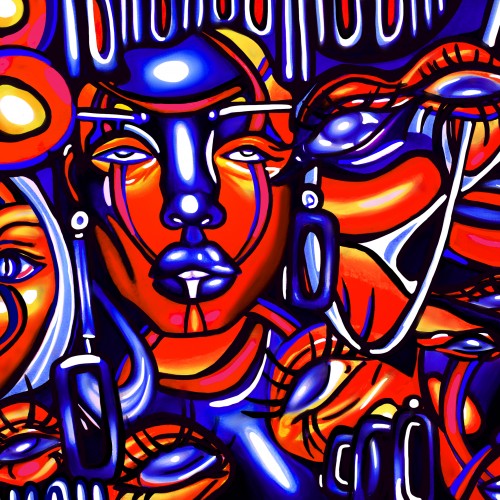
This started as a purely experimental abstract piece, but evolved to include both abstract and surreal (i.e. representational) elements.
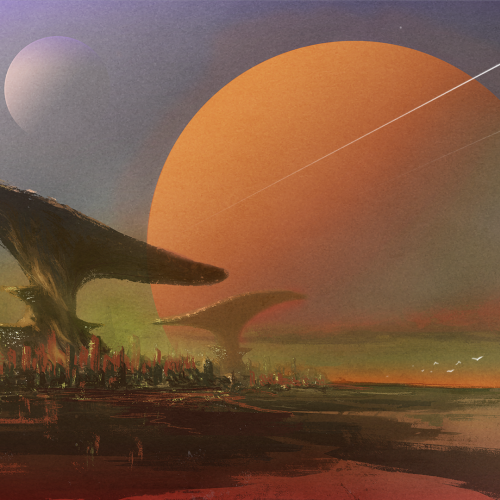
This work entail the idea of Metaverse 1.0, a virtual space created by the convergence of virtually enhanced physical reality and physically persistent virtual space, including the sum of all virtual worlds, augmented reality, and the Internet. This defines YEAR MILLION, where humankind becomes uploaded to a highly saturated smorgasbord of digital realms where we live out our life in any number of possible ways we please.
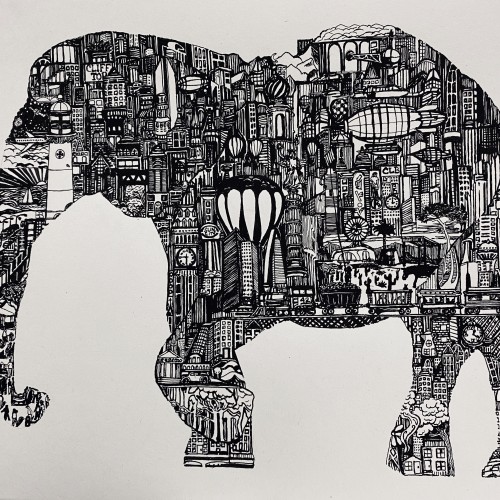
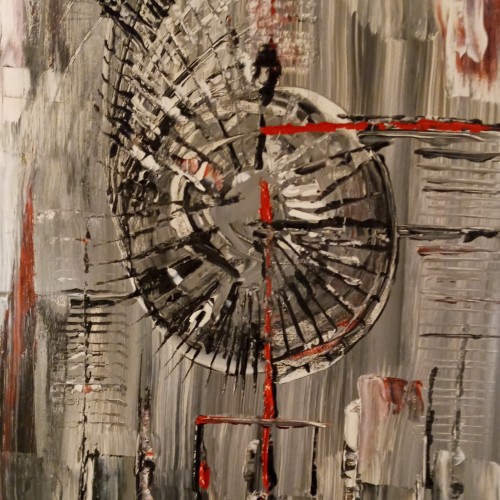
The materials that Meir uses in her works are not of the refined and so she is called an “arte povere” artist. At times she describes her work as someone dealing in alchemy - work develops as in a trial laboratory with different techniques and materials. She says, “ at times the artistic work process is a sort of puzzle demanding the filling in of all the empty squares “.
Some of her work focuses on women, and they incorporate criticism and cultural protest.
Meir has strong opinions about recycling and environmental protection that is represented in her works by use of materials and shapes. In her work she reacts to contemporary art that communicates with the eco system, waste, and she also searches for different worlds. Her works are made up of layers upon colorful layers that when we look at them it becomes clear that the mound of waste she chose is not coincidental. It actually becomes a colorful kaleidoscope of utopia.
Jaffa Meir is a multifaceted, autodidact artist working in painting, sculpture, photography, product design, carpets and furniture, painting on textile, and computer graphics.
The structural composition of some of the works is influenced also by her many years of working in the architects’ office.
Meir also worked in the developing of ideas within the field of ecosystems and recycling for factories such as Coca Cola, and during this process came up with ideas for designing parks and public game spaces using industrial waste products.
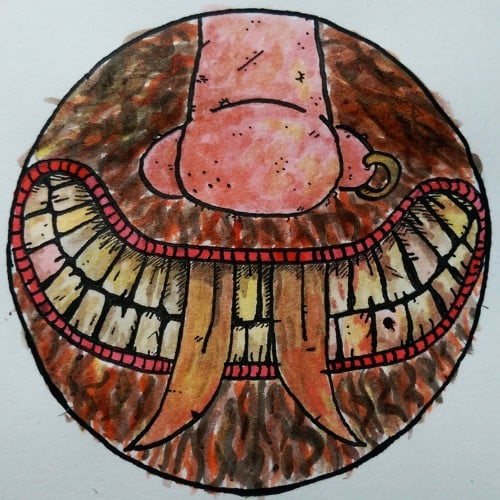
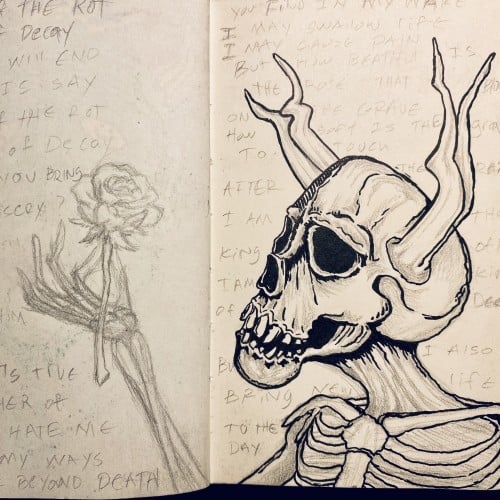
King of the rot
King of decay
Worlds will end, upon his say
King of the rot
King of decay
Is all you bring, just misery?
Upon my cries i heard him say
“Yes its true, I’m father to dismay”
“Loathe me, hate my ways”
“But look beyond the death”
“You find in my wake”
“I may swallow life”
“I may bring pain”
“But how beautiful is the rose that blooms on the grave?”
“How soft to the touch is the grass, after the rain?”
“I am the king of rot”
“I am the king of decay”
“But i also bring new life to the day” #embracingnightmares
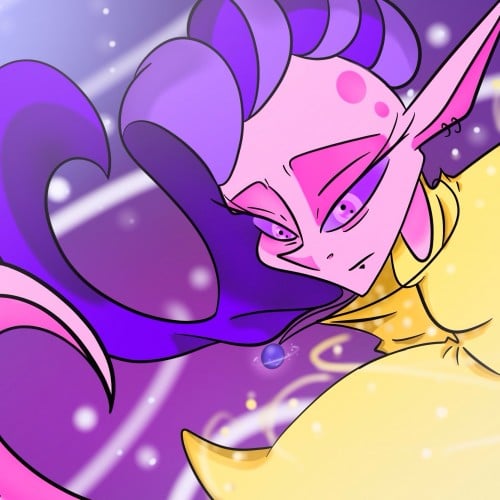
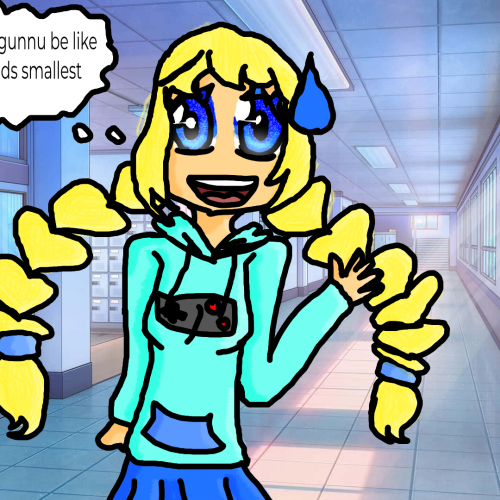
made in magma hears the link- https://magma.com/invite/HVL6T7HH oh so yes my wii deleted you oc has a human form because yes yall give me a Worlds Smallest Violin moment for one of your oc's I will go first vilit when she was a human was the outcast of her school but she made friends fast because of her art
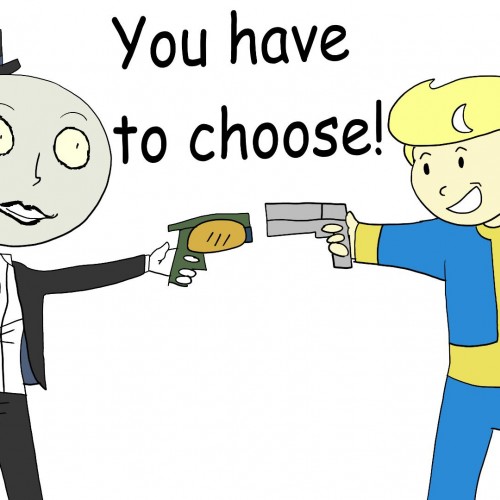
And then one of them gets shot, and Ellie says, "You know you didn't have to do that, right? But that's okay, you just keep being you!" ... Be that Unplanned Variable! Be the Hope Colonist, and play Outer Worlds by Obsidian today!!!!