Previous
Next
logo logo
logo logo
  • Discover Art
    • Trending
    • Most Recent
    • Most Faves
    • Most Views
    • Curated Galleries
  • Drawing Challenges
    • See All Challenges
  • Drawing Prompts
  • Artists
    • Most Popular
    • Most Recent
    • Available For Hire
    • Artist Spotlight
  • More
    • Marketplace
    • Art Discussions
    • Resources
    • News + Blog
Login
Most Recent
Select an option
  • Most Relevant
  • Most Faves
  • Most Views
  • Most Comments
  • Most Recent
SEARCH RESULTS FOR

fast

Simon Simon
Enlarge
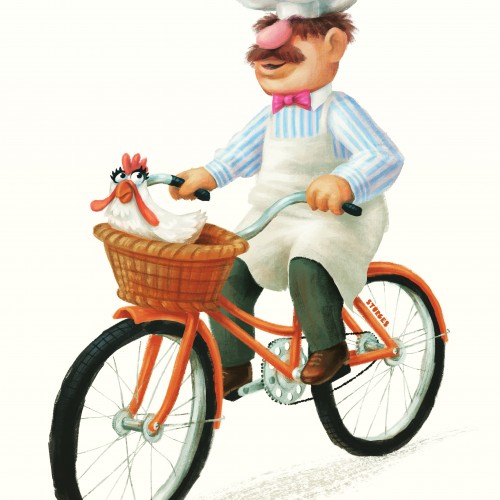
Bork, bork, bork!

Bork, bork, bork! The Swedish Chef is taking “fast food” to a whole new level—now with 100% more chicken anxiety. Camilla did not sign up for this Tour de Flap, but here we are. Will they reach the kitchen safely, or will this turn into an unscheduled poultry emergency? Stay tuned. Latest from my Bikes of Amsterdam series

  • 35
  • 2
  • 0
Sabina Hahn Sabina Hahn
Enlarge
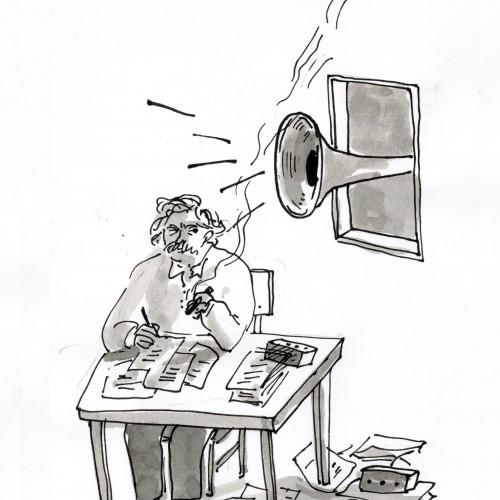
Mark Twain

Mark Twain (1835–1910) In the 1870s and ’80s, the Twain family spent their summers at Quarry Farm in New York, about two hundred miles west of their Hartford, Connecticut, home. Twain found those summers the most productive time for his literary work, especially after 1874, when the farm owners built him a small private study on the property. That same summer, Twain began writing The Adventures of Tom Sawyer. His routine was simple: he would go to the study in the morning after a hearty breakfast and stay there until dinner at about 5:00. Since he skipped lunch, and since his family would not venture near the study—they would blow a horn if they needed him—he could usually work uninterruptedly for several hours. “On hot days,” he wrote to a friend, “I spread the study wide open, anchor my papers down with brickbats, and write in the midst of the hurricane, clothed in the same thin linen we make shirts of.” Whether or not he was working, he smoked cigars constantly. One of his closest friends, the writer William Dean Howells, recalled that after a visit from Twain, “the whole house had to be aired, for he smoked all over it from breakfast to bedtime.” - From Daily Rituals: How Artists Work by Mason Currey “Everyone is a moon, and has a dark side which he never shows to anybody.” ― Mark Twain #dailyrituals #inktober #MarkTwain @masoncurrey

  • 340
  • 2
  • 0
Kevin VanEmburgh Kevin VanEmburgh Plus Member
Enlarge
My Weekend Always Goes By So Fast
1/5

  • 130
  • 1
  • 0
Sabina Hahn Sabina Hahn
Enlarge
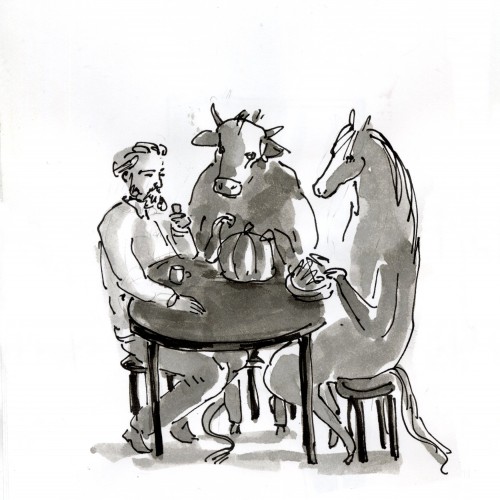
Herman Melville

Herman Melville (1819–1891) "I rise at eight—thereabouts—& go to my barn—say good-morning to the horse, & give him his breakfast. (It goes to my heart to give him a cold one, but it can’t be helped.) Then, pay a visit to my cow—cut up a pumpkin or two for her, & stand by to see her eat it—for it’s a pleasant sight to see a cow move her jaws—she does it so mildly & with such a sanctity." - From Daily Rituals: How Artists Work by Mason Currey “I would prefer not to.” ― Herman Melville, Bartleby the Scrivener “A smile is the chosen vehicle of all ambiguities.” ― Herman Melville, Pierre; or, The Ambiguities #dailyrituals #inktober #HermanMelville @masoncurrey

  • 187
  • 2
  • 0
Angela Martini Angela Martini Plus Member
Enlarge
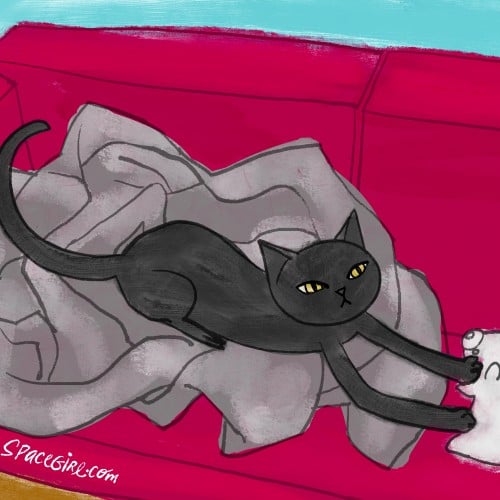
Sherlock making biscuits.

My cat Sherlock is hard at work making breakfast biscuits on his trusty Snuffles bear.

  • 65
  • 2
  • 1
John Kane John Kane Plus Member
Enlarge
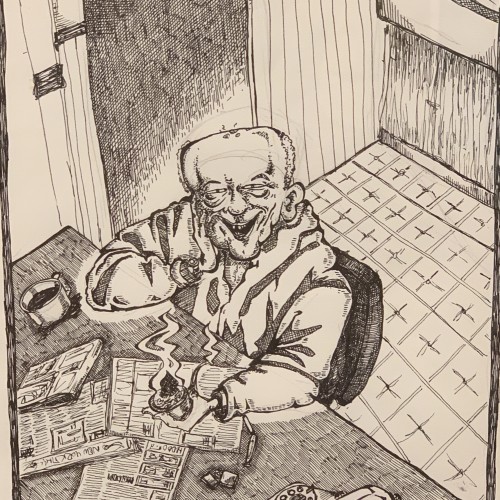
Breakfast table

This is a pre procreate drawing. I’ve always liked the way this guys face turned out

  • 4
  • 4
  • 0
Sarah Sarah Plus Member
Enlarge
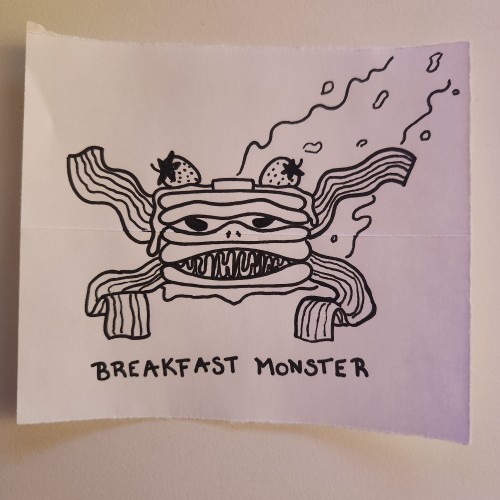
Doodles with Dane - Food - Breakfast Monster

  • 4
  • 2
  • 0
Sabina Hahn Sabina Hahn
Enlarge
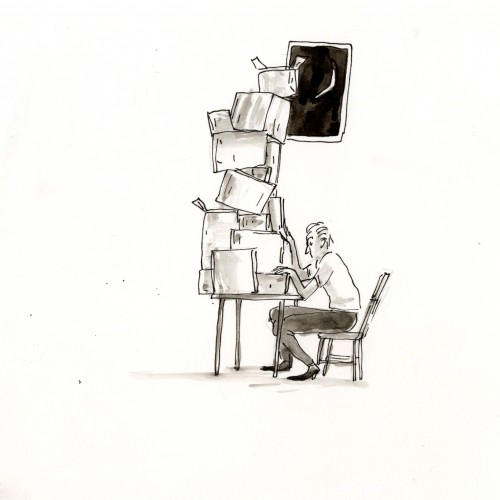
Joseph Cornell (1903–1972)

Joseph Cornell (1903–1972) Cornell worked nights at the kitchen table, sorting and assembling materials for his boxes. It was not easy going. Some nights he felt too fatigued from his day job to concentrate on his art and would sit up reading instead, switching on the oven for warmth. In the mornings, his quarrelsome mother would scold him about the mess he’d left at the kitchen table; without a proper workroom, Cornell was forced to store his growing collection of magazine clippings and dime-store baubles out in the garage. In 1940 Cornell finally mustered the courage to quit his job and pursue his art full-time—and even then his habits changed little. He still worked nights at the kitchen table, while his mother and brother slept upstairs. In the late morning he would head downtown for breakfast at his local Bickford’s restaurant, often satisfying his sweet tooth with a Danish or a slice of pie (and lovingly cataloging these indulgences in his diary). - From Daily Rituals: How Artists Work by Mason Currey #dailyrituals #inktober #JosephCornell @masoncurrey

  • 197
  • 12
  • 0
Sabina Hahn Sabina Hahn
Enlarge
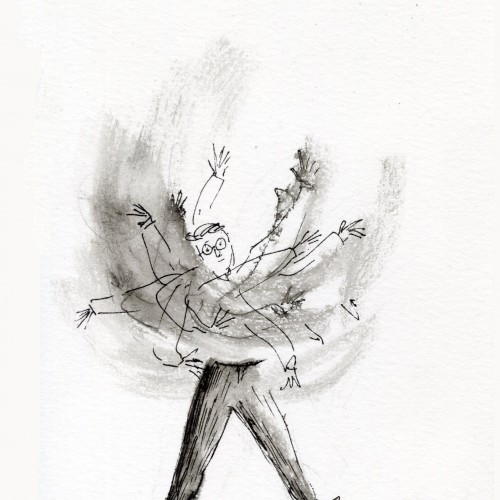
Dmitry Shostakovich (1906–1975)

Dmitry Shostakovich (1906–1975) Shostakovich’s contemporaries do not recall seeing him working, at least not in the traditional sense. The Russian composer was able to conceptualize a new work entirely in his head, and then write it down with extreme rapidity—if uninterrupted, he could average twenty or thirty pages of score a day, making virtually no corrections as he went. But this feat was apparently preceded by hours or days of mental composition—during which he “appeared to be a man of great inner tensions,” the musicologist Alexei Ikonnikov observed, “with his continually moving, ‘speaking’ hands, which were never at rest.” Shostakovich himself was afraid that perhaps he worked too fast. “I worry about the lightning speed with which I compose,” he confessed in a letter to a friend. Undoubtedly this is bad. One shouldn’t compose as quickly as I do. Composition is a serious process, and in the words of a ballerina friend of mine, “You can’t keep going at a gallop.” I compose with diabolical speed and can’t stop myself.… It is exhausting, rather unpleasant, and at the end of the day you lack any confidence in the result. But I can’t rid myself of the bad habit. - From Daily Rituals: How Artists Work by Mason Currey #dailyrituals #inktober #shostakovich @masoncurrey

  • 433
  • 8
  • 0
Sabina Hahn Sabina Hahn
Enlarge
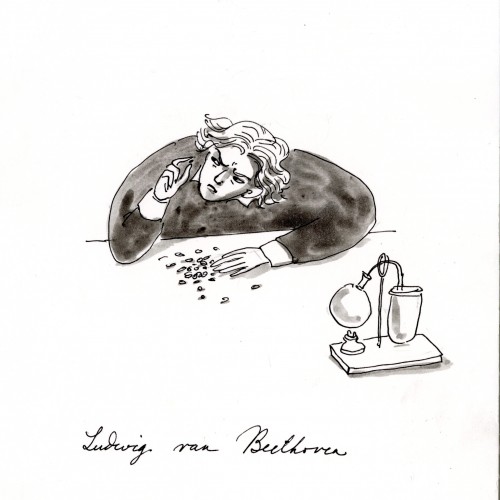
Ludwig van Beethoven

Ludwig van Beethoven (1770–1827) Beethoven rose at dawn and wasted little time getting down to work. His breakfast was coffee, which he prepared himself with great care—he determined that there should be sixty beans per cup, and he often counted them out one by one for a precise dose. From Daily Rituals : How Artists Work by Mason Currey. #dailydrawing #dailyritual #beethoven #coffee #inktober @masoncurrey

  • 225
  • 4
  • 0
Guzman Guzman Plus Member
Enlarge
breakfast

There are practice excercises on Youtube for the sketchbook app. It was just for the flower, which I didn't quite get it right and I changed the background and added the bee. I am actually proud of the bee. That's breakfast.

  • 22
  • 7
  • 1
Bleu Hope Bleu Hope Plus Member
Enlarge
“Where To Here”, September 2024.

As Halloween and Samhuinn fast approaches…

  • 90
  • 3
  • 4
Bleu Hope Bleu Hope Plus Member
Enlarge
“Rapid Charger Syndrome”, August 2024.

Given my propensity for walking a little too fast in public spaces, I’m something of a “rapid charger” myself… xD

  • 391
  • 3
  • 0
Bleu Hope Bleu Hope Plus Member
Enlarge
“Alan Moore’s Psychedelic Breakfast”, July 2024.

Japanese themed again!

  • 359
  • 2
  • 0
Doug Dutton Doug Dutton
Enlarge
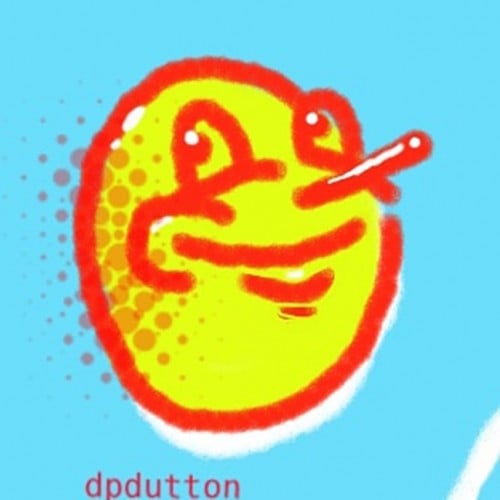
Love + Death are gumball machine toys.

Finally had a day to sit and scribble, first day in a long time. It's fast and loose, but I like how it turned out, and I had fun! My reference was a toy squirrel; but, I think love and death are a bit more interesting. Done in Photoshop. Another color version & reference- https://leglessmermaid.blogspot.com/2024/05/love-death-are-gumball-machine-toys.html

  • 6
  • 2
  • 0
Kevin VanEmburgh Kevin VanEmburgh Plus Member
Enlarge
You Realize That Life Goes Fast

  • 371
  • 4
  • 0
Joselo Rocha Joselo Rocha
Enlarge
Flying-Chancla Survivors-Club

Survival of the fastest

  • 517
  • 0
  • 0
Richard Koehler Richard Koehler
Enlarge
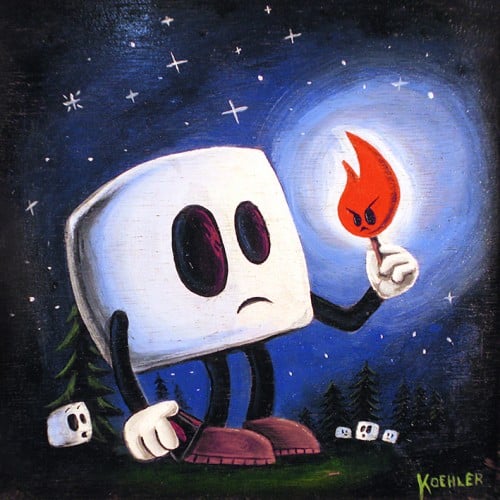
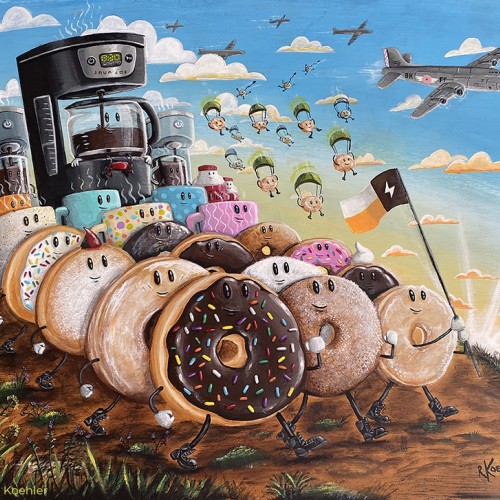
Breakfast Brigade

18x24 inch acrylic painting on wood board. Had fun with this one. Thanks for looking.

  • 649
  • 18
  • 8
gabbie gabbie
Enlarge
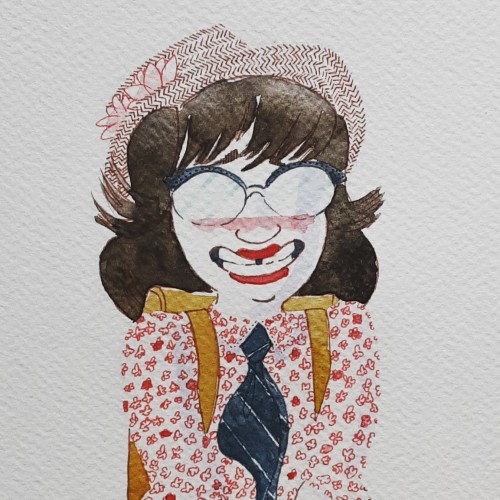
Worlds Smallest Violin

made in magma hears the link- https://magma.com/invite/HVL6T7HH oh so yes my wii deleted you oc has a human form because yes yall give me a Worlds Smallest Violin moment for one of your oc's I will go first vilit when she was a human was the outcast of her school but she made friends fast because of her art

  • 6
  • 3
  • 0
Isadora Griffin Isadora Griffin
Enlarge
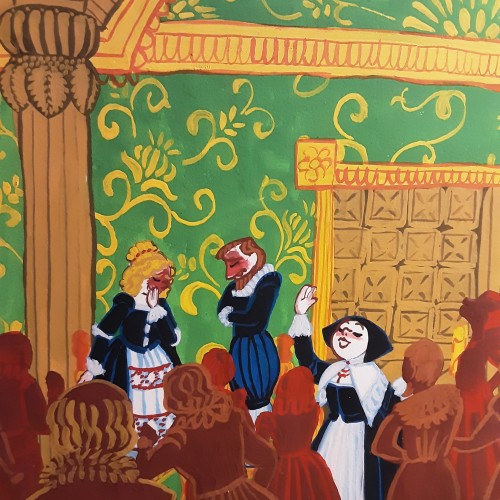
Detail from a engagement feast

Midnight painting because i cant sleep. I hope to get the whole picture done before the weekend, but im not a fast painter, so heres the first corner.

  • 35
  • 2
  • 0
Brianna Eisman Brianna Eisman
Enlarge
Pretty Plants 2 - Acrylic on Canvas

I love the versatility of acrylic paint. You can change the consistency by adding water or acrylic mediums. These additions enable artists to create transparent glazes or thick impasto textures. The fast-drying nature of acrylics makes it easier to correct mistakes or make alterations during the painting process. This painting is part of a three piece set featuring my favorite plants painted on a soft gradient background.

  • 231
  • 3
  • 0
Alexandra Martin Alexandra Martin
Enlarge
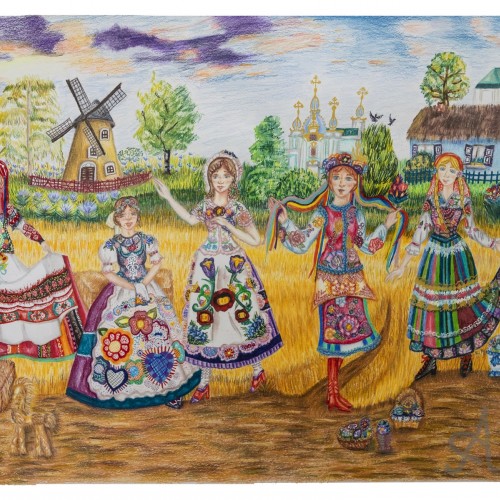
Harvest Festival

From left to right (countries and their names): Belarus- Alena Sokolova Czech Republic-Iveta Cerna Hungary-Maida Valko Ukraine- Olena Karpenko Poland- Albinka Debski Markers and Pens -Sailor Shikiori Dual Tip Brush Pens -Micron Pens -Copic Markers -Posca Markers -Staedtler Double Ended Permanent Pens -Faber Castell Pitt Artist Pens -Gelly Roll Pens -Uni Ball Signo Pens -Marvy Artist Double Sided Permanent Pens -Mark’s Tous Le Jours Ballpoint Pen etc… Colored Pencils -Caran d’ache luminance -Holbein Artist colored pencils -Tombow Irojiten -Derwent Lightfast -Faber Castell Polychromos -Caran d’ache Pablo Etc… Additionally I used Supracolor watercolor pencils, Staedtler Mars Lumograph EE Pencil, and various types of Zebra Pens.

  • 9
  • 3
  • 0
Joselo Rocha Joselo Rocha
Enlarge
Bacon!... Kitchens Duct Tape!

Honestly, you can fix almost anything with bacon.

  • 168
  • 1
  • 0
Anna Anna
Enlarge
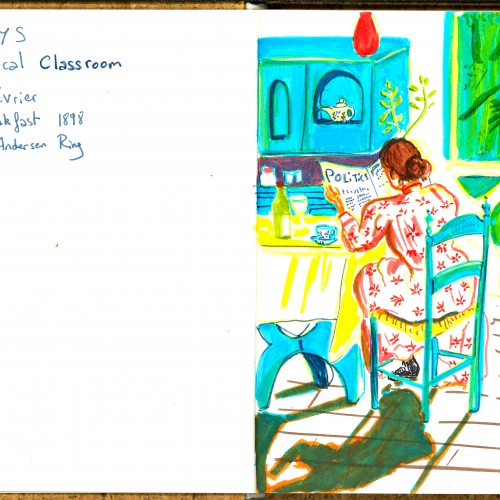
At breakfast DTIYS challenge

Challenge to reproduce this painting proposed by classical classroom Sketchbooking while on holidays in Colombia - made with watercolor markers

  • 73
  • 6
  • 0
Naufaria Naufaria
Enlarge
Ramadan Mubarak 1444H

Happy fasting! Have a wonderful Ramadan!

  • 48
  • 2
  • 0
Step Agustin Step Agustin
Enlarge
Patience Gets Us Nowhere Fast

Head #23 of my 100 Heads.

  • 162
  • 0
  • 0
Izabela Izabela
Enlarge
Magic violet. Whimsical illustration - Day 7

I'm playing a lot with the background texture. I'm discovering the power of brushes from Krita Software.  I fell in love with the gouache texture effect.  I like the silhouettes in this illustration, but the leaves could be better. I need to find a good brush for drawing leaves faster and with ease. Or maybe I should try some other techniques? Have a creative time!

  • 8
  • 6
  • 0
WaterproofFade-Proof WaterproofFade-Proof
Enlarge
Lady Sora

One of the leaders of Zephyrus' military, cousin to the king Lady Sora is a formidable foe and steadfast ally.

  • 65
  • 2
  • 0
Audrey Audrey
Enlarge
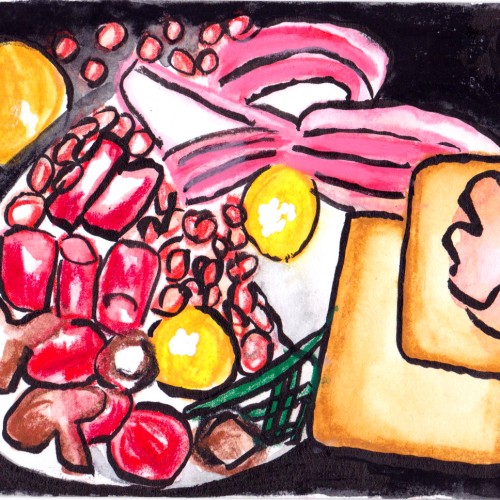
English breakfast

  • 7
  • 0
  • 0
crais robert crais robert
Enlarge
The House of Ryman: A Family of Artists

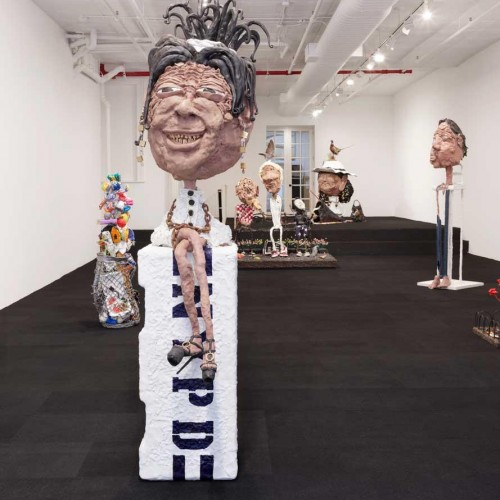
Take the Rymans, for instance. There is Robert Ryman (1930 – 2019), the patriarch whose paintings are indisputable icons of the modernist canon. Then there are his wives and children. Ethan Ryman (b. 1964) is the oldest of Robert’s three artist children. Though his mother was not an artist, Lucy Lippard (b. 1937) was still a scrappy and eloquent art critic, a feminist, a social activist, and an environmentalist. Ethan’s meticulously considered and crafted artworks might be characterized as somewhere between photography and sculpture, the abstract and the (f)actual. Though Lippard and Ryman divorced just six years after their 1961 marriage, their son is arguably the closest to his father’s methodologies if not his medium, and was certainly the last to become a visual artist. Robert Ryman went on to marry fellow artist Merrill Wagner (b. 1935) in 1969 and they had two sons. Though Wagner is more quietly acknowledged than Ryman, her boundless practice includes sculpture, painting, drawing, installation, and more. With an emphasis on materiality, her sites are indoors and out, her styles alternating. Will Ryman (b. 1969) is the elder son of Robert and Merrill. He started out as an actor and playwright though he too eventually assumed a visual art practice to become a sculptor. He is best known for his large-scale public artworks and theatrical installations that focus on the figurative and psychological, at times absurdist, narratives. Cordy Ryman (b. 1971) is the youngest, and the only one of the three who knew that he was going to be a visual artist early on. His work is abstract, the sophistication understated, and his output is prolific. With his mother’s DIY flair, his homely materials seem sourced from the overflow of construction projects, lumberyards, and Home Depot. Ethan Ryman said that, when he was young, he didn’t want to be a visual artist. Instead, he pursued music and acting, producing records for Wu-Tang Clan, among others, getting “my ears blown out.” But he was always surrounded by artists—Sol LeWitt, Carl Andre, Jan Dibbetts, William Anastasi, and countless others at his mother’s place on Prince Street in SoHo and at the Rymans’s 1847 Greek Revival brownstone on 16th Street in Manhattan, where everyone was often seated around the family dinner table. He would spend part of most weekends in the highly stimulating chaos that reigned there—birds, dogs, plants, toys, art, people, everywhere. “While nowhere near as overwhelming, I was also constantly exposed to artists, writers and other creative folks at my Mom’s place.” “While nowhere near as overwhelming, I was also constantly exposed to artists, writers and other creative folks at my Mom’s place.” Ethan Ryman Lippard was “a powerhouse.” She took Ethan on her lecture tours, readings, conferences, galleries, studios, wherever she had to go. And while that almost always breeds rebellion, at some point, he began noticing all the art around them—both what it looked like and how it was made. He began to take photographs of buildings and realized that “abstract color fields were all around us.” He also began to notice his father and Wagner’s work more carefully—how sensitively it was executed and how reactive it was to its surroundings. “Once you’re interested, you notice. When I asked my dad questions, I would most likely get a one-word response. I had to go to his lectures for answers where he broke down modern art for me. After listening to him, it seemed to me we should all be painting, otherwise what were we doing with our lives?” Will Ryman, on the other hand, said that all his work has a narrative component. His background is in theatre and his interests have always been film and plays, his narratives about New York City and American culture and history. “It’s a city I love,” he said. “I try to observe culture in a bare-bones way and I’ve always been interested in telling stories—we’re the only species that tells stories to each other. It comes from an intuitive, cathartic place in me. I want to stay away from preconceived notions, although that’s not completely possible. I have no plan except to do something honest, with a little bit of a political bent and humor but I’m not an activist. I’m interested in exploring a culture and its flaws as an interaction between human beings.” His interests and his work are very different from his last name. There is no connection to minimalism. He didn’t go to art school, drawn instead to theatre workshops and theatre troupes. “I didn’t become involved with the visual arts until my mid-thirties. It’s easy to say what I make is a reaction, but I dismiss that. And I also wouldn’t say it’s rebellious after twenty years.” Of his family, he said, “we’re a normal family, a close family, with all the dynamics and complications that go along with that. And while everyone who came to 16th Street were artists, they were also just family friends. I have no other measure for how a family interacts. It was just the way it was.” Cordy Ryman was the only one of the three who went to art school, earning a BFA from the School of Visual Arts, but it was reportedly awkward for him, since all his teachers knew his parents. “When I started making abstract paintings, it was kind of push and pull but it became more interesting to me than my earlier figurative or narrative work. That’s when I started to know where I came from. I realized that I had a visual memory, and the language was there, a language I didn’t know I knew. We all had different ways of working; our processes are very different and it’s hard to compare us. Ethan and I use a similar inherited language but he thinks about what he does more. I work very fast, the ideas come from the process itself. I work in two or three modes simultaneously and bounce around.” At home, they were around Wagner’s work since her studio was there. “Will and I were always in her studio, helping her, going to her installation sites with her, adjusting her boulders or whatever the project was she was working on. That was special and made a deep impression, but I didn’t realize it then.” All five Rymans have in common an acute consciousness of space and of place as an integral component of their work. For the brothers, part of that consciousness might stem from their parents, but also from their attachment to their family home, which was a crucible of sorts for them, where everyone was an artist. To Cordy, the house was a “living, breathing thing, and the art in it felt alive, growing, and occupying any space that was available. It was the structure of our world. When I’m making work, it doesn’t need to be the most beautiful thing ever, but it needs to have its own life, its own space, like the art we grew up with.” And the next generation of Rymans, also all sons—what about them? Will said his son is still too young to know. Cordy thought the same about his two younger children; his oldest is in the art world, but not as an artist—so far. Ethan perhaps summed it up best: my two sons are artists; they just don’t know it yet.

  • 12
  • 1
  • 0
« Previous
Next »

Doodle Addicts

Navigate
  • Discover Art
  • Drawing Challenges
  • Weekly Drawing Prompts
  • Artist Directory
  • Art Marketplace
  • Resources
Other
  • News + Blog
  • About Us
  • Contact Us
Newsletter
© 2026 Doodle Addicts™ — All Rights Reserved Terms & Conditions / Privacy Policy / Community Guidelines
Add Doodle Addicts to your home screen to not miss an update!
Add to Home Screen