Imagine trading your soft bed for a deflating mattress.
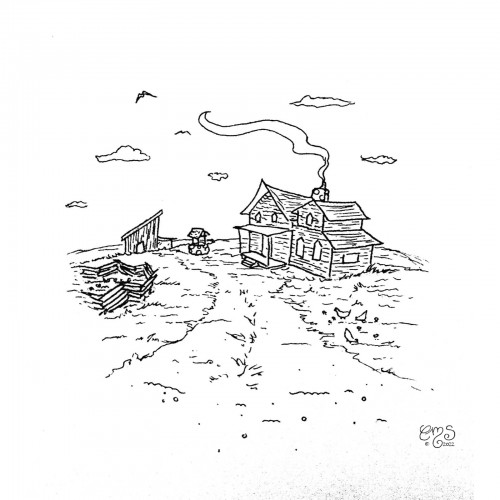
Imagine food cooked under ash, a fire that smokes more than it warms.
Imagine waking at dawn with stiff muscles, yet finding yourself strangely alive.
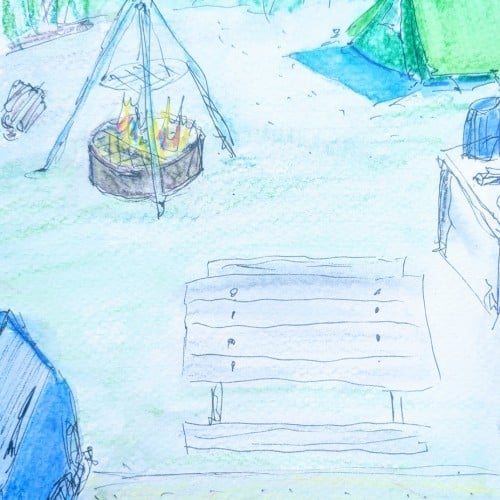
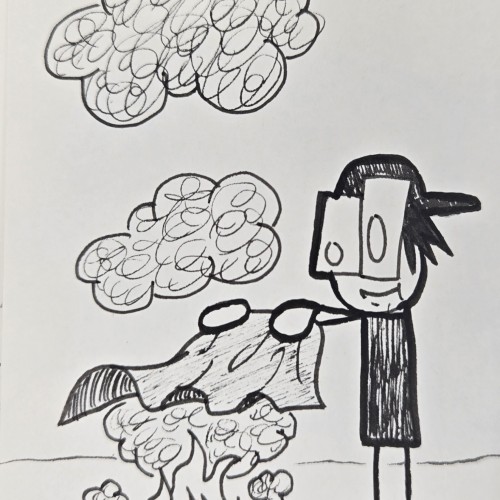
This sketch is not just about tents, cars, and campfires.
It is about the in-between—where inconvenience and beauty wrestle, and something deeper sneaks in.
Camping reminds me: comfort is overrated, but presence is priceless.
"Lang may yer lum reek (a Hogmanay greeting, implying "May you never be without fuel for your fire!", but more literally translates to "Long may your chimney smoke!")" All this I corrupted and used to inspire me here.
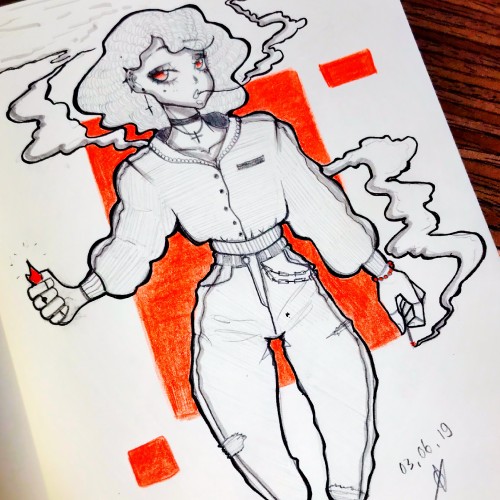
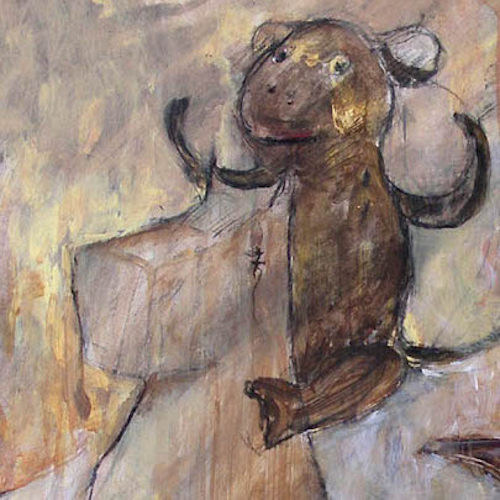
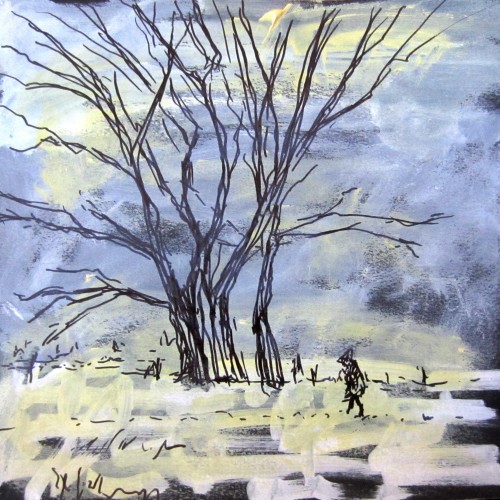
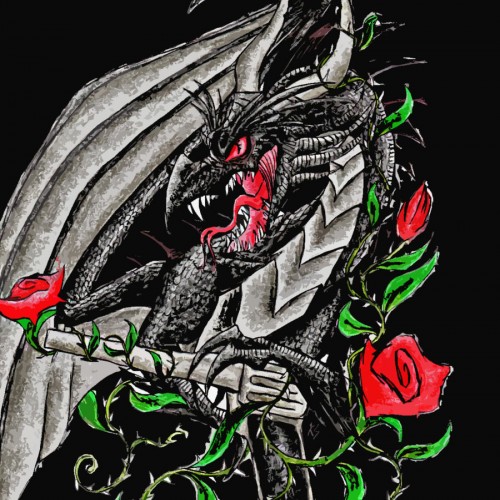
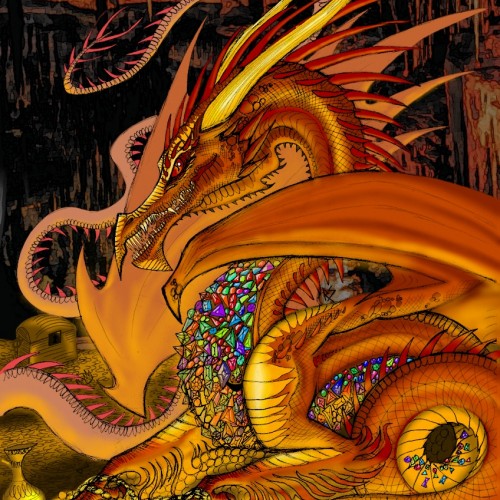
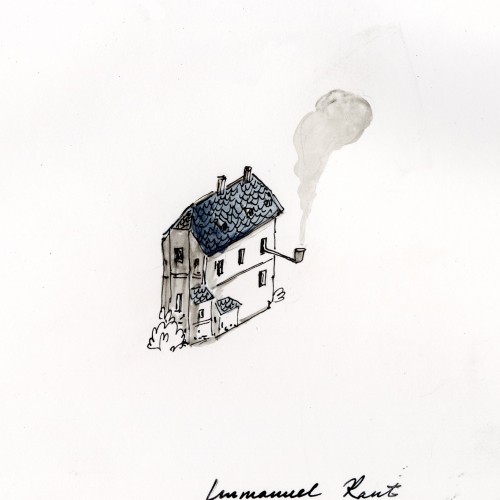
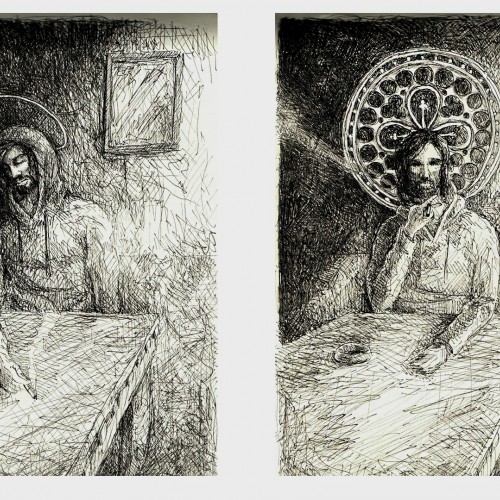
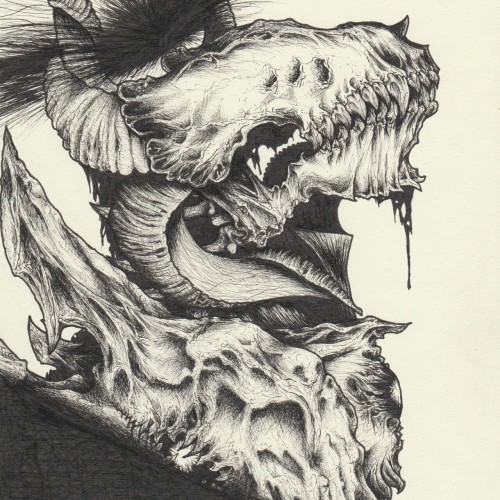
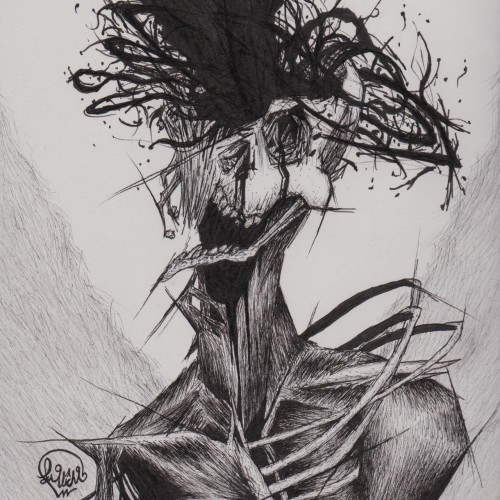
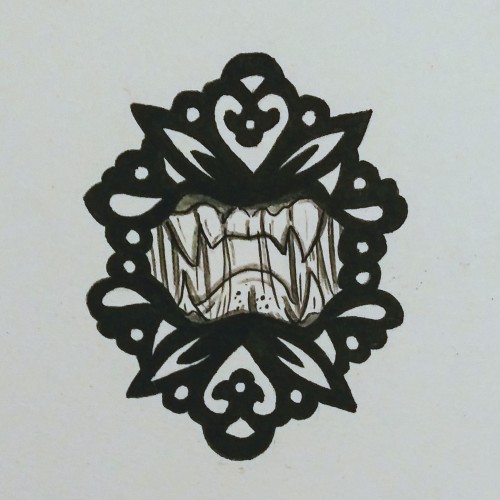
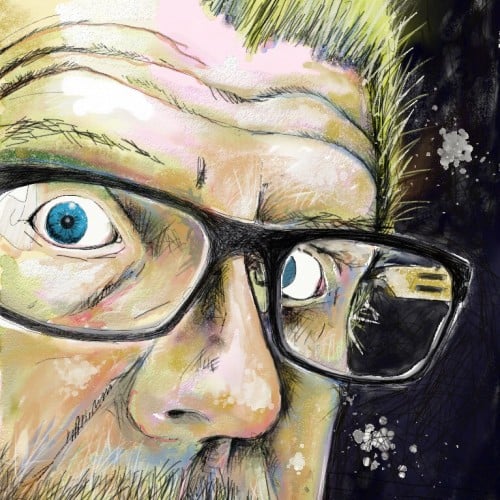
More inktober 2019. From the top: Day 11 (Snow - a tribute to Victoria Crowe), Day 23 (Ancient), Day 13 (Ash - smoke drawn with real ash), Day 12 (Dragon) and Day 6 (Husky)
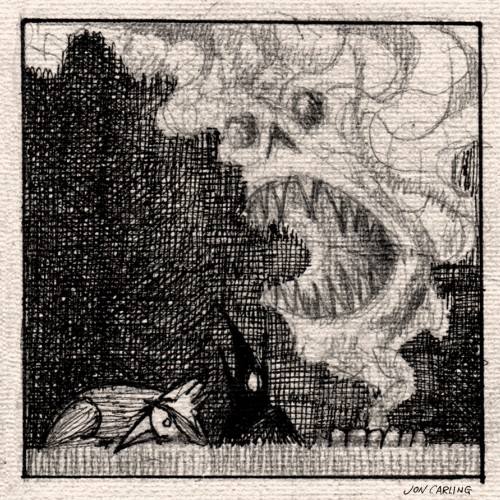
My vision of the character ‘Smaug’ from J.R.R. Tolkien’s ‘The Hobbit’.
Pencil sketch, coloured digitally on IbisPaint X.
Here is a passage from The Hobbit describing Smaug’s appearance: “There he lay, a vast red-golden dragon, fast asleep; thrumming came from his jaws and nostrils, and wisps of smoke, but his fires were low in slumber. Beneath him, under all his limbs and his huge coiled tail, and about him on all sides stretching away across the unseen floors, lay countless piles of precious things, gold wrought and unwrought, gems and jewels, and silver red-stained in the ruddy light. Smaug lay, with wings folded like an immeasurable bat, turned partly on one side, so that the hobbit could see his underparts and his long pale belly crusted with gems and fragments of gold from his long lying on his costly bed.”
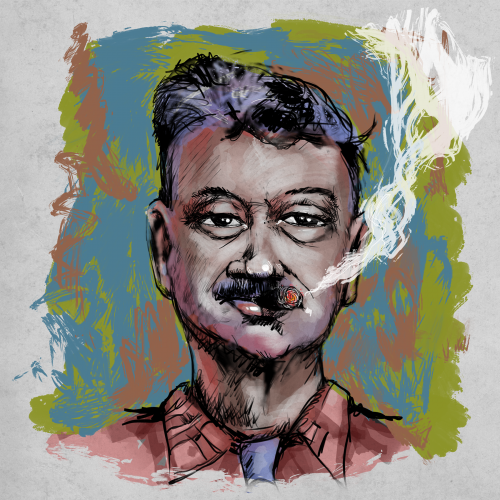
Immanuel Kant (1724–1804)
Kant’s biography is unusually devoid of external events.
As Heinrich Heine wrote: The history of Kant’s life is difficult to describe. For he neither had a life nor a history.
In actual fact, as Manfred Kuehn argues in his 2001 biography, Kant’s life was not quite as abstract and passionless as Heine and others have supposed…. If he failed to live a more adventurous life, it was largely due to his health: the philosopher had a congenital skeletal defect that caused him to develop an abnormally small chest, which compressed his heart and lungs and contributed to a generally delicate constitution. In order to prolong his life with the condition—and in an effort to quell the mental anguish caused by his lifelong hypochondria—Kant adopted what he called “a certain uniformity in the way of living and in the matters about which I employ my mind.”
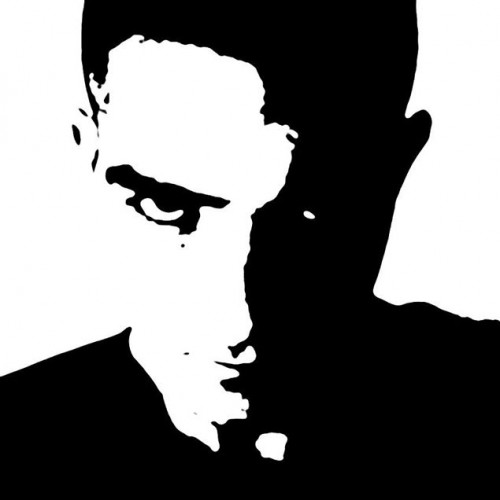
This routine was as follows: Kant rose at 5:00 A.M., after being woken by his longtime servant, a retired soldier under explicit orders not to let the master oversleep. Then he drank one or two cups of weak tea and smoked his pipe. According to Kuehn, “Kant had formulated the maxim for himself that he would smoke only one pipe, but it is reported that the bowls of his pipes increased considerably in size as the years went on.”
- From Daily Rituals: How Artists Work by Mason Currey
#dailyrituals #inktober #ImmanuelKant @masoncurrey
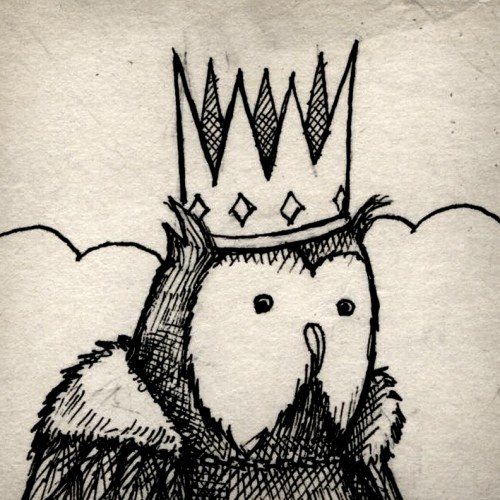
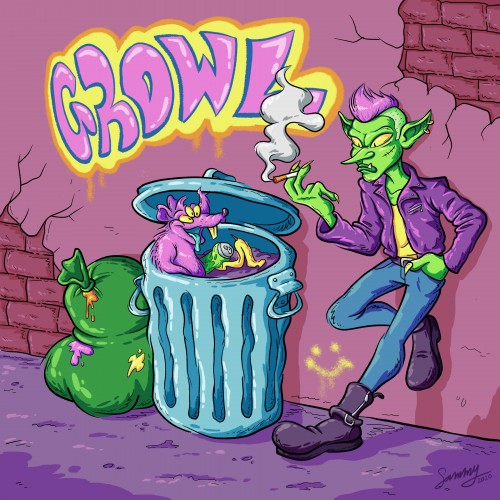
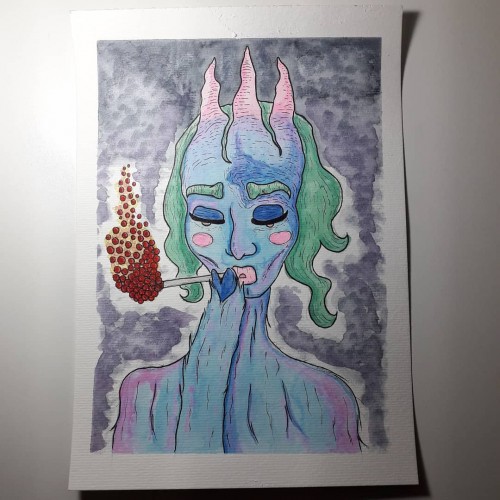
"If you're a goblin in need of a smoke, you know where to go" Part of a series I've started with monsters in the modern world, this is the digital work I've liked the most so far, but I'd appreciate feedback on anything I could improve on.
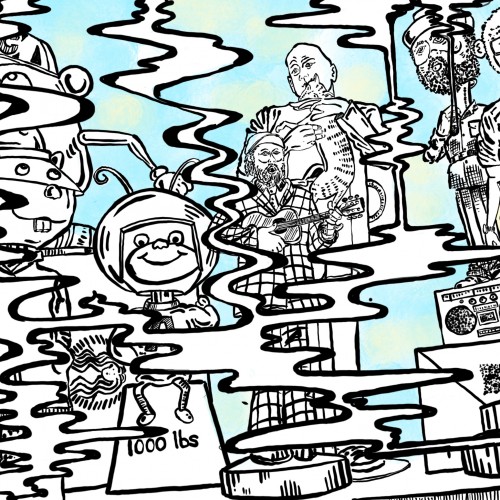
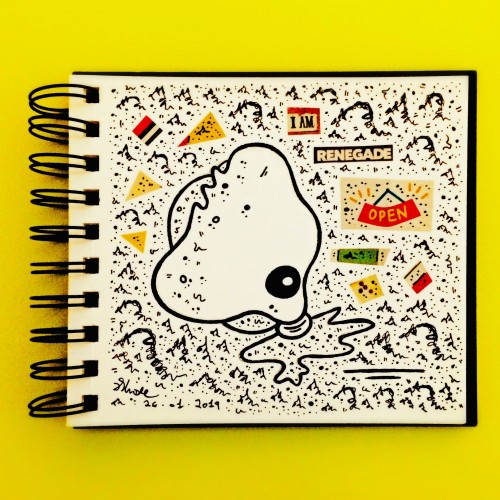
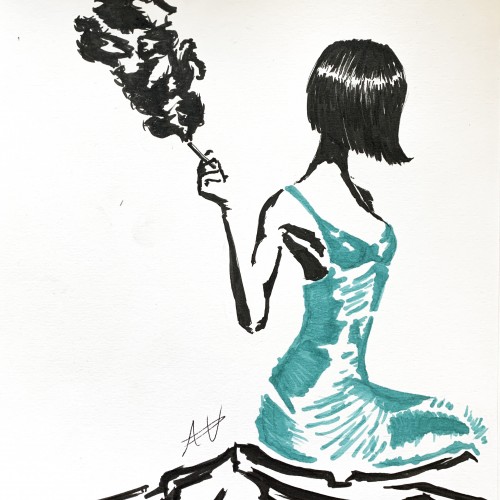
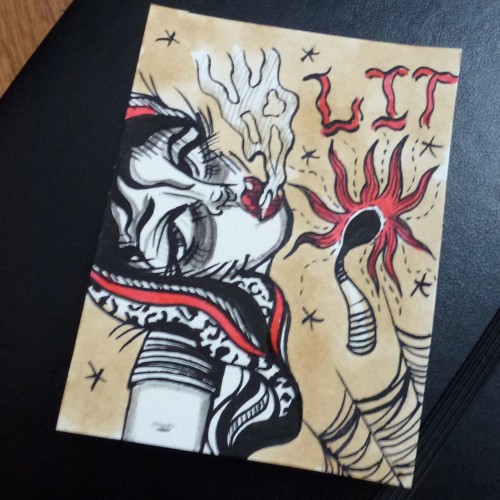
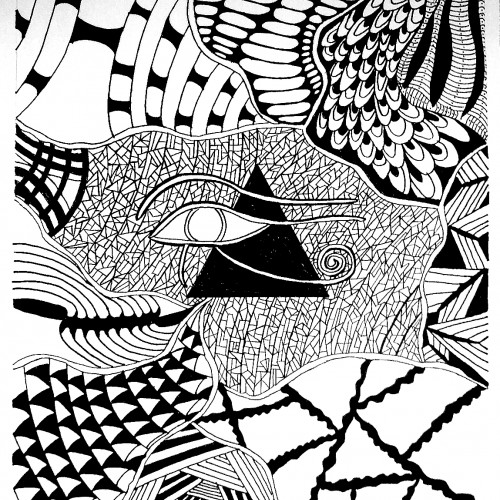
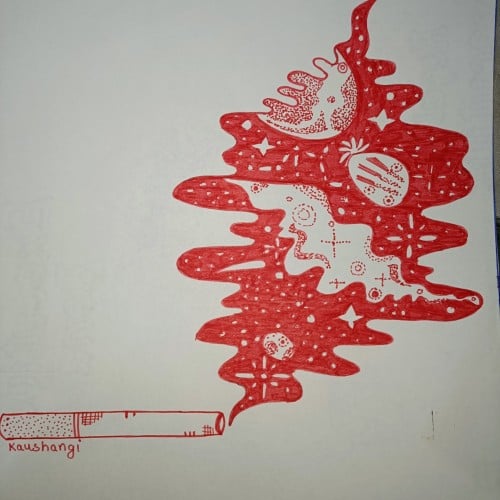
This was my first trial with doodling in years. Done during the COVID lockdown, I was feeling lonely and anxious, and had only a piece of paper and one marker at hand. I smoked a joint and started drawing. I'm particularly proud of this one because it was completely intuitive and free-style, and it made me confident enough to keep doodling afterwards.
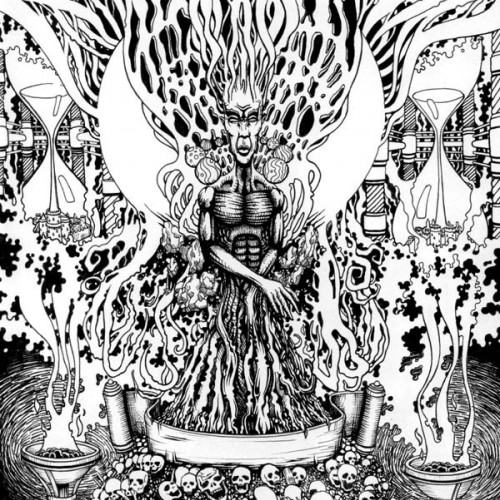
This striking black and white ink drawing personifies Time as a dark entity surrounded by flying souls. A half moon hovers between two hourglasses, symbolizing the passage of time, while smoke billows from two pit fires below. The scene is grounded by skulls and bones, emphasizing the theme of mortality. The artwork is elegantly framed in a gothic style, enhancing its surreal atmosphere and dark symbolism, inviting viewers to reflect on the inevitability of time and its impact on existence.