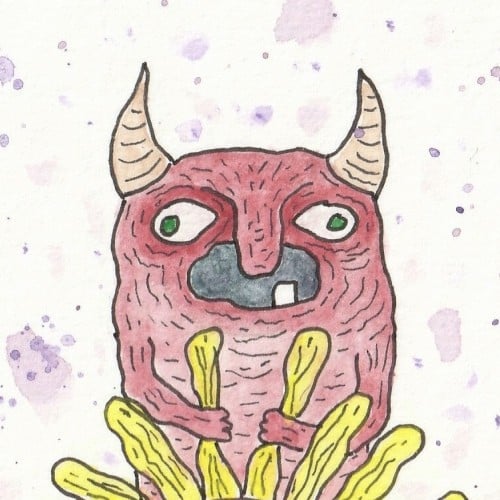
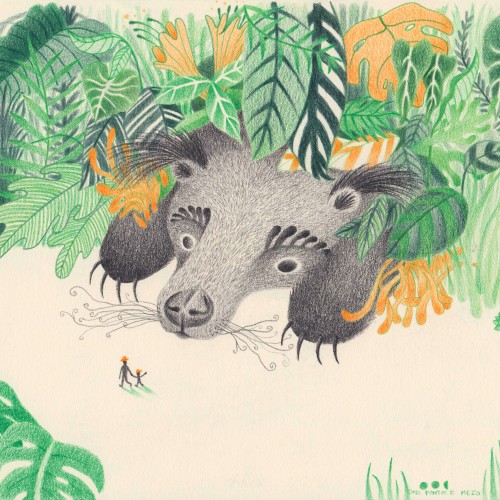
Binturong, a fluffy animal with even fluffier ears. Really mysterious if you ask me. I made a small comic of this, you can see more on Instagram.
On a more serious note, binturongs are fascinating and also a vulnerable species, with a decreasing population (acording to the IUCN redlist).
You can learn more about them through @abconservation.
:.
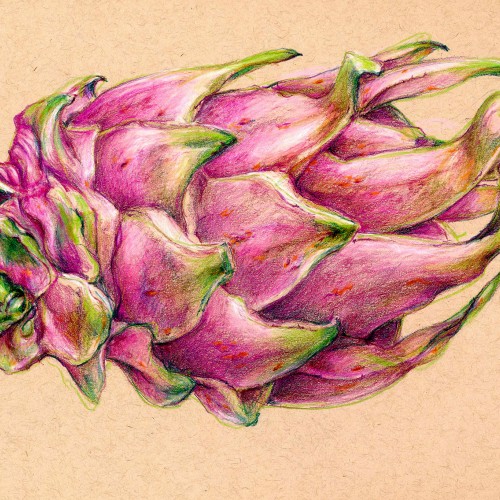
I asked my husband (who is our Covid-period grocery shopper as I am high risk) to bring home a fruit to draw. He came home with a dragon fruit. For those who don't know this interesting edible, it's from a cactus. There are two species: the Asian species is white inside, the Central American variety is shocking pink (see photo). Great in smoothies or when nicely ripe (as this one was) it's tasty eaten out of the skin with a spoon.
I've been seeing lots of new bird species around my neighbourhood, like robins and magpies!
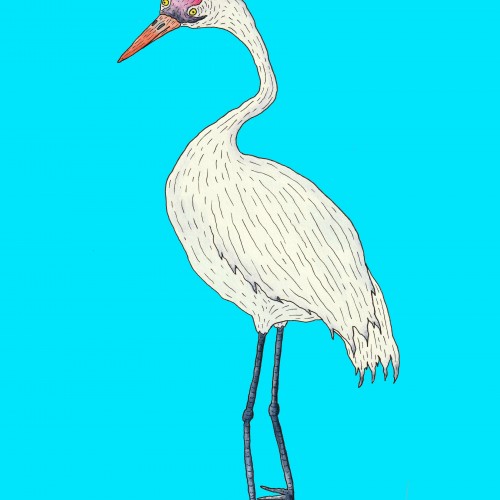
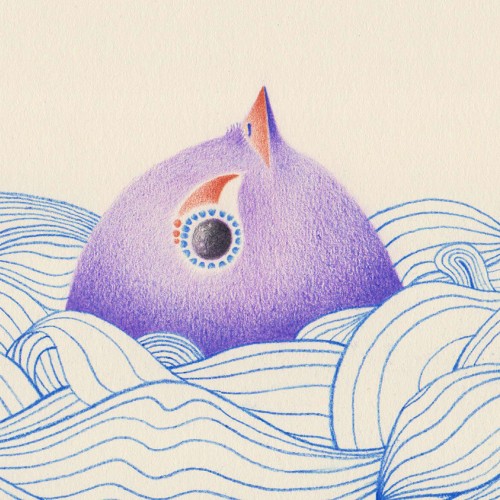
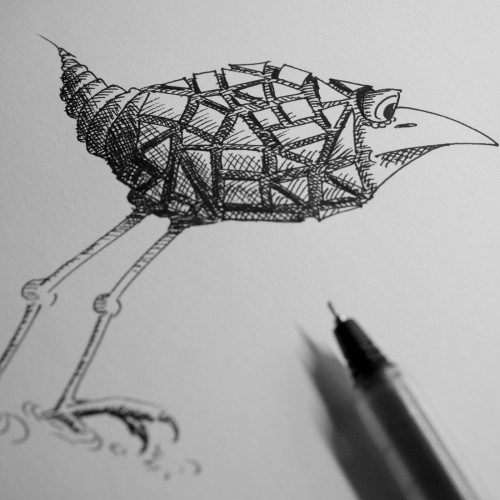
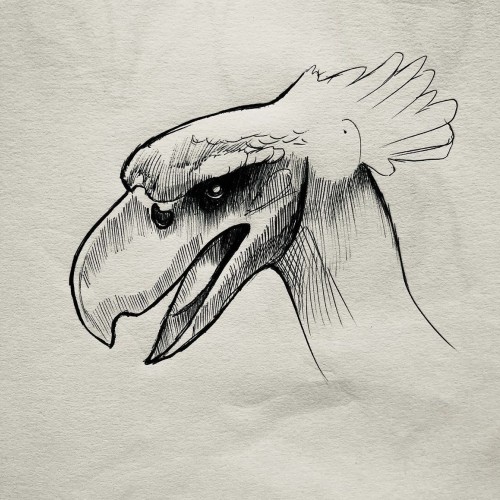
I like to think this bird is watching me from the sea of uncertainty, and looking at all the things I will create in the future and secretly telling me to go on, without me knowing how they will turn out. And strangely, that is some kind of motivation for me. : .
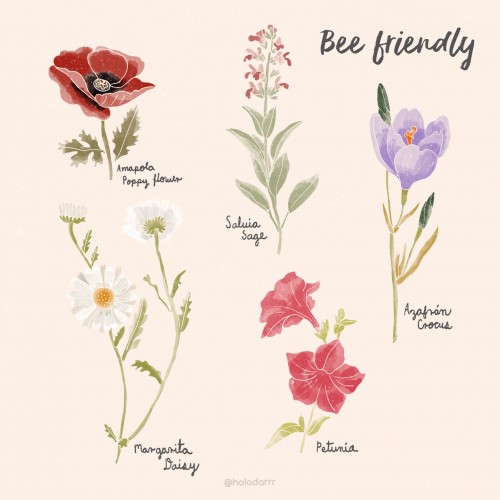
Bee friendly plants you can cultivate, protect or care if you see them anywhere. There are many native flowers, herbs, vegetables and fruit trees that help pollination, the ideal is to grow species free of agrochemicals and pesticides.
For day 15 the inktober word was weak so I decided to approach the subject of hunting for trophies.
It is not the animal that's weak it's the human that's cruel.
A lot of species become endangered because of our need to kill. We should love and protect all the animals, not put them on walls (real or virtual) only for our pleasure and ego.
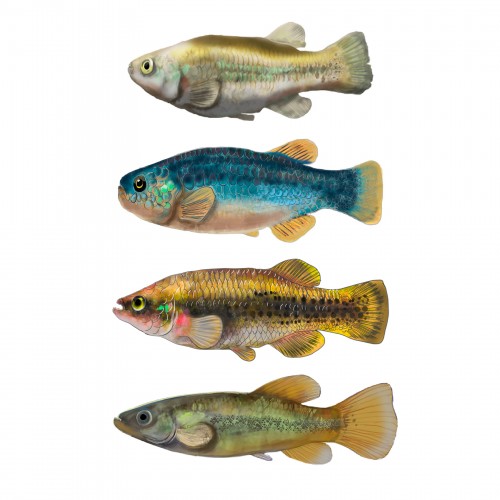
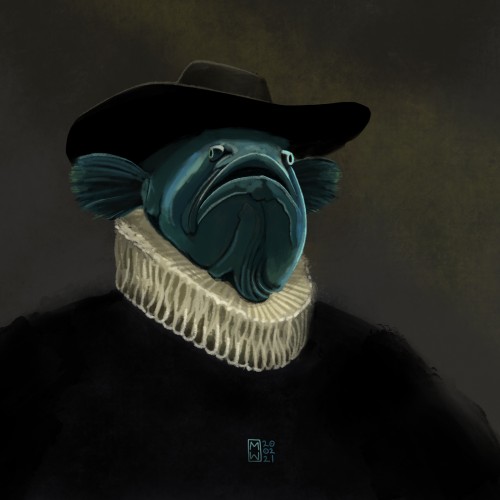
The Middle American killifish genus Profundulus occurs in most Pacific and Atlantic drainages from the Mexican state of Guerrero to the Chamelecón River in Honduras, with highest species diversity in southern Mexico. Digital painting. Genus Profundulus: P. parentiae (top), P. mixtlanensis (blue predator), P. oaxacae (mostly dark spots) y P. balsanus (below). More like this on my IG page: https://www.instagram.com/camilojulianc/
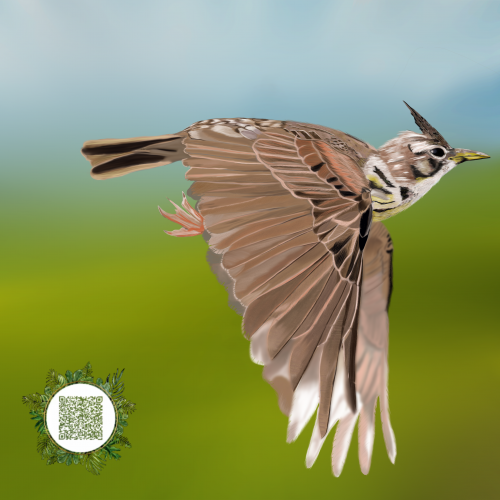
I just finished the Calandra Lark. Here are some facts about this beautiful bird...
Appearance: It's a large lark, about 17.5-20 cm long, with a robust build, a heavy bill, and noticeable pale eyebrows
. Its plumage is mainly greyish-brown streaked above and white below, with large black patches on the breast sides.
Habitat: This species is found in open plains, steppes, pastures, and dry cereal cultivations. It's mainly resident in the west of its range but Russian populations migrate further south in winter.
Diet: Their main food source is seeds, but they also consume insects when nesting.
Behaviour: Calandra Larks are known to be gregarious outside the breeding season, often forming large flocks.
Song: Their song is considered musical and slower than the Skylark's. It has been historically popular as a cagebird.
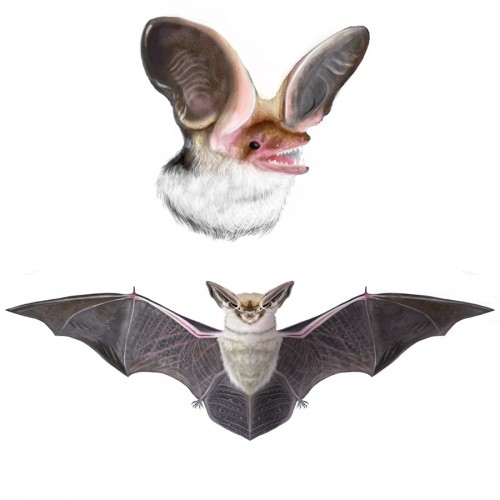
Big-eared Brown Bat (Histiotus macrotus). Hybrid technique (digital enhanced watercolor). This species has large dark ears. The dorsal hairs are strongly bicolored, with black or dark brown bases and yellow tips. Some authors consider that H. macrotus is distributed only in Chile and Argentina. More like this on IG: https://www.instagram.com/camilojulianc/
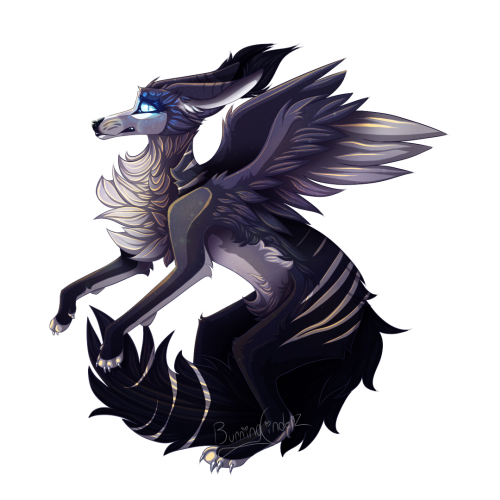
Hey, something that ISN'T a fox! ...Kinda. This is a fox-like canine with wings, not sure what to exactly call their species yet. I'm pretty proud of her design. c:
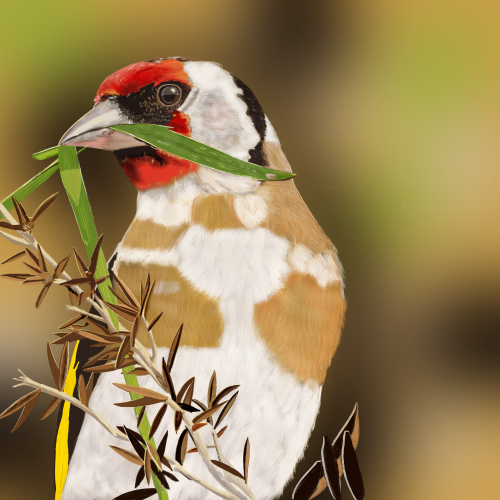
The European Goldfinch is a striking small finch with a distinctive red face and black-and-white head. Its wings are black with a bright yellow wing bar, while the body is mainly buff or light brown.
During the breeding season, the bill of male and female goldfinches is white, but at other times of the year, it is marked with a black tip.
Female goldfinches are very alike in appearance to males, and visually, it is hard to tell them apart from a distance. At close range, the sexes can be distinguished by the size of the red facial patch, with the females not extending past the eyes as it does in males of the species.
Juvenile goldfinches do not develop adults' red, white and black facial markings until the late summer or autumn after hatching. Until this point, they have streaky buff-brown markings on their heads. Info: Birdfact . com
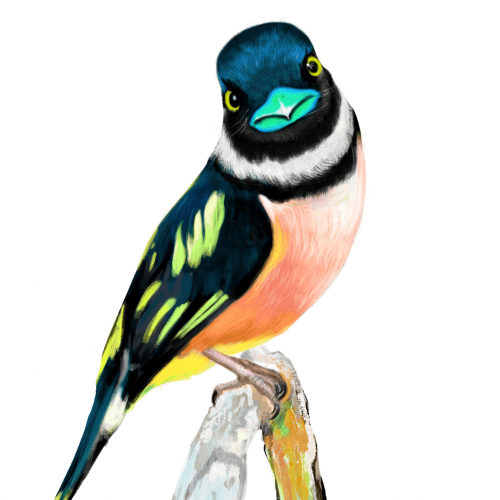
The Black-and-yellow Broadbill (Eurylaimus ochromalus) is a species of bird in the Eurylaimidae family. It is found in Brunei, Indonesia, Malaysia, Myanmar, Singapore, and Thailand. Reference: @hokduan. More like this on: https://www.instagram.com/camilojulianc/
A page of comic for a conquest
The story
End of the project: human species. The simulation has been achieving unexpected outcomes. Was increased free thought and the doubts fade away.
At that time, I recreate my own image. However, it's behaviours came with anomalies. We aren't.
You can't run away from you. Dreams were unexisted memories.
The likehood was that we're living an illusion. But, we change our view.
I couldn't attain the freedom I looked for. Everything became real. Everything came down. Am I still dreaming?
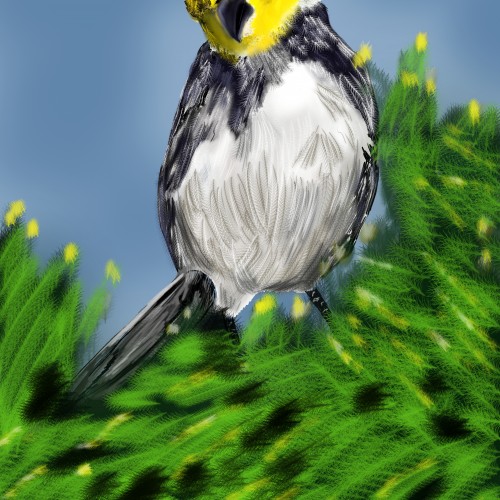
**ENDANGERED SPECIES** This small bird the Golden Cheeked Warbler #goldencheekedwarbler #endangeredspecies also known as the #GoldFinchofTexas lives and breeds in Central Texas particularly somewhere around the Edwards Plateau, Lampasas Cut Plain and Central Mineral Region. The main reason of the threat and decrease of this small bird’s population is mainly because of ranching, agriculture and land development. At present, there is no known record of the number of Golden Cheeked Warblers remaining.
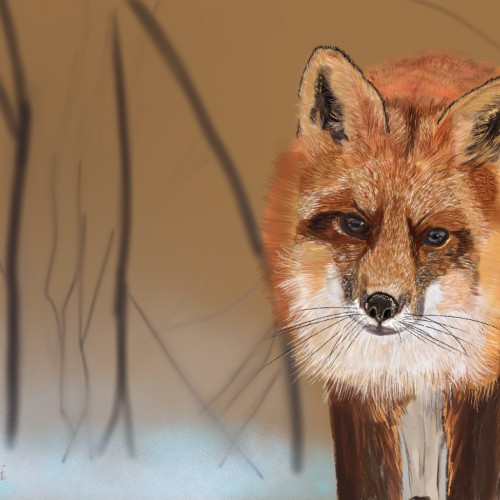
**Are Red Foxes Endangered?**
Currently, red foxes do not have such a status. The IUCN claims that the mammals’ population is stable and does not consider red foxes to be endangered. In fact, they also say that their highest population density is in the UK. Up to 30 red foxes per square 0.5km can exist. However, in the UK the red fox population has fallen by about 41% from 1995 until 2017.
There are several large threats to the red fox population, mainly habitat losses and fragmentations, plus exploitation and hunting. Habitat loss is the most serious of them all. Luckily for the species, they are very adaptable and can live in different conditions, which is also one of the reasons foxes have been regular visitors to urbanised areas and people’s yards. They come to look for food, which their natural habitat offers less of.
In the UK, there are some strict rules about dealing with foxes on your property and you can get a serious fine or even get jailed if you do not follow them.
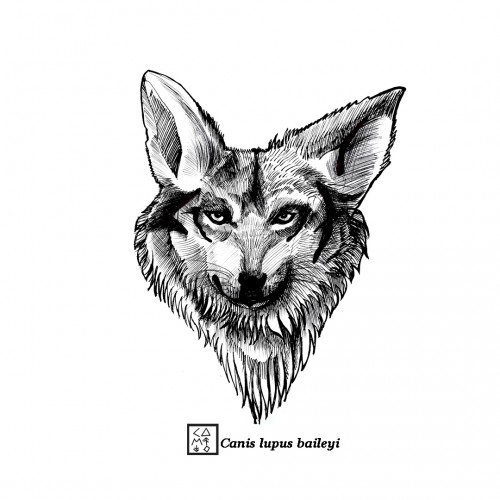
The Mexican wolf (Canis lupus baileyi) is a subspecies of gray wolf once native to southeastern Arizona, southern New Mexico, western Texas and northern Mexico. Its ancestors were likely the first gray wolves to enter North America after the extinction of the Beringian wolf, as indicated by its southern range and basal physical and genetic characteristics. More like this on: https://www.instagram.com/camilojulianc/
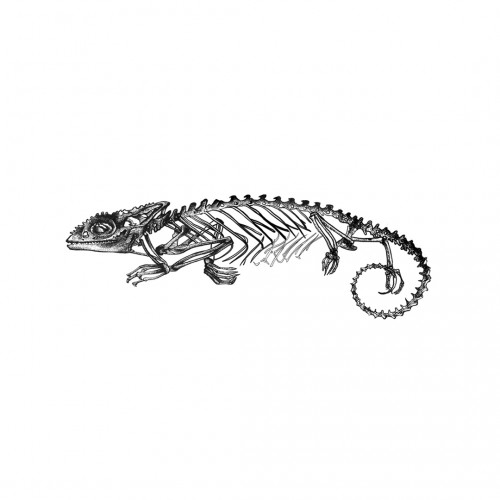
The Seychelles Tiger Chameleon, is the only species in the resurrected genus Archaius. It is listed as Endangered on the IUCN Red List of Threatened Species. More like this on: https://www.instagram.com/camilojulianc/
Drawn with Clip Studio Paint and XP-Pen Artist 15.6 Pro pen display tablet.
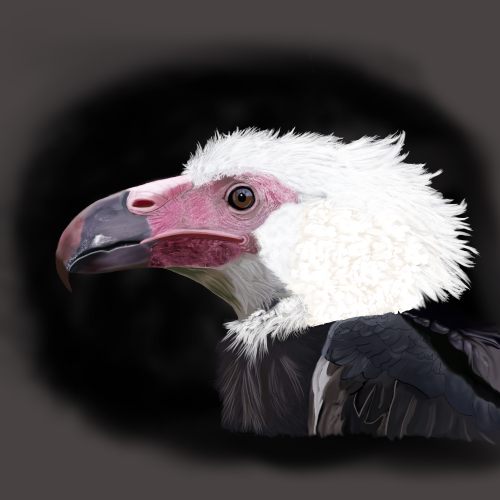
Critically Endangered The White-headed Vulture has undergone catastrophic declines in population number, with an estimate median decline in 96% over three generations (45 years)
This decline has been seen in its very large range from West Africa, across to southern Africa also. Reductions in populations of medium-sized mammals and wild ungulates, as well as habitat conversion throughout its range best explain the current decline. Additional threats include indirect poisoning at baits set to kill jackals in small-stock farming areas. This species is also recorded in trade in West and Central Africa as this species is used for both traditional medicines and also they are intentionally killed for use in witchcraft. This species is part of the Accipitridae bird family, which diverged from all other species of bird 49.6 million years ago during the Paleogene period. Vultures split from the other genera in this family 12.7 million years ago. This species is highly sensitive to land-use and is concentrated to protected areas. Individuals were marked with patagial (wing) tags in Fouta Djallon vulture sanctuary to monitor movements and for a toxicological assessment of the vulture population of the park. Additional studies to monitor the movements of individuals within and between protected areas in underway is South Africa. Info: Edgeofexistence . org #birdlife #birds #birddrawing #birdsketch #whiteheadedvulture #vultures #bampidraws