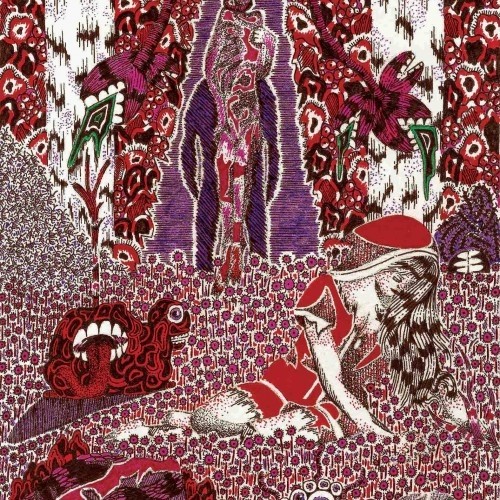
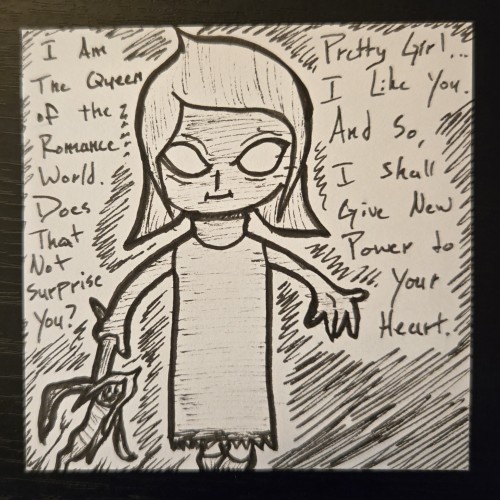
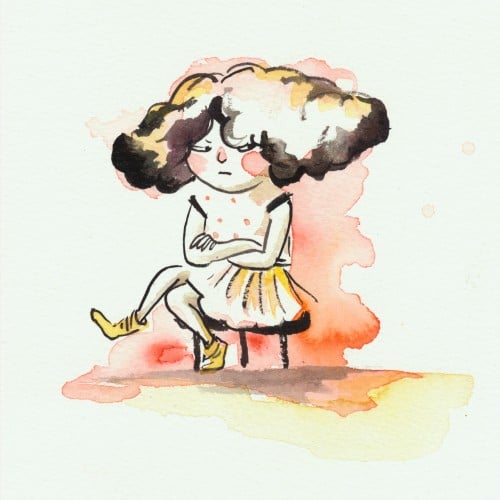
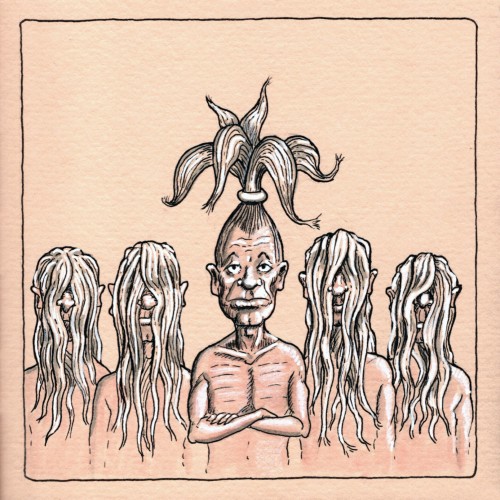
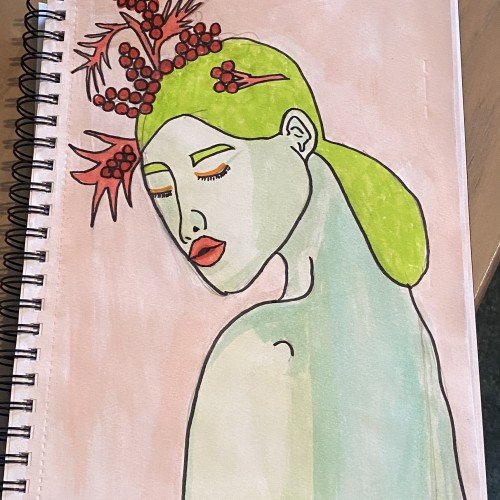
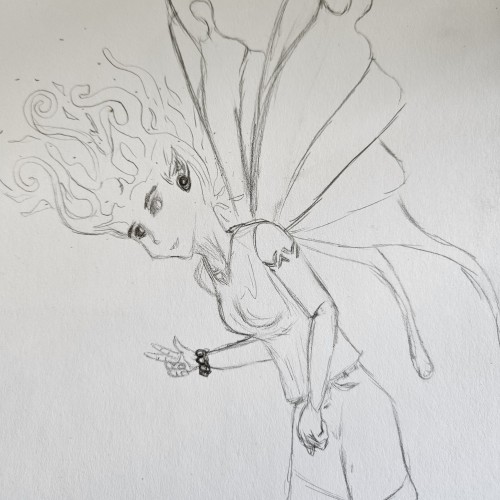
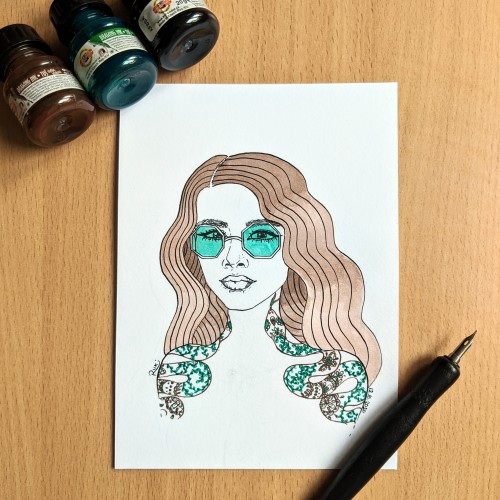
Willow's an oc of mine... she's very quirky. She's better suited to hanging out with the dead than the living. Also, super open to tips on this one because, as a beginner, I'm not amazing at diverse people. Like, black people have different facial structures and hair. Asian people have different facial structures and hair. So if I got something wrong, I'm open to redrawing that part. Just lmk.
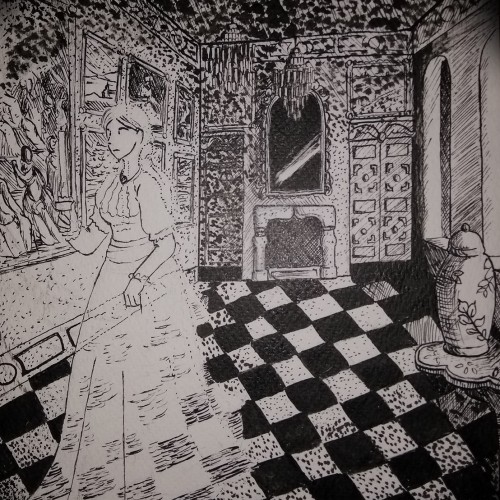
The black woman of the Wittelsbach family is a ghost haunting the Schleißheimer Castle. She was a widow who killed her own children because of an misunderstanding. The man she loved told her they cannot be together because of 2 pairs of eyes. He meant his parents wouldn't agree the relationship. Horrified by her cruel act she was thrown in the dungeon and died there. To this day she still said to be roaming the castle.
Nikola Tesla (1856–1943)
After he had started his own company, Tesla arrived at the office at noon. Immediately, his secretary would draw the blinds; Tesla worked best in the dark and would raise the blinds again only in the event of a lightning storm, which he liked to watch flashing above the cityscape from his black mohair sofa.
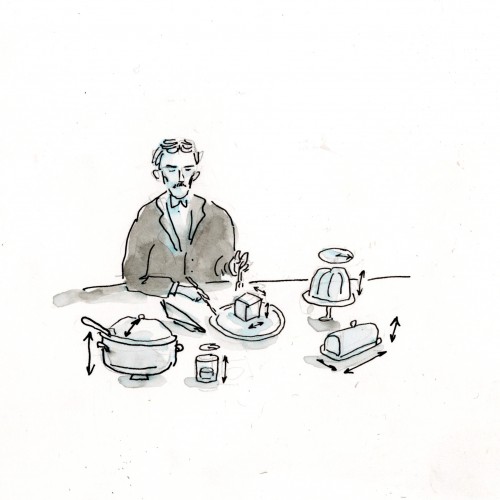
Tesla ate alone, and phoned in his instructions for the meal in advance. Upon arriving, he was shown to his regular table, where eighteen clean linen napkins would be stacked at his place. As he waited for his meal, he would polish the already gleaming silver and crystal with these squares of linen, gradually amassing a heap of discarded napkins on the table. And when his dishes arrived—served to him not by a waiter but by the maître d’hôtel himself—Tesla would mentally calculate their cubic contents before eating, a strange compulsion he had developed in his childhood and without which he could never enjoy his food.
- From Daily Rituals: How Artists Work by Mason Currey
“Of all things, I liked books best.”
― Nikola Tesla
“One must be sane to think clearly, but one can think deeply and be quite insane.”
― Nikola Tesla
#dailyrituals #inktober #NikolaTesla @masoncurrey
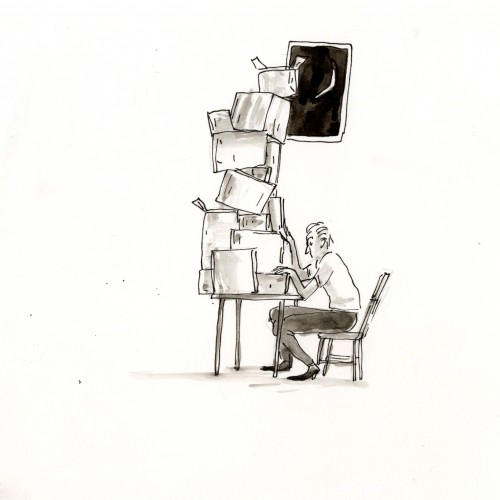
Joseph Cornell (1903–1972)
Cornell worked nights at the kitchen table, sorting and assembling materials for his boxes. It was not easy going. Some nights he felt too fatigued from his day job to concentrate on his art and would sit up reading instead, switching on the oven for warmth. In the mornings, his quarrelsome mother would scold him about the mess he’d left at the kitchen table; without a proper workroom, Cornell was forced to store his growing collection of magazine clippings and dime-store baubles out in the garage.
In 1940 Cornell finally mustered the courage to quit his job and pursue his art full-time—and even then his habits changed little. He still worked nights at the kitchen table, while his mother and brother slept upstairs. In the late morning he would head downtown for breakfast at his local Bickford’s restaurant, often satisfying his sweet tooth with a Danish or a slice of pie (and lovingly cataloging these indulgences in his diary).
- From Daily Rituals: How Artists Work by Mason Currey
#dailyrituals #inktober #JosephCornell @masoncurrey
P. G. Wodehouse (1881–1975)
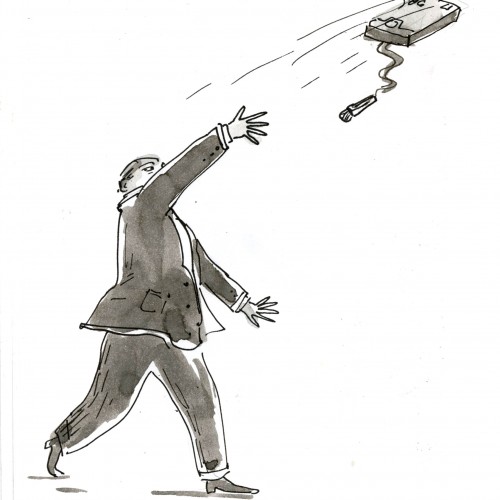
Once, when he was beginning a Wooster-Jeeves novel, he experimented with using a Dictaphone. After he had dictated the equivalent of a page, he played it back to check it over. What he heard sounded so terribly unfunny that he immediately turned off the machine and went back to his pad and pencil.
After this, according to the biographer Robert McCrum, “he might snooze a bit in his armchair, have a bath, and do some more work, before the evening cocktail (sherry for her, a lethal martini for him) at six, which they took in the sun parlour, overlooking the garden.
- From Daily Rituals: How Artists Work by Mason Currey
“He had just about enough intelligence to open his mouth when he wanted to eat, but certainly no more.”
― P.G. Wodehouse
#dailyrituals #inktober #PGWodehouse @masoncurrey
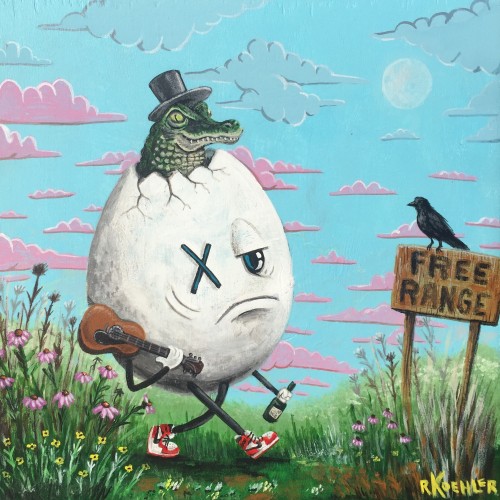
The second painting in the Egg-istential Crises series. This one took some crazy turns as I was painting including the Air Jordans he's wearing. Small 8 x 8 acrylic painting.
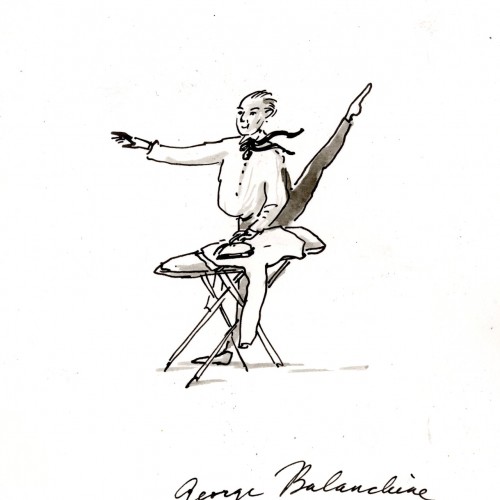
George Balanchine (1904–1983)
Balanchine liked to do his own laundry. “When I’m ironing, that’s when I do most of my work,” he once said. The choreographer rose early, before 6:00 A.M., made a pot of tea, and read a little or played a hand of Russian solitaire while he gathered his thoughts. Then he did his ironing for the day (he did his own washing too, in a portable machine in his Manhattan apartment) and, between 7:30 and 8:00, phoned his longtime assistant for a rundown of the day’s schedule.
- From Daily Rituals: How Artists Work by Mason Currey
“I like to do things certain ways and I disagree with everybody but I don't even want to argue.”
― George Balanchine
#dailyrituals #inktober #balanchine @masoncurrey